
Evidence of an Ice Age forest emerges from the North Sea floor
Ancient DNA from North Sea sediments suggests forests covered Doggerland thousands of years earlier than scientists believed.

 Edited By: Joseph Shavit

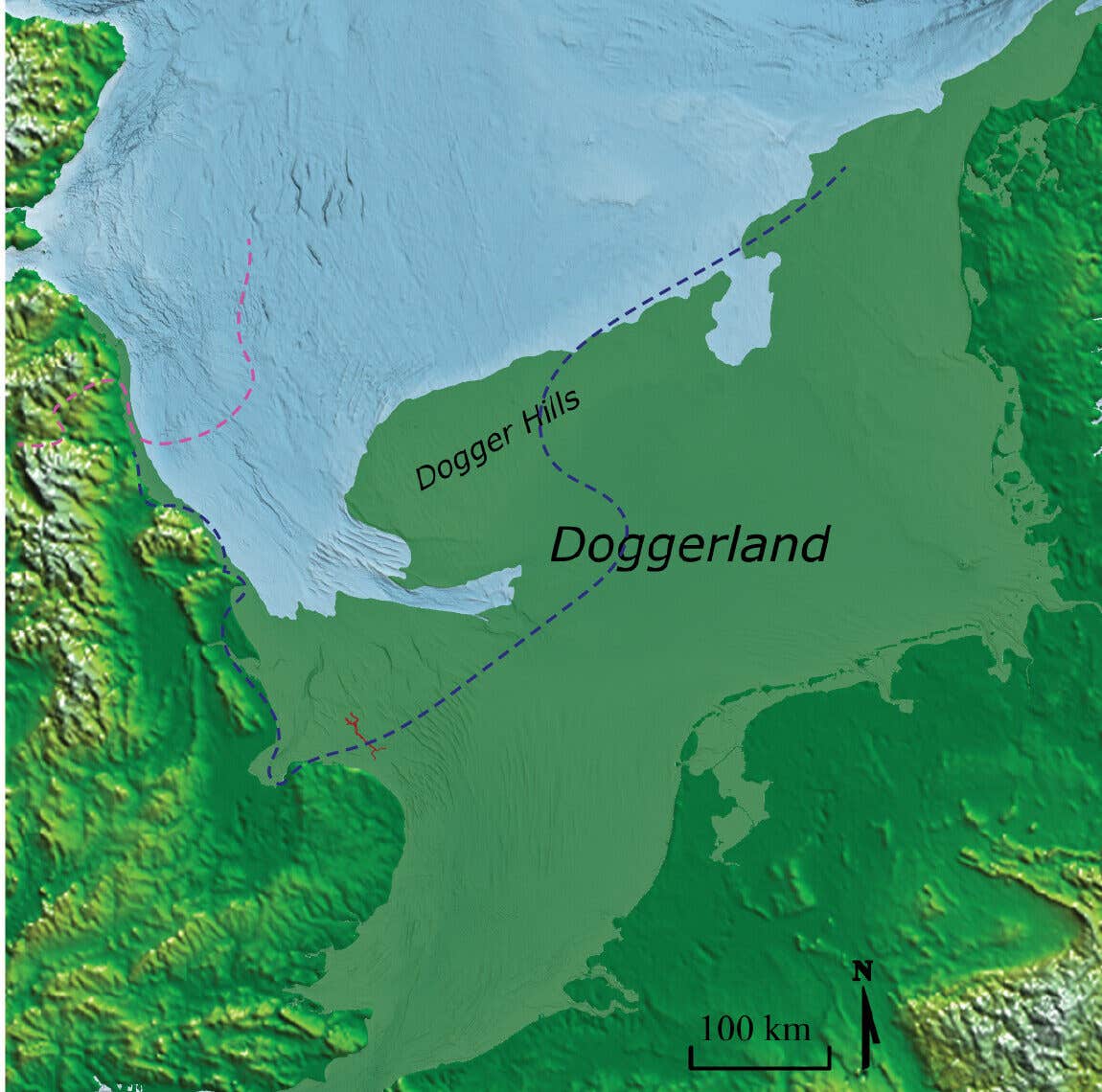
Ancient DNA reveals forests grew in Doggerland 16,000 years ago, far earlier than expected. (CREDIT: Walker et al. 2020)
The North Sea is home to the remains of a vast land that has been lost to time and is referred to as Doggerland, the area of land that connected Great Britain to continental Europe following the last glacial (ice) age. Recent genetic research shows that this submerged area of land supported trees many thousands of years earlier than previously believed.
Research shows trees existed in Doggerland 16,000 or more years ago, long before there were forests in Great Britain. This study was conducted by researchers at the University of Warwick through a large sampling of ancient DNA (aDNA) from sedimentary deposits. The work was published in the journal Proceedings of the National Academy of Sciences.
The findings of this study indicate that Doggerland was not only a migration route between the continents but likely provided a habitat for the flora and fauna of the region during colder climatic periods. Additionally, this area would have provided a welcoming habitat for the early human populations living in this part of the world.
"The sedimentary aDNA analysis of Doggerland has allowed us to build a picture of the environment of that area from the end of the last ice age to when the North Sea emerged," stated Professor Robin Allaby of the University of Warwick, chief investigator of this research. "We have discovered that trees appear in the sedimentary record over 4,000 years (or more) earlier than researchers had expected to find them; therefore, we conclude that the North Sea emerged onto the Earth's surface and fully formed much later than previously believed to have been the case."
Buried Ecosystem Traces
At the time of the last glacial maximum (also known as the "last ice age") and during the Holocene Epoch, sea levels were much lower. This provided many square miles of land between Britain and Europe. Over the span of thousands of years, ocean levels rose. The gradual flooding of Doggerland eventually produced what we now know as the North Sea.
To reconstruct the ecological history of the area, the research team analyzed 252 sediment samples from 41 sites along a prehistoric river known as the "Southern River," which was part of the Europe's Lost Frontiers project. The sediment cores collected during the project contained ancient plant and animal DNA that had been preserved through time.
As a result of sequencing the sediment samples, the researchers produced billions of short DNA sequences. After filtering and analyzing those sequences, they were able to build a timeline showing how ecosystems changed over the course of the last 20,000 years, up to approximately 5,000 years ago.
Examining the data allowed the researchers to identify the different regions that were eventually covered by seawater as a result of changing climate conditions and melting ice caps from the last ice age.
Early Woodland Evidence
Among the most significant findings was the discovery that temperate hardwood trees appeared much earlier than previously thought. DNA fragments associated with certain types of trees, including oak, alder, hazel, and elm, were found in sediment samples that were approximately 16,000 years old. This is several thousand years earlier than when those same species were expected to have become common in England based on pollen records.
According to pollen records from England, the four tree species mentioned above first appeared in the region around 10,500 to 9,500 years ago. However, the researchers concluded that some areas of Doggerland had already established woodlands long before these dates. This conclusion is based on the presence of DNA fragments from these four species.
The researchers also found evidence of lime trees (Tilia) in their sediment analysis from Doggerland. These appear approximately 2,000 years earlier than previously suggested by evidence from mainland Britain.
Findings from the study support the existence of microrefugia. These are small pockets of suitable habitat where temperate species could survive during the extremely cold and dry climate conditions of the Ice Ages in northern regions.
Botanical Surprises and Lost Species
The early geographic record of DNA revealed surprising details about this ancient ecosystem.
One of those surprises was botanical. The scientific team discovered DNA fragments belonging to Pterocarya, also known as walnut relatives. These fragments were recovered from sediments at seven different locations.
This genus of plant had previously been thought extinct in northwestern Europe for approximately 400,000 years.
Comparison between ancient and modern genetic data shows that the early Pterocarya DNA clusters with a modern species, Pterocarya stenoptera. This species is still found in parts of Asia today. Although pollen evidence had suggested rare occurrences of this genus in northwestern Europe, the DNA indicates that this tree survived in the region much longer than previously thought.
The study also provides insight into the slow process of Doggerland's disappearance. DNA evidence from marine plants begins to appear in the records at the time when rising sea levels flooded the land between approximately 9,000 and 8,500 years ago. However, terrestrial signals can still be detected in sediment layers long after the major flooding. This indicates that while large areas were inundated, some land still remained above mean sea level.
The Gradual Disappearance of Doggerland
In addition, the Storegga tsunami, which was generated by a major underwater landslide approximately 8,150 years ago, caused destruction in many parts of Doggerland. However, the DNA evidence indicates that the tsunami waters did not completely reach the original shoreline.
The research suggests that the final submergence of Doggerland may have occurred as recently as approximately 7,000 years ago. This means that the transition from land to sea was slow and gradual rather than sudden.
The research findings also have implications for early human populations. The existence of forested habitats during colder winter months may help explain how early human groups used these environments after the Ice Age.
Hunters and gatherers would have found an abundant supply of animals such as wild boar. These animals would have provided food as well as materials useful for building early forms of shelters. People may have lived on lands that later became Doggerland for many years prior to the emergence of the Maglemosian culture approximately 10,300 years ago.
"For many years, experts stated that Doggerland was only a land bridge, primarily serving as a pathway for early human migration into what would later become England," said Dr. Vincent Gaffney of the University of Bradford and co-author of this research.
"Today we recognize that Doggerland was not only an early settlement for human beings but also a refuge for many plant and animal species. Its land mass was a pivot point for early prehistoric human migration and resettlement across northern Europe over thousands of years."
Implications for Ice Age Ecosystems
These findings are expected to provide a new way for experts to understand how Ice Age ecosystems evolved in northwestern Europe. Evidence that many tree and animal species survived much farther north than previously believed during cold periods helps explain why forests spread rapidly after the end of the last glacial period.
This research also demonstrates the value of studying ancient DNA preserved in sediment. Unlike pollen, DNA preserved in sediment can provide detailed evidence about thousands of years of local ecosystems. It also makes it possible to identify hidden refuges that helped species survive during periods of significant climatic change.
As research continues on submerged landscapes such as Doggerland, these studies may reveal more about how early environments influenced the dispersal of forests and human populations across Europe.
Research findings are available online in the journal PNAS.
The original story "Evidence of an Ice Age forest emerges from the North Sea floor" is published in The Brighter Side of News.
Related Stories
- Ancient Antarctic ice reveals six million years of Earth’s climate history
- New ESA satellite launches to weigh the world’s forests from space
- What drove North America’s large mammals to extinction after the last ice age
Like these kind of feel good stories? Get The Brighter Side of News' newsletter.
Rebecca Shavit
Writer
Based in Los Angeles, Rebecca Shavit is a dedicated science and technology journalist who writes for The Brighter Side of News, an online publication committed to highlighting positive and transformative stories from around the world. Her reporting spans a wide range of topics, from cutting-edge medical breakthroughs to historical discoveries and innovations. With a keen ability to translate complex concepts into engaging and accessible stories, she makes science and innovation relatable to a broad audience.


