AltoVolo redefines personal air travel with 220 mph hybrid eVTOL aircraft
AltoVolo’s Sigma blends vertical takeoff, long range, and low noise to target private ownership in the emerging eVTOL market.

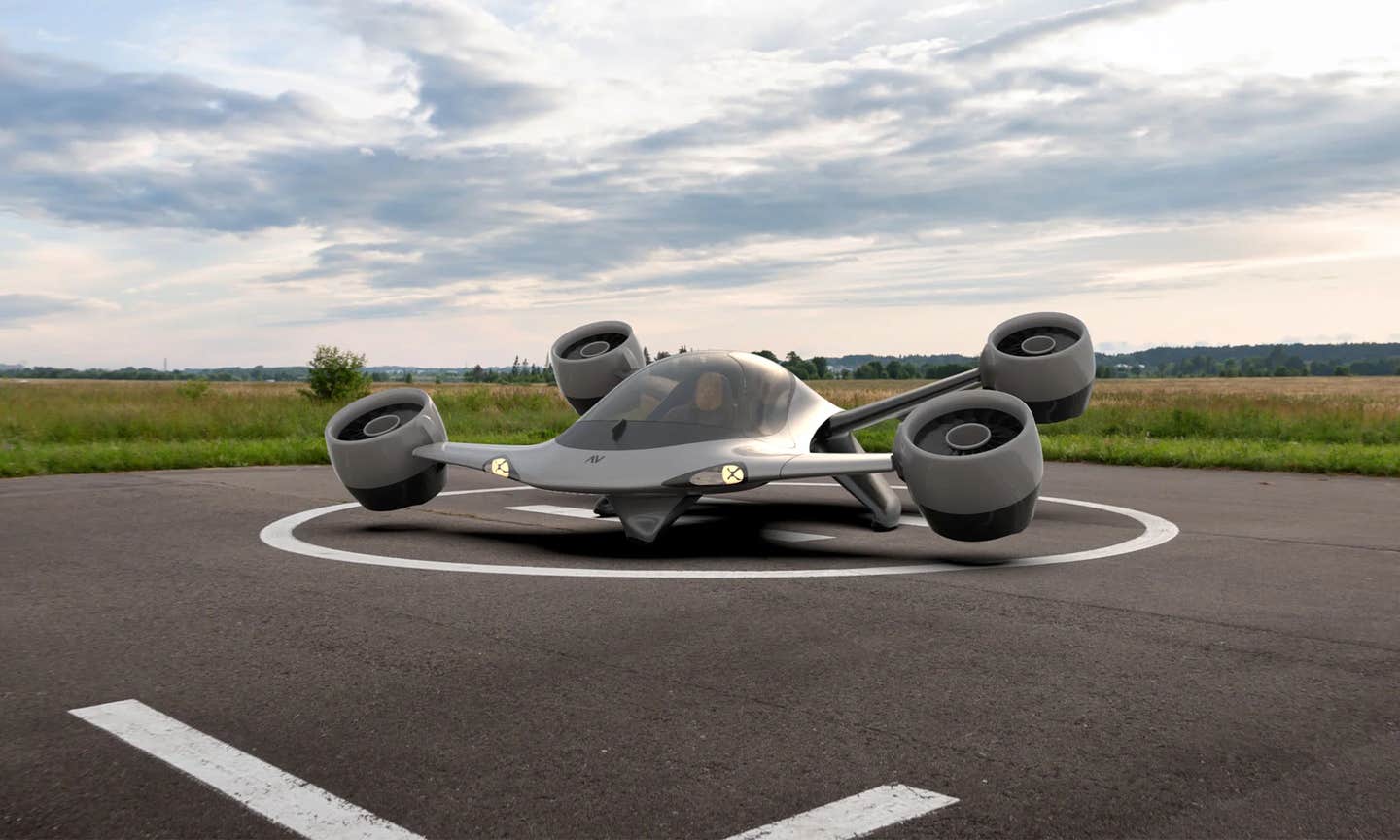
AltoVolo’s Sigma is not an air taxi. It is a privately owned hybrid electric aircraft designed for quiet, long-range personal flight. (CREDIT: AltoVolo)
A new personal aircraft is emerging from the crowded advanced air mobility space, and it is not aimed at city air taxis. Developed by AltoVolo, the Sigma is designed as a privately owned hybrid electric aircraft that blends vertical takeoff with jet-style cruise performance. The company says the aircraft could change how personal flight fits into daily life.
AltoVolo is led by founder and CEO Will Wood, who has positioned the company toward private ownership rather than shared urban transport. While many competitors focus on short, scheduled hops between dense city centers, AltoVolo is building for long-distance, point-to-point travel. That distinction shapes nearly every aspect of the Sigma’s design.
The company has now taken a key step toward commercialization. Potential buyers can apply for a build slot with an initial commitment of £860. AltoVolo has also launched what it describes as the world’s first online eVTOL configurator, allowing customers to customize their aircraft down to seat belt and stitch line colors.
“We will be delivering an ultra-refined hybrid electric aircraft. We believe there are thousands of customers for this type of cutting-edge technology,” Wood told The Brighter Side of News. “Much like you would expect from a supercar brand we are focused on performance and technology, rather than minimizing costs.”
Engineering a Vertical Hybrid Jet
At roughly 4.8 meters wide, the Sigma is compact enough to fit within tight spaces, including residential properties. Its hybrid electric tilting jet propulsion system allows vertical takeoff and landing, followed by efficient forward flight. Batteries provide short bursts of power, while liquid fuel supports longer distances.
That combination gives the aircraft a reported range of about 500 miles and a cruise speed of 220 miles per hour. On electric power alone, the Sigma can travel up to 260 miles. The company lists a top speed of 290 miles per hour and a service ceiling of 10,000 feet.
The aircraft carries up to three passengers and weighs about 980 kilograms when fully loaded. AltoVolo says safe, stable flight remains possible after the failure of one jet. Triple-redundant flight controls and a ballistic parachute that can deploy at 50 feet are included as safety features.
Design validation has involved outside expertise. Dr. Richard E. Brown of Sophrodyne Aerospace reviewed the aircraft’s aerodynamic concept. Simulation work used Ansys software, which is also used by Formula 1 teams. Autonomous control systems come from Embention, a Spanish firm that supplies certified flight controllers for Amazon Prime Air.
Quiet Flight and Cabin Experience
Noise remains one of the largest barriers to wider use of vertical aircraft. AltoVolo claims the Sigma is more than 80 percent quieter than conventional helicopters. Takeoff noise levels measure about 65 to 70 decibels from 100 meters, roughly comparable to a household dishwasher.
That reduction could allow flight operations in places where helicopters face restrictions. Residential areas, private estates, and yachts become more realistic landing sites when noise drops to that level. AltoVolo argues this capability opens new use cases beyond traditional aviation infrastructure.
Engineers are also focusing on the cabin environment. Internal noise, vibration, and harshness are being refined to deliver a smoother ride. At the same time, the company is developing a synthesized internal soundscape.
The soundscape is designed to provide pilots with feedback on power load across each electric tilting jet. The audio cues will shift and blend throughout the cabin, offering functional information while creating what the company describes as an immersive experience.
Training, Certification, and Early Ownership
To prepare new pilots, AltoVolo has built a full-scale simulator that mirrors the Sigma cockpit. The simulator uses carbon fiber construction and soft leather finishes, matching the physical aircraft. Customers can fly a digital twin of their customized vehicle before ever leaving the ground.
Flight time in the simulator can count toward pilot accreditation, reducing the training time required for owners. The goal is to lower barriers for new pilots while maintaining safety standards.
On the regulatory side, the Sigma is positioned to benefit from the United States MOSAIC certification framework. These rules reduce type certification costs and allow aircraft to be sold as light sport aircraft under the powered lift category. AltoVolo is also pursuing certification with the European Union Aviation Safety Agency and the UK Civil Aviation Authority.
The company expects greater alignment between regulatory regions as eVTOL aircraft become more common. That alignment could simplify ownership across borders and expand the potential customer base.
From Vision to Market Reality
Scale prototype testing has already been completed, and AltoVolo is now preparing a full-scale demonstrator. The first 100 customer aircraft will feature unique material finishes and specification options not planned for later production models.
Early buyers will also become part of what the company describes as a community shaping the product’s future. AltoVolo plans a global dealer and servicing network, with maintenance and overhaul schedules already under review.
Skepticism remains in parts of the aviation world. Some observers note the limited public track record of the company’s leadership and the challenges of certifying a new aircraft category. Manufacturing scale, long-term reliability, and cost remain open questions.
Still, AltoVolo is carving out a distinct position. Rather than replacing helicopters or building shared fleets, the Sigma is marketed as a personal mobility tool. The promise is simple control over time, distance, and destination.
AltoVolo technical specifications:
Vehicle Layout:
- 3-seater hybrid electric VTOL aircraft
Performance:
- Hover Time: 18.5mins
- Payload: 270kg
- Cruise Speed: 220mph
- Top Speed: 290mph Est
- Hybrid Range: 510miles
- Electric Only Range: 260miles
- Estimated Noise Level, Take-off: 65-70dB(A) @ 100m
- Flight Ceiling: 10,000ft (3,050m)
Weight Dimensions:
- Max Take-off Weight: 980kg
- Length: 4,050mm
- Width: 4,800mm
- Packed Width: 2,280mm
- Total Height: 1,580mm
Safety:
- Ballistic Parachute 50ft deployment
- Thrust Vectoring Stability
- Control System Triple Redundancy
Related Stories
- Joby Aviation’s electric air taxi set to revolutionize urban mobility
- Fast-charging lithium-sulfur battery revolutionizes EVs and eVTOL aircraft
- Airwolf takes off: The 140 mph flying motorcycle is here
Like these kind of feel good stories? Get The Brighter Side of News' newsletter.

Joseph Shavit
Writer, Editor-At-Large and Publisher
Joseph Shavit, based in Los Angeles, is a seasoned science journalist, editor and co-founder of The Brighter Side of News, where he transforms complex discoveries into clear, engaging stories for general readers. With vast experience at major media groups like Times Mirror and Tribune, he writes with both authority and curiosity. His writing focuses on space science, planetary science, quantum mechanics, geology. Known for linking breakthroughs to real-world markets, he highlights how research transitions into products and industries that shape daily life.