An implant under the skin could replace insulin injections
An MIT implant kept insulin-producing cells alive for 90 days in animals without immune-suppressing drugs.

 Edited By: Joseph Shavit

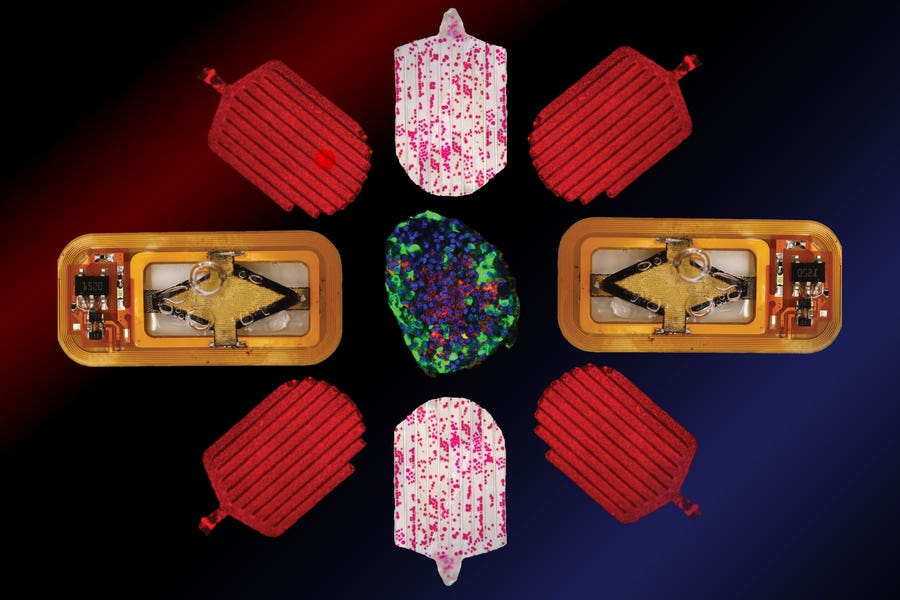
MIT researchers are developing an implantable device that contains insulin-producing cells. (CREDIT: MIT Researchers)
A small device implanted just beneath the skin, roughly the size of a large postage stamp and weighing about two grams, kept diabetic mice and rats healthy for three months without a single dose of immunosuppressive medication.
That result, published in the journal Device by researchers at MIT, represents a meaningful step toward something diabetes patients have long needed: a way to receive transplanted insulin-producing cells without the drugs that prevent the immune system from destroying them.
The implanted device has a built-in mechanism for keeping living pancreatic islet cells alive. The substrate material protects the transplanted pancreatic islet cells by allowing them access to a continuous supply of oxygen generated within the substrate itself. This process occurs without the need for complex systems to supply oxygen. Instead, it uses moisture present within the body as the source for generating the oxygen needed for the islet cells.
The concept of islet cell transplantation is not new. Physicians have known for many years that taking insulin-producing cells from a donor can restore normal glucose control. A set of protocols developed in Edmonton and later approved by the FDA has provided a way for some patients to achieve long-term insulin independence. A subset of patients has experienced complete insulin independence for years.
Challenges of Islet Cell Transplantation
The main problem with islet cell transplantation has always been the need to use immunosuppressant medications. While many medications are available, they all suppress the immune system’s ability to fight foreign material. As a result, the body cannot properly respond to threats. This increases vulnerability to infection and cancer.
Although immunosuppressant medications can provide clinical benefits, the associated health risks are significant and can be disqualifying. For many people with Type 1 Diabetes Mellitus, the risks of receiving an islet cell transplant are simply too great.
One method for addressing this issue is using a device that surrounds transplanted cells with a protective layer. This layer shields them from the immune system without using drugs. However, this approach has faced a major limitation. The protective coating also blocks oxygen access, and without oxygen, the cells ultimately die.
“Our objective is to develop a means of providing the benefits of cell therapy to patients without the requirement of immune suppression,” said Daniel Anderson, a professor in the Chemical Engineering Department at MIT and the principal investigator of the study.
Oxygen Generation from the Inside
To solve the oxygen problem, the MIT team built an integrated oxygen generator directly into the device. An internal component, a proton exchange membrane, splits water vapor (the gas phase of H2O) that is readily available within the body. This process produces hydrogen (H2) and oxygen (O2) gases.
The hydrogen gas escapes harmlessly outside the device. At the same time, the oxygen gas flows into an internal storage vessel before diffusing into the compartment containing the islet cells.
Wireless power is transmitted to the device using an external antenna placed against the skin. It transmits power through the body without requiring a physical connection. Earlier versions of the device operated for about one month. The latest design significantly extends that duration through improved waterproofing, stronger structural integrity to prevent cracking, and enhanced circuitry that increases electrical power to the oxygen-generating component.
This increase in power leads to more oxygen production. That allows longer-term survival of transplanted insulin-producing cells and increases insulin output.
“One month is a reasonable time frame to initially demonstrate the feasibility of our device for performing basic proof-of-concept experiments,” said Siddharth Krishnan, the lead author of the paper and now an assistant professor of electrical engineering at Stanford University. From a translational perspective, he noted that maintaining normoglycemia for up to 90 days is closely tied to how long insulin-producing cells can be sustained under physiological conditions.
Experimental Results Across Models
The research team evaluated three experimental models. The first used rat islets transplanted into mice whose own insulin-producing cells had been chemically destroyed. These mice maintained normal blood glucose levels for the full 90 days while the oxygenated devices remained implanted.
When the devices were removed, blood glucose levels returned to pre-transplant baselines. This indicated that the implanted cells were responsible for glucose control. In contrast, control mice without the oxygenated device experienced early graft failure and remained diabetic throughout the study.
The second experiment used stem-cell-derived rat islets instead of donor islets. This approach may eliminate the need for cadaveric donors if successful. However, glycemic control in these animals was not as strong as in those receiving donor islets.
Researchers attributed this partly to differences in how insulin interacts across species. They also suggested that stem-cell-derived islets may require a longer incubation period after transplantation to become fully functional.
“We believe there is a lot of opportunity for the cells to stay longer in culture,” said co-author Matthew Bochenek, the second lead author. “That would allow them to function more like a normal pancreas and produce a more physiologic amount of insulin.”
A third study was conducted in rats, a larger animal model. Two devices from the mouse experiments were connected using a flexible framework. These studies also showed reversal of diabetes for 90 days without immunosuppression.
The modular design offered an additional advantage. If one device failed, the other could continue functioning without interruption.
Toward Human Translation
The path toward human application included a preliminary study in a cynomolgus monkey. Researchers used a portable antenna connected to the animal through a jacket-like system. The implanted islet cells were evaluated after one month.
The cells showed no signs of immune rejection. Retrieved cells remained viable and contained insulin granules. In contrast, no viable islet cells were recovered from control implants that lacked oxygenation.
Limitations and Future Directions
Researchers emphasized that the work remains early-stage. The primate study lasted only one month and involved a small number of animals. Longer studies with higher cell densities are needed before human trials can be considered.
The implanted devices also triggered fibrotic tissue formation, which is a typical response to foreign objects. This created a barrier that slowed glucose and insulin exchange between the device and surrounding tissue.
Animal models showed slower glucose responses compared to healthy controls during tolerance tests. This was due to factors such as distance between islets and interstitial space, as well as tissue fibrosis. Future designs may combine oxygenation with anti-fibrotic surface coatings.
Some animals in the rodent study died. These deaths were primarily due to fighting injuries or complications from poorly controlled diabetes in comparison groups, not from device toxicity.
The long-term goal is to maintain islet survival for extended periods. Researchers noted that islets can survive for long durations if placed in a supportive environment. Current efforts are focused on extending survival as much as possible.
Anderson’s group is now working toward a two-year survival target. They are also exploring applications beyond diabetes.
Broader Implications of the Technology
For people with Type 1 diabetes, the impact could be substantial. Daily insulin injections and glucose monitoring require constant attention and effort. A long-lasting implant that produces insulin without ongoing immunosuppression could significantly reduce that burden.
The research team also sees broader applications for the platform. It could be used for diseases that require repeated delivery of proteins, enzymes, or antibodies.
The long-term vision is to enable drug production directly from the patient’s body. Instead of receiving periodic infusions in clinical settings, patients could generate their own treatments internally.
Research findings are available online in the journal Device.
The original story "An implant under the skin could replace insulin injections" is published in The Brighter Side of News.
Related Stories
- New protein discovery paves the way towards life without daily insulin for diabetics
- New diabetes drug boosts insulin production by 700%
- Brain hormone Leptin may cure type 1 diabetes without insulin
Like these kind of feel good stories? Get The Brighter Side of News' newsletter.
Rebecca Shavit
Writer
Based in Los Angeles, Rebecca Shavit is a dedicated science and technology journalist who writes for The Brighter Side of News, an online publication committed to highlighting positive and transformative stories from around the world. Her reporting spans a wide range of topics, from cutting-edge medical breakthroughs to historical discoveries and innovations. With a keen ability to translate complex concepts into engaging and accessible stories, she makes science and innovation relatable to a broad audience.