An important ice cap vanished in Greenland about 7,000 years ago
GreenDrill cores reveal Prudhoe Dome was ice-free about 7,000 years ago, showing Greenland’s sensitivity to modest warming.

 Edited By: Joseph Shavit

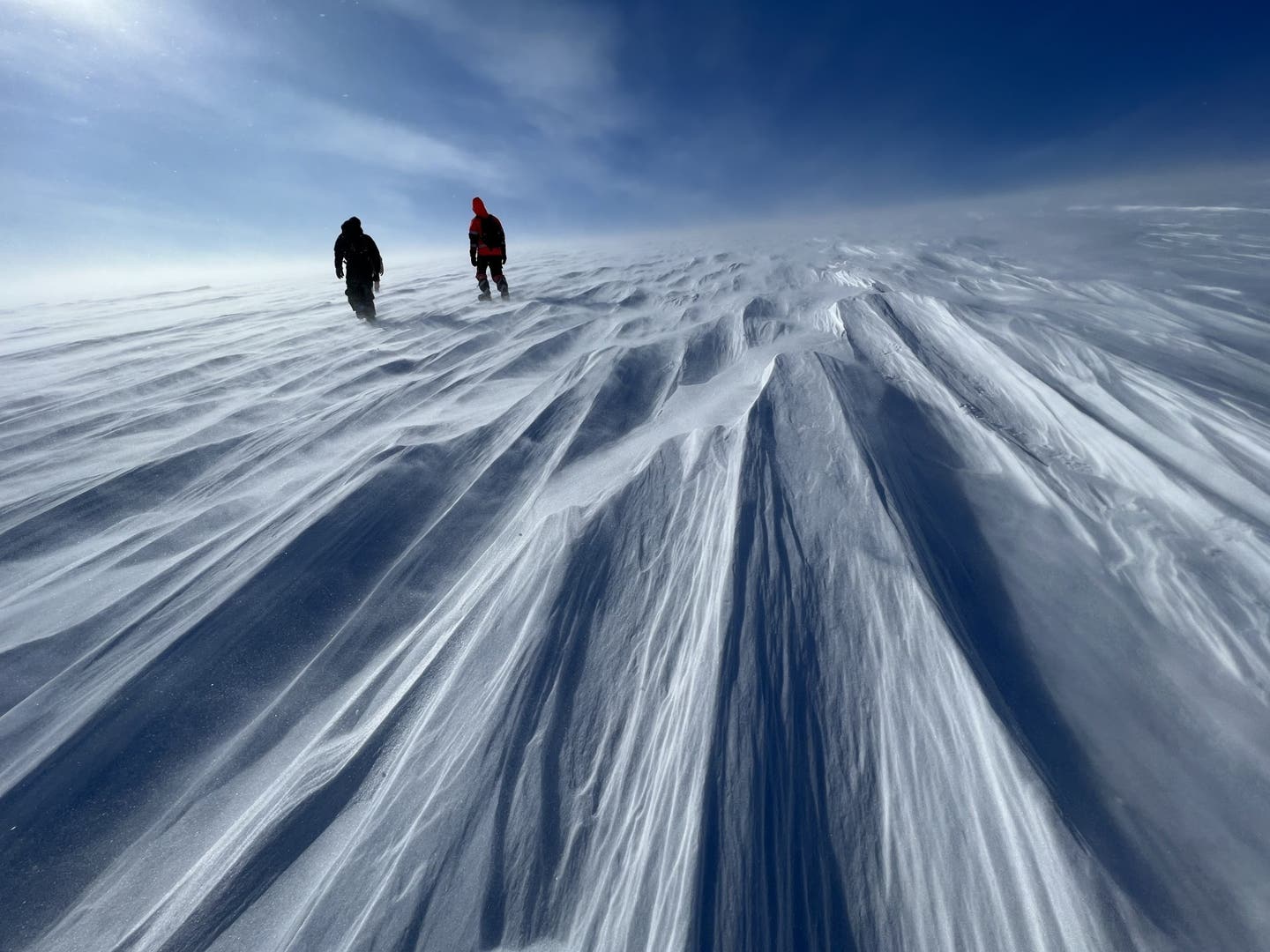
Sediment drilled from beneath Greenland’s Prudhoe Dome shows the ice cap vanished about 7,000 years ago, offering new clues about future melt. (CREDIT: Jason Briner/University at Buffalo)
Deep under Greenland’s ice, a thin layer of frozen dirt and rock has been holding a secret for thousands of years. Now, a drilling project co-led by the University at Buffalo has brought that secret to the surface, and it carries a sharp warning.
The first study from GreenDrill reports that a high point of Greenland’s ice sheet, the Prudhoe Dome ice cap in the northwest, disappeared completely about 7,000 years ago. Scientists did not expect the melt to be so recent.
That timing matters because it happened during the Holocene, an interglacial period that began about 11,000 years ago and continues today. Many people think of the Holocene as steady and calm. It is also when humans began farming and building early societies. Yet the study suggests that even modest natural warmth in that era pushed a key section of the ice sheet beyond a tipping point.
“This is a time known for climate stability, when humans first began developing farming practices and taking steps toward civilization,” said Jason Briner, a professor in the Department of Earth Sciences at the University at Buffalo. “So for natural, mild climate change of that era to have melted Prudhoe Dome and kept it retreated for potentially thousands of years, it may only be a matter of time before it begins peeling back again from today’s human-induced climate change.”
Drilling Into Greenland’s Hidden Ground
GreenDrill is a National Science Foundation-funded effort to retrieve bedrock and sediment buried beneath the Greenland Ice Sheet. Researchers have less rock and soil from under Greenland’s ice than they do from the moon. That shortage has limited what scientists can say about past ice loss.
The buried material is valuable because it acts like a record of exposure. Chemical signals in rock and sediment can show when the surface last saw open sky. That helps scientists pinpoint when ice vanished in the past.
For this first study, the team drilled 1,669 feet below the surface during a weeks-long camp at the top of Prudhoe Dome in 2023. They set up two drill sites, one at the summit and another closer to the edge where the ice is thinner. This study focuses on the summit core.
The researchers pulled up sediment and used luminescence dating to read its history. The method relies on a simple idea. When sediment sits buried, tiny electrons become trapped inside mineral grains due to natural radiation. Those electrons stay trapped until the sediment sees light again. When light returns, the grains release energy as a measurable glow.
The brighter the glow, the longer the sediment has stayed out of sunlight. The team measured that glow to estimate when the sediment last saw daylight.
Their results point to a clear window. The sediment under the summit site last had sunlight sometime between 6,000 and 8,200 years ago. That range suggests the ice cap melted before then, likely in the early Holocene.
A Melted Summit in a “Stable” Era
The study’s lead author, Caleb Walcott-George, said the timing carries an uncomfortable lesson. Walcott-George is a former University at Buffalo graduate student and now an assistant professor at the University of Kentucky.
“This means Prudhoe Dome melted sometime before this period, likely during the early Holocene, when temperatures were around 3 to 5 degrees Celsius warmer than they are today,” he said. “Some projections indicate we could reach those levels of warming at Prudhoe Dome by the year 2100.”
That comparison puts a distant past in the same frame as the near future. It also shifts how you may picture Greenland’s stability. The summit seems permanent when you look across an endless white horizon. The new evidence says the ice there can retreat for long stretches, even without modern industry.
The finding also helps explain why scientists focus on places like Prudhoe Dome. It sits along a vulnerable part of the ice sheet’s margin in the northwest. If a high point like this melted during a relatively mild warm period, it suggests the area reacts quickly to temperature changes.
Briner and Joerg Schaefer, a research professor at Columbia University’s Lamont-Doherty Earth Observatory, co-led GreenDrill. Schaefer said the bed material can help identify which edges of the ice sheet might fail first.
“Rock and sediment from below the ice sheet tell us directly which of the ice sheet’s margins are the most vulnerable, which is critical for accurate local sea level predictions,” Schaefer said. “This new science field delivers this information via direct observations and is a game-changer in terms of predicting ice-melt.”
The study ties that vulnerability to sea level concerns. When scientists learn where melt begins, they can better judge which coastal regions face earlier risk. The research does not offer a sea level number. It does point to a way to narrow uncertainty.
Stress and Teamwork on the Ice
The science came with a human story, too. In spring 2023, the drill sites looked like a small village of yellow tents. Colored flags marked paths across the snow. Researchers shoveled windblown drifts and collected ice chips pushed up by drilling fluid. Meanwhile, drillers from the NSF Ice Drilling Program drove equipment through hundreds of feet of ice.
The team worked not far from Camp Century, a Cold War-era U.S. Army base. Army scientists tried to drill into the ice to hide missiles. They instead pulled up sediment beneath the ice. That sediment sat at the University at Buffalo for years. It later helped show Greenland’s ice sheet was much smaller about 400,000 years ago.
GreenDrill’s work nearly failed late in the process. A fracture in the ice at the summit site threatened the final stage. The team found a last-minute fix. They used a drill bit usually reserved for rock. That allowed them to finish the last 390 feet and reach the bed just before planes arrived.
“It was like watching a Buffalo Bills game,” Briner said. “Just stressful until the final minute.”
Walcott-George described the experience in personal terms. “When all you see is ice in all directions, to think of that ice being gone in the recent geological past and again in the future is just really humbling,” he said.
Briner also credited the wider team. Collaborators included Nicolás Young, Allie Balter-Kennedy, and Nathan Brown. He emphasized the behind-the-scenes logistics staff as well.
“This project involved more complicated logistics than any I’ve been involved with in my career,” Briner said. “So many moving parts, and so much talent among the scientists, drillers and support staff.”
What Comes Next for GreenDrill
The Prudhoe Dome result is only the start. The team expects many more studies from the cores. The second core, taken closer to the ice edge, may reveal what happens at the most vulnerable point. The researchers also see promise in what the sediment might contain.
Traces of plants could help reconstruct Greenland’s ancient environment. They could also help explain what the landscape looked like when ice pulled back.
“We have a treasure chest in our hands now that we can pick apart and explore,” Briner said.
GreenDrill also aims to prove a broader point. Earlier projects, including Camp Century and the Greenland Ice Sheet Project 2 in the 1990s, collected some bed material. GreenDrill differs because researchers chose drill sites specifically to reach what lies beneath the ice.
“GreenDrill really demonstrated that, if you can logistically pull it off, there is the technology available to drill down to the bedrock and there’s an analytical toolkit to then analyze it,” Briner said. “We have very reliable, numerical models that can predict the rate of melting, but we also want real, observational data points that can tell us indisputably that X amount of warming in the past led to X amount of ice being gone.”
Practical Implications of the Research
This study gives scientists a direct benchmark for Greenland’s sensitivity to warming. It shows a high point in the northwest vanished during the Holocene and stayed back for long periods.
The results can help refine models that predict where Greenland may melt first. Better model performance supports more accurate local sea level planning for coastal communities.
The work also validates a new approach. Drilling targeted sites for sub-ice sediment creates direct evidence, not inference, about past ice loss.
Finally, the findings guide future field campaigns. Researchers can prioritize other vulnerable margins and test whether similar retreats happened elsewhere.
Research findings are available online in the journal Nature Geoscience.
The original story "An important ice cap vanished in Greenland about 7,000 years ago" is published in The Brighter Side of News.
Related Stories
- Scientists find trapped heat beneath Greenland — impacting ice sheet motion and future sea level rise
- Scientists Find Massive Hidden Rock Layer Beneath Bermuda
- World’s largest lithium deposit discovered in the US along the Nevada – Oregon border
Like these kind of feel good stories? Get The Brighter Side of News' newsletter.
Joshua Shavit
Writer and Editor
Joshua Shavit is a NorCal-based science and technology writer with a passion for exploring the breakthroughs shaping the future. As a co-founder of The Brighter Side of News, he focuses on positive and transformative advancements in technology, physics, engineering, robotics, and astronomy. Joshua's work highlights the innovators behind the ideas, bringing readers closer to the people driving progress.