Anti-obesity drug improves metabolism beyond weight loss, study finds
In mice, tirzepatide turned up brown fat activity and improved glucose control beyond food restriction alone.

 Edited By: Joseph Shavit

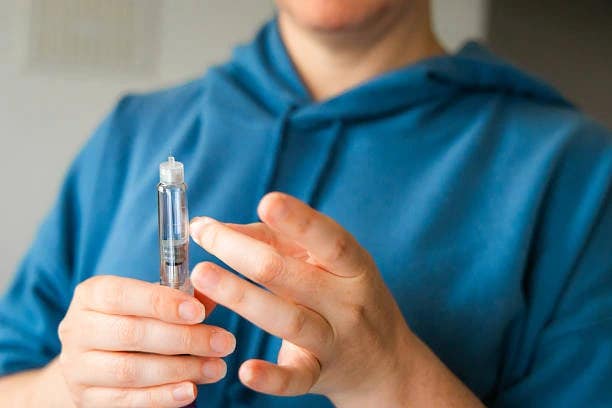
Study findings suggest tirzepatide activates brown fat and improves metabolism beyond appetite reduction, but human confirmation is needed. (CREDIT: Wikimedia / CC BY-SA 4.0)
The skin over a mouse’s shoulders warmed up after a dozen days on tirzepatide. That heat map, taken with an infrared camera, pointed to a familiar patch of tissue between the shoulder blades: brown fat, the body’s calorie-burning depot.
In a new mouse study, tirzepatide did what many people already associate it with. It drove weight down mainly by cutting appetite. But the work also suggests something else is happening at the tissue level. Even when the researchers matched food intake between groups, tirzepatide pushed brown fat toward a more active, energy-burning state. There were improvements in blood sugar control that food restriction alone did not fully explain.
The study was led by Marion Peyrou, a Ramón y Cajal researcher based at the University of Barcelona’s Faculty of Biology and Institute of Biomedicine (IBUB). Peyrou is also affiliated with the Sant Joan de Déu Research Institute (IRSJD) and CIBEROBN, Spain’s research network focused on obesity and nutrition.
A drug built to hit two targets
Tirzepatide, sold as Mounjaro, is approved for weight control in adults with obesity or overweight with comorbidities, and for treatment of poorly controlled type 2 diabetes mellitus. Unlike earlier obesity drugs that focus on a single pathway, tirzepatide activates receptors for two gut hormones: GLP-1 and GIP. That dual action has been tied to major weight loss. This occurs largely through reduced food intake.
The biology behind its broader metabolic effects has stayed murkier. GIP receptors show up in more places than GLP-1 receptors, including in fat cells within adipose tissue. This raises the possibility that tirzepatide acts outside the brain and gut.
Animal studies have hinted at that. Blocking central GIP signaling abolished appetite suppression but only partly reduced weight loss, suggesting a peripheral contribution. The paper also notes that only about 20% of tirzepatide’s insulin sensitivity benefit links to weight loss. By contrast, for GLP-1 receptor agonists, the improvement is described as nearly all weight-related.
Separating the drug from the diet
To sort drug effects from the effects of simply eating less, the team used obese male C57BL/6J mice fed a high-fat diet for 15 weeks. By that point, the mice met the study’s definition of obesity. There was about a 150% increase in body weight compared with standard-diet controls.
Then came 12 days of daily injections. For the first five days, the tirzepatide dose was 10 nmol/kg/day, followed by 20 nmol/kg/day for seven more days. A control group received saline. A third “pair-fed” group received saline too, but ate the same amount of high-fat food as the tirzepatide-treated mice each day.
Weight loss tracked almost perfectly between the tirzepatide group and the pair-fed group. Food intake fell sharply right after dosing began, dropping to about one-third of the intake in untreated mice. When dosing escalated, intake dipped again. Body weight fell to about 80% of the starting weight a week after treatment began.
That matching weight curve mattered. It meant most of the weight loss came from eating less, not from a mysterious metabolic speed-up.
Yet some metabolic changes did not line up so neatly.
Brown fat, turned up
By the end of treatment, tirzepatide-treated mice had lower blood glucose than both untreated obese mice and the pair-fed obese controls. Triglycerides fell significantly only in the tirzepatide group. Glucose tolerance improved strongly in tirzepatide-treated mice, shown by a reduced incremental area under the curve during glucose tolerance testing. Pair-fed mice saw only a mild improvement.
Under the microscope, white fat cells in both subcutaneous (inguinal) and visceral (epididymal) depots looked smaller in tirzepatide-treated mice. Pair-fed mice did not show a significant drop in average adipocyte size.
Brown fat stood out even more. Tirzepatide shrank lipid droplets inside brown fat cells. The pair-fed group showed only a modest trend in that direction. Then came the infrared images: food restriction alone reduced brown fat thermogenesis. However, tirzepatide raised brown fat activity compared with pair-fed mice, returning temperatures to levels similar to ad libitum-fed controls.
Gene activity and RNA sequencing
The team also tracked gene activity with whole-transcriptome RNA sequencing. Brown fat showed 1,053 differentially expressed genes, with “thermogenesis” and “oxidative phosphorylation” among the most enriched pathways. Many top Gene Ontology terms related to mitochondrial respiration and biogenesis.
To put that pattern in context, the researchers compared tirzepatide’s brown-fat transcriptome shift with changes seen during cold exposure, a classic brown-fat trigger. Around 20% of genes induced by tirzepatide overlapped with those induced after ten days of cold exposure. These genes again clustered in thermogenesis and oxidative phosphorylation pathways.
Targeted checks backed up the broad sequencing readout. Tirzepatide increased expression of thermogenic markers in brown fat, including Ucp1, Dio2 and Ppargc1a, along with batokines such as Bmp8b and Cxcl14. Those shifts did not appear in pair-fed mice. At the protein level, tirzepatide increased UCP1 and raised levels of mitochondrial proteins, including SDHB and COXI. It also raised TOM20, a marker linked to mitochondrial mass.
White fat changed too, but in a different way. The two white-fat depots shared pathway shifts tied to lipid metabolism and extracellular matrix regulation. Still, the study did not find clear evidence of “browning” in white fat over this short timeline. This was true even in inguinal fat, a depot known for its browning potential.
What’s promising, and what stays uncertain
The authors also looked at circulating inflammation markers. An affinity-based plasma proteomics panel found changes in a small set of extracellular proteins, with inflammatory and immune categories among the most affected. Targeted cytokine assays showed reductions in TNF-α, IL-6 and Ccl2, but those drops also appeared in pair-fed mice, pointing to food restriction as the main driver there. Leptin declined in tirzepatide-treated mice but not in pair-fed controls.
The study keeps returning to one caution: mice are not humans. The work used invasive tissue analyses that would be difficult to do in people. However, species differences in fat distribution and metabolic regulation could reshape the story.
The paper notes two human-facing complications. First, tirzepatide’s GIP receptor agonism appears weaker at the mouse receptor than at the human receptor. Second, while tirzepatide clearly raises energy expenditure in mice in other reports, it does not appear to do so in humans. Even so, it increases lipid oxidation in patients.
Whether human brown fat responds to tirzepatide remains an open question. The authors point to contradictory findings for GLP-1 receptor agonists in people. They mention that six days of subcutaneous GIP infusion can raise temperature over the supraclavicular region, a main brown-fat site. They also cite the ongoing TABFAT clinical trial, designed to test whether tirzepatide boosts brown-fat activity in women with obesity using 18F-FDG-PET/CT. However, results are not yet available.
The limitations list is blunt: the study is preclinical, group sizes were constrained by ethics, and the experiments used only male mice. The researchers call for studies in females and for human work that directly measures brown-fat activity.
Research findings are available online in the journal Biomedicine & Pharmacotherapy.
The original story "Anti-obesity drug improves metabolism beyond weight loss, study finds" is published in The Brighter Side of News.
Related Stories
- Obesity drugs show heart health benefits beyond weight loss
- Weight-loss drug Semaglutide could significantly reduce the risk of heart attacks
- Weight-loss drug Tirzepatide significantly slows breast cancer growth, study finds
Like these kind of feel good stories? Get The Brighter Side of News' newsletter.
Mac Oliveau
Writer
Mac Oliveau is a Los Angeles–based science and technology journalist for The Brighter Side of News, an online publication focused on uplifting, transformative stories from around the globe. Passionate about spotlighting groundbreaking discoveries and innovations, Mac covers a broad spectrum of topics including medical breakthroughs, health and green tech. With a talent for making complex science clear and compelling, they connect readers to the advancements shaping a brighter, more hopeful future.