Bumble Bee Queens can survive underwater for a week – here’s why
Scientists assumed spring floods drowned dormant bumble bee queens. A new study shows they can survive more than a week underwater.

 Edited By: Joseph Shavit

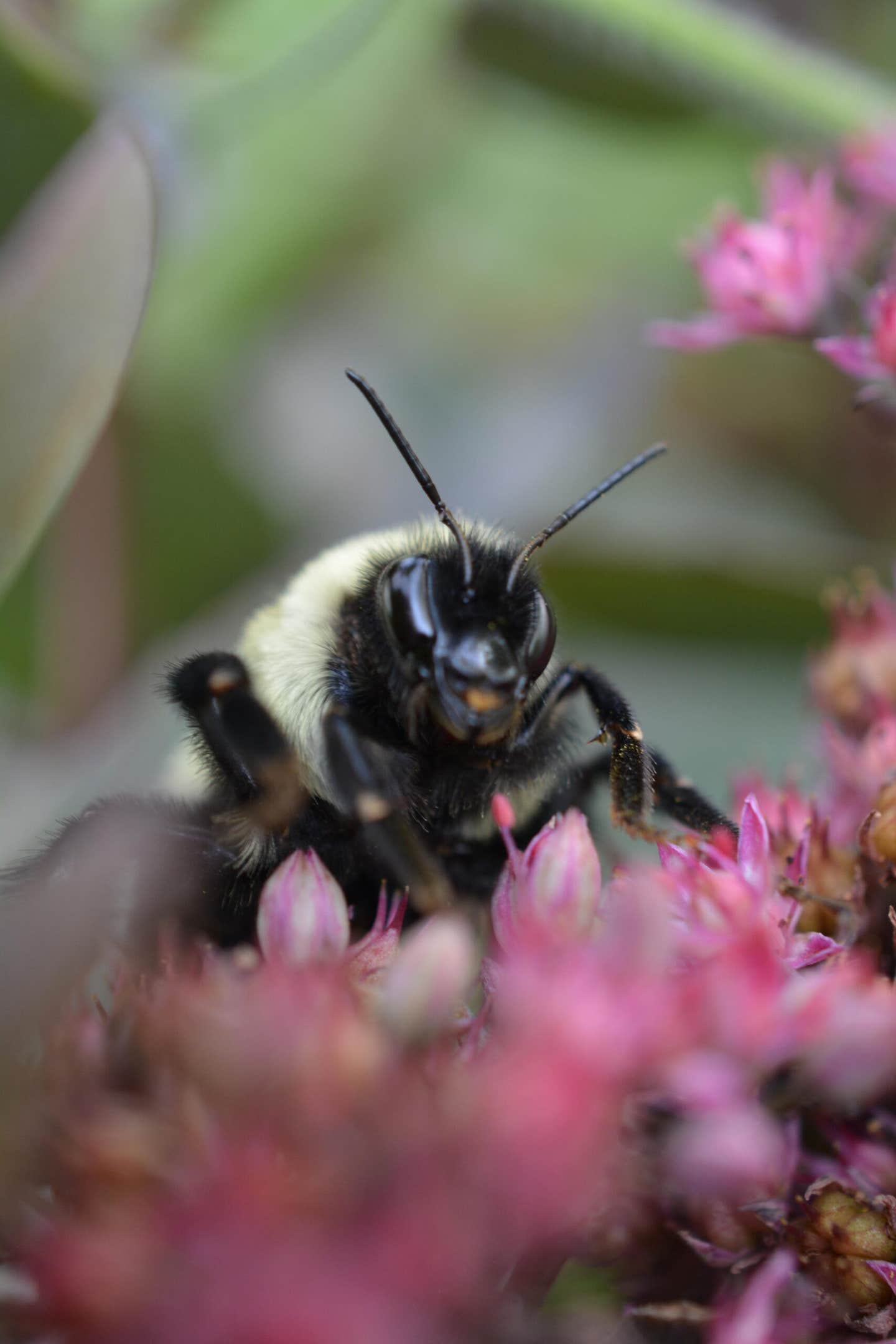
Bumble bee queens can survive over a week underwater using a combination of metabolic depression and anaerobic survival strategies. (CREDIT: Lucas Borg-Darveau)
Spring flooding was supposed to be a death sentence for them. Buried underground, dormant, with no way to surface, bumble bee queens caught in rising water seemed like straightforward casualties of a seasonal hazard. The assumption made sense. They are large, terrestrial insects with no obvious business being submerged for days at a time.
That assumption was wrong.
New research from the University of Ottawa shows that bumble bee queens can survive being completely underwater for more than a week. Afterward, they emerge and recover as though nothing particularly unusual had happened.
The findings, led by Professor Charles-Antoine Darveau of the Department of Biology, reveal a layered physiological strategy that no one had previously documented in this species. It is one that may matter more as climate patterns continue to shift.
Underground, and Then Underwater
Every autumn, mated bumble bee queens burrow into shallow soil to wait out winter. This state, called diapause, is something like hibernation. During this time the queen's metabolism drops dramatically, her body running on stored reserves until spring warmth cues her to emerge and establish a new colony.
The problem is that those shallow underground chambers, often just a few centimeters deep, sit directly in the path of spring snowmelt and heavy rain. Until recently, it was generally assumed that queens caught in a flood simply drowned.
Postdoctoral researcher Sabrina Rondeau had already challenged that assumption, finding that queens could survive submersion for over a week without obvious harm. What Darveau's team wanted to understand was how.
"This study started from a discussion with my co-author," Darveau explained. "Her recent findings showed that these queens can survive submersion for over a week, which is extraordinary for a terrestrial insect. We wanted to understand how that's even possible."
To find out, the team placed queens into laboratory-induced diapause for up to 22 weeks. Then they submerged them underwater for eight days while monitoring their metabolic activity and biochemical changes. Honours student Skyelar Rojas also contributed to the research.
Two Strategies, Running at Once
The first part of the answer involves the diapause state itself. A queen's metabolism during overwintering is already suppressed far beyond what cold temperatures alone would explain. In fact, it drops to less than one percent of what she would burn during active flight. That extraordinarily low energy demand gives her more room to work with when oxygen becomes scarce.
But the queens weren't simply waiting passively. Even while fully submerged, they continued exchanging gases through the water, effectively breathing underwater at a very slow rate. As evidence, oxygen levels in the submersion water dropped measurably over eight days compared to control tubes with no queen present. This confirmed the queens were actively consuming dissolved oxygen throughout.
"The first key is metabolic depression," Darveau said. "Their metabolism is already extremely low during diapause. That low energy demand makes survival possible."
That still wasn't the complete picture. The research team also detected significant buildup of lactic acid in the bees' bodies after submersion. This is a clear sign that the queens were generating energy through anaerobic pathways when aerobic respiration wasn't enough to meet even their minimal needs.
"They're not relying on just one strategy," Darveau said. "They combine underwater gas exchange with anaerobic metabolism. That flexibility is what allows them to survive these extreme conditions."
The Bill Comes Due After
Surviving eight days underwater doesn't come free.
Once the queens were removed from the water, their metabolic rate surged dramatically. It spiked to levels more than ten times higher than normal diapause readings. The elevation held for two to three days before gradually declining. It returned to pre-submersion levels after roughly a week.
That metabolic spike lines up with the clearance of accumulated lactate, essentially the same kind of oxygen debt that a sprinter runs up during an all-out race. The queens were burning through the biochemical backlog left over from their anaerobic activity underground.
"That surge in metabolism coincides with clearing the accumulated lactate," Darveau noted. "It's essentially a recovery phase. After about a week, their metabolism returns to normal diapause levels."
Most queens also regained normal movement during this window, with individuals typically showing full mobility by the second or third day of recovery.
A Resilience That Carries Weight
The stakes here extend beyond curiosity about insect physiology. Bumble bee queens are the sole founders of next year's colonies. A queen that doesn't survive winter doesn't produce workers. She doesn't pollinate crops. The entire downstream output of a colony depends on one insect making it through to spring.
"Bumble bee queens are the founders of future colonies," Darveau said. "If they don't survive winter and early spring, entire colonies are lost."
Spring flooding events are also becoming more frequent and more intense as climate patterns shift. Understanding which queens survive, and why, gives researchers a clearer picture of how bumble bee populations might fare under worsening conditions.
The study does note several open questions. Exactly how the queens manage underwater gas exchange, whether through trapped air acting as a physical gill or some other mechanism, remains to be clarified. The research also didn't test how different water temperatures or oxygen saturation levels might affect survival. The team acknowledges that the absolute limit of submersion tolerance is still unknown.
Practical Implications
The findings carry practical weight for conservation efforts focused on wild pollinators. If flood tolerance is a trait that varies across bumble bee populations or species, it becomes a relevant factor in assessing which groups face the greatest climate risk. Habitat management decisions, including how land near known overwintering areas is drained or modified during spring, could affect queen survival in ways that weren't previously considered.
There's also a broader ecological lesson embedded in the data. A species that looks vulnerable on paper, a dormant terrestrial insect trapped underground by rising water, can carry hidden physiological depth.
Accounting for that depth, rather than assuming the worst, may change how researchers model pollinator population responses to a warming, wetter world.
Research findings are available online in the journal Proceedings of the Royal Society B Biological Sciences.
The original story "Bumble Bee Queens can survive underwater for a week - here's why" is published in The Brighter Side of News.
Related Stories
- Bumblebees use light to tell time, study finds
- Scientists discover the ancient link between bees and the evolution of colors in flowers
- Breakthrough research reveals why bees are increasingly making less honey
Like these kind of feel good stories? Get The Brighter Side of News' newsletter.
Joshua Shavit
Writer and Editor
Joshua Shavit is a NorCal-based science and technology writer with a passion for exploring the breakthroughs shaping the future. As a co-founder of The Brighter Side of News, he focuses on positive and transformative advancements in technology, physics, engineering, robotics, and astronomy. Joshua's work highlights the innovators behind the ideas, bringing readers closer to the people driving progress.