China releases first practical software to keep time on the Moon
A new lunar timekeeping tool from China addresses tiny relativistic effects that could shape future Moon navigation and science.

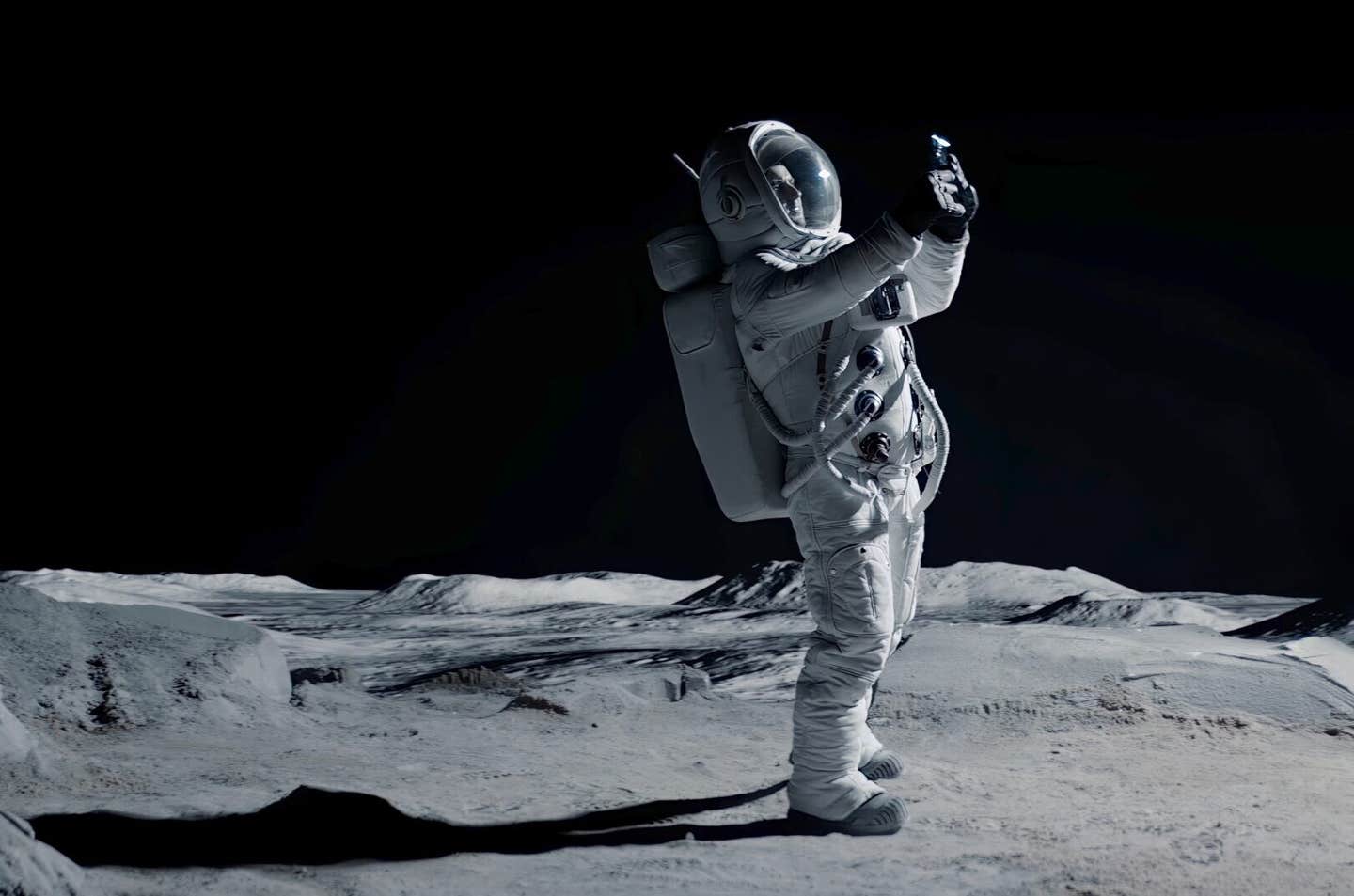
Chinese researchers unveil the first practical lunar timekeeping software to support navigation, landings, and future Moon missions. (CREDIT: Shutterstock)
As missions to the Moon multiply, keeping time there is no longer a theoretical problem. Researchers from the Purple Mountain Observatory in Nanjing have released what they describe as the world’s first practical software for lunar timekeeping. The tool is designed to help spacecraft navigate, land, and operate with extreme precision as global interest in the Moon accelerates.
The work, published in Astronomy and Astrophysics, tackles a subtle but critical issue. Time passes slightly faster on the Moon than on Earth because the Moon’s gravity is weaker. The difference is about 56 millionths of a second per day. That tiny shift, predicted by Albert Einstein’s theory of general relativity, adds up over time and can disrupt navigation systems.
To solve this, the Chinese team developed a detailed model that tracks how lunar time drifts relative to Earth time. They then packaged the model into ready-to-use software called LTE440, short for Lunar Time Ephemeris. The program allows engineers and scientists to compare lunar and Earth time in a single step.
Why lunar time can no longer be ignored
In the past, this problem barely mattered. Lunar missions were rare, short, and mostly isolated. Engineers simply used Earth time and applied mission-specific fixes when needed. That approach worked because few systems had to stay synchronized for long periods.
That situation is changing fast. Multiple spacecraft are expected to orbit, land on, and operate around the Moon at the same time. Human missions are also returning. Under those conditions, relying on custom fixes becomes risky and inefficient.
Jonathan McDowell, a Harvard astronomer and space historian, told The Brighter Side of News that lunar timekeeping is now an engineering necessity. “Differences as small as a microsecond could quickly become significant in navigation systems,” he said, especially when calculations stretch over minutes.
“If you want to use the equivalent of GPS on the moon; which we’ll probably want to do in just a few years from now, especially for precision landing locations; you’ll need to handle this somehow.”
McDowell added that similar efforts are underway in the United States, but he is not aware of another openly available tool. “This emphasizes that China is serious about the moon, and is being quite open about sharing its lunar-related research,” he said.
Turning theory into a working tool
The Purple Mountain Observatory team began with precise data on the Moon’s motion through space. Time differences depend not only on gravity but also on speed. As the Moon orbits Earth and both travel around the Sun, those motions slightly change how fast clocks tick.
Using modern planetary data, the researchers tracked how the gap between lunar time and Earth time evolves. They found their method stayed accurate to within a few tens of nanoseconds even when projected over 1,000 years.
Rather than stopping at theory, the team focused on usability. LTE440 automates calculations that once required deep expertise in relativity and celestial mechanics. Engineers can now convert between lunar and Earth time without building custom models from scratch.
The researchers stress that LTE440 is an early step. Future versions will need to support real-time navigation and networks of lunar clocks. Still, the release marks a shift from abstract planning to practical infrastructure.
Building a lunar reference clock
Earth-based systems already account for time’s uneven flow. GPS satellites, for example, constantly correct for relativistic effects caused by gravity and motion. Those corrections allow phones and vehicles to pinpoint locations within meters.
The Moon now faces a similar challenge. While scientists have defined a lunar coordinate time for reference systems, it is not tied to any physical clock. As missions grow more complex, a practical lunar time scale linked to Earth’s Coordinated Universal Time becomes essential.
In 2024, the International Astronomical Union adopted a framework calling for the Moon to have its own time reference. The Chinese study builds on that effort by offering a concrete numerical solution.
The team set a strict target. To keep daily differences within about 10 nanoseconds, calculations must be accurate to parts in ten trillion. Their tests show LTE440 meets that standard, with errors far smaller than what current missions require.
Demands from future lunar science
Navigation is not the only driver. The Moon offers unique conditions for astronomy. With no atmosphere and little interference, it is an attractive site for advanced radio telescopes.
One promising idea is Earth–Moon very long baseline interferometry. This technique links antennas on Earth and the Moon to create sharper images of distant objects. Success depends on extremely precise timing.
Signals recorded on both bodies must be stamped within better than a microsecond. To allow for instrument noise, the underlying time model must be even more accurate. The study concludes that errors in a lunar time ephemeris should be at least one hundred times smaller than observational limits.
LTE440 was built with that margin in mind.
How LTE440 keeps time so precise
Instead of relying on long equations, the researchers used a numerical approach. They based their work on a modern planetary model known as DE440, which tracks the positions and velocities of solar system bodies with high precision.
From that data, they computed how time near the Moon differs from a solar system reference time. The software stores these results in compact files that can be quickly interpolated.
One challenge was long-term drift. Small biases can accumulate over decades. The team separated slow trends from repeating patterns, removed the drift during calculations, and added it back in a controlled way.
They tested the method by changing step sizes and reproducing known Earth time effects. The results matched existing planetary data within a trillionth of a second.
The study also breaks down what affects lunar time most. The Moon’s motion and the Sun’s gravity dominate. Earth, Jupiter, and even distant Kuiper belt objects add smaller effects. Monthly and yearly patterns appear, ranging from milliseconds down to microseconds.
Practical Implications of the Research
As lunar activity increases, reliable timekeeping will support safer landings, smoother navigation, and better coordination between missions. You can expect tools like LTE440 to become part of the backbone for lunar GPS-style systems, surface operations, and communication networks.
For science, accurate lunar time opens the door to advanced radio astronomy and long-term experiments that demand stable timing. It also lays groundwork for international standards, helping different space agencies work from the same clock.
In the long run, clear links between lunar and Earth time will make sustained human and robotic presence on the Moon more practical. This research moves lunar exploration from isolated missions toward a shared, time-synchronized environment.
Research findings are available online in the journal Astronomy & Astrophysics.
Related Stories
- Time moves faster on Mars than on Earth, study finds
- Reading a quantum clock takes more energy than operating it
- The world's first nuclear clock can detect changes in nature’s fundamental constants
Like these kind of feel good stories? Get The Brighter Side of News' newsletter.

Joseph Shavit
Writer, Editor-At-Large and Publisher
Joseph Shavit, based in Los Angeles, is a seasoned science journalist, editor and co-founder of The Brighter Side of News, where he transforms complex discoveries into clear, engaging stories for general readers. With vast experience at major media groups like Times Mirror and Tribune, he writes with both authority and curiosity. His writing focuses on space science, planetary science, quantum mechanics, geology. Known for linking breakthroughs to real-world markets, he highlights how research transitions into products and industries that shape daily life.