DNA breakthrough reveals the hidden life of plant roots
A new DNA-based technique allows scientists to measure plant roots directly from soil, revealing hidden biomass and climate potential.

 Edited By: Joseph Shavit

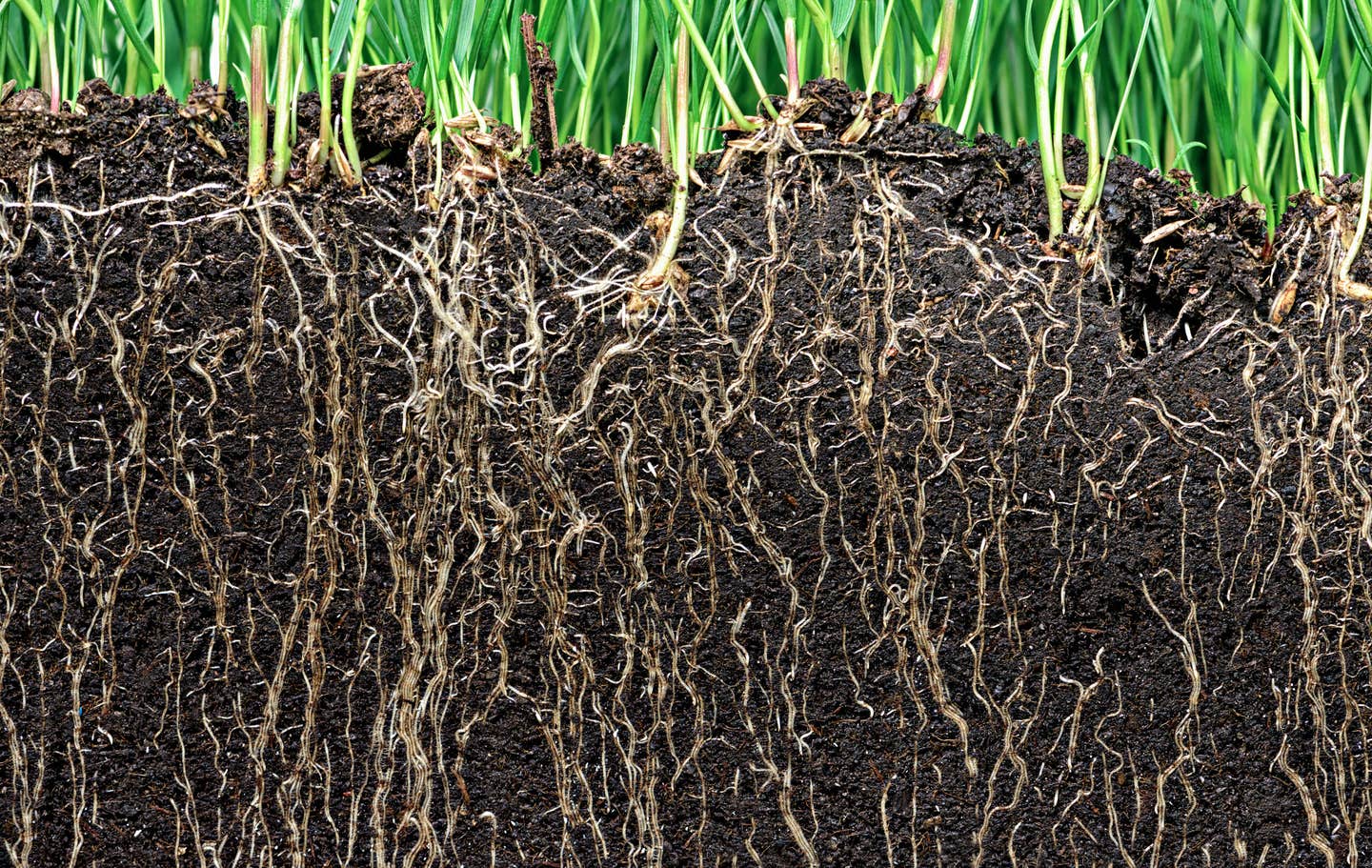
A new DNA method lets scientists measure plant roots underground, opening doors for climate research and smarter farming. (Shutterstock)
You walk through a field of wheat, ryegrass, or clover and notice the sway of stems and leaves. What you cannot see is where most of the action happens. Beneath the soil surface, roots spread, compete, and quietly shape the future of farming and climate science. These underground systems anchor plants, draw in water and nutrients, and lock carbon into the soil. Yet for decades, scientists have struggled to measure them with precision.
Roots matter deeply, but they stay out of sight. That invisibility has made them one of the hardest parts of plants to study. Researchers know roots drive plant health and soil strength, but they have lacked a reliable way to measure how much root material exists and which species it belongs to. Henrik Brinch-Pedersen, a professor at the Department of Agroecology at Aarhus University, compares the challenge to studying ocean life without diving below the surface.
The problem has never been curiosity. The problem has been access.
Why Measuring Roots Has Been So Difficult
For years, studying roots meant dirty hands and long hours. Scientists dug up soil, washed it through sieves, pulled out tangled roots, dried them, and weighed what remained. The process took time and patience. Worse, it often destroyed the finest roots. Those thin strands are the most active parts of a root system. They absorb nutrients and release carbon into the soil.
Because fine roots break easily, traditional methods often miss them. That leads to undercounting root biomass and misunderstanding how plants really behave underground. When multiple species grow together, the challenge grows even larger. Once roots are mixed, it becomes nearly impossible to tell which plant they came from. This gap has limited progress in climate studies, plant breeding, and biodiversity research. Scientists have known roots hold answers, but the tools lagged behind the questions.
A DNA-Based Breakthrough Underground
Researchers at Aarhus University set out to change that. Instead of pulling roots from soil, they turned to genetics. Their method uses droplet digital PCR, known as ddPCR, to detect plant DNA directly from soil samples. The technique breaks a soil sample into tens of thousands of tiny droplets. Each droplet is tested for traces of plant DNA.
At the center of the method is a genetic marker called ITS2. It works like a barcode. Each plant species carries a unique version. By targeting that marker, researchers can identify which species are present and estimate how much root material each contributes.
“It’s a bit like giving the soil a DNA test,” Brinch-Pedersen says. “We can suddenly see the hidden distribution of species and biomass without digging up the whole field.”
Turning DNA Signals Into Root Mass
To make the method reliable, the research team built reference curves. They prepared soil samples with known amounts of roots, extracted DNA, and measured it using ddPCR. This allowed them to link DNA signals directly to root biomass.
They tested the method in semi-field experiments using grasses such as perennial ryegrass, hybrid ryegrass, and cocksfoot. The results were compared with traditional root washing and weighing. The DNA-based approach often detected more root material, especially fine roots that standard methods missed.
The technique also worked in mixed samples. Researchers could tell how much each species contributed underground, even when roots were tightly intertwined. Careful testing confirmed the DNA probes reacted only with their intended targets.
Recognition From the Scientific Community
The work was carried out by Nurbanu Shynggyskyzy, Claus Krogh Madsen, Per L. Gregersen, Jim Rasmussen, Uffe Jørgensen, and Henrik Brinch-Pedersen. The study also drew international attention where experts described it as a major step forward.
The recognition reflects how long the field has waited for a method like this. Root science has often lagged behind studies of leaves and stems. This research helps close that gap.
Roots, Carbon, And Climate Potential
Roots are gaining attention for another reason. They store carbon. When plants grow, they pull carbon dioxide from the air and send some of that carbon into their roots. If conditions are right, that carbon can stay in the soil for decades or longer.
This makes root systems an important part of climate solutions. Unlike machines or fuels, roots work quietly and constantly. Yet without accurate measurements, it has been hard to prove how much carbon different crops store underground.
The new DNA method changes that. It allows scientists to measure root biomass with greater accuracy. That opens the door to documenting carbon storage in ways that were not possible before.
Limits And The Road Ahead
The method is not perfect. Closely related species, such as genetic hybrids, can be hard to separate because their DNA is very similar. Each new species also requires its own DNA probe, which takes time to develop.
Still, the researchers see this as a starting point, not a barrier. Brinch-Pedersen says the key achievement is showing that precise root measurement can be done directly from soil. The next step is expanding the DNA library to include more plants. As the technique develops, it could move from controlled plots into real fields across different soil types and climates.
Practical Implications of the Research
This research offers real benefits beyond the lab. For farmers and plant breeders, it provides a faster way to compare crops and select varieties with stronger root systems. Deeper and denser roots can improve drought resistance and nutrient uptake without lowering yields.
For climate scientists, the method offers a clearer picture of how much carbon crops store underground. That information is critical for building climate-smart farming systems. Ecologists also gain a powerful tool. They can now study how plant species interact belowground and how biodiversity shapes soil health.
Most importantly, the method allows you to finally see what has long been hidden. The underground world of roots is no longer out of reach.
Research findings are available online in the journal Plant Physiology.
The original story "DNA breakthrough reveals the hidden life of plant roots" is published in The Brighter Side of News.
Related Stories
- 3D-printed soil: Never forget to water your plants again
- Incredible 'smart soil' can water and feed itself
- Scientists create space bricks for moon base using microwaves and lunar soil
Like these kind of feel good stories? Get The Brighter Side of News' newsletter.
Rebecca Shavit
Writer
Based in Los Angeles, Rebecca Shavit is a dedicated science and technology journalist who writes for The Brighter Side of News, an online publication committed to highlighting positive and transformative stories from around the world. Her reporting spans a wide range of topics, from cutting-edge medical breakthroughs to historical discoveries and innovations. With a keen ability to translate complex concepts into engaging and accessible stories, she makes science and innovation relatable to a broad audience.