Event Horizon Telescope captures magnetic turbulence flickering at the edge of black hole M87*
New EHT images show M87*’s ring stays steady while polarized light fades, then flips, hinting at changing magnetic fields.

 Edited By: Joseph Shavit

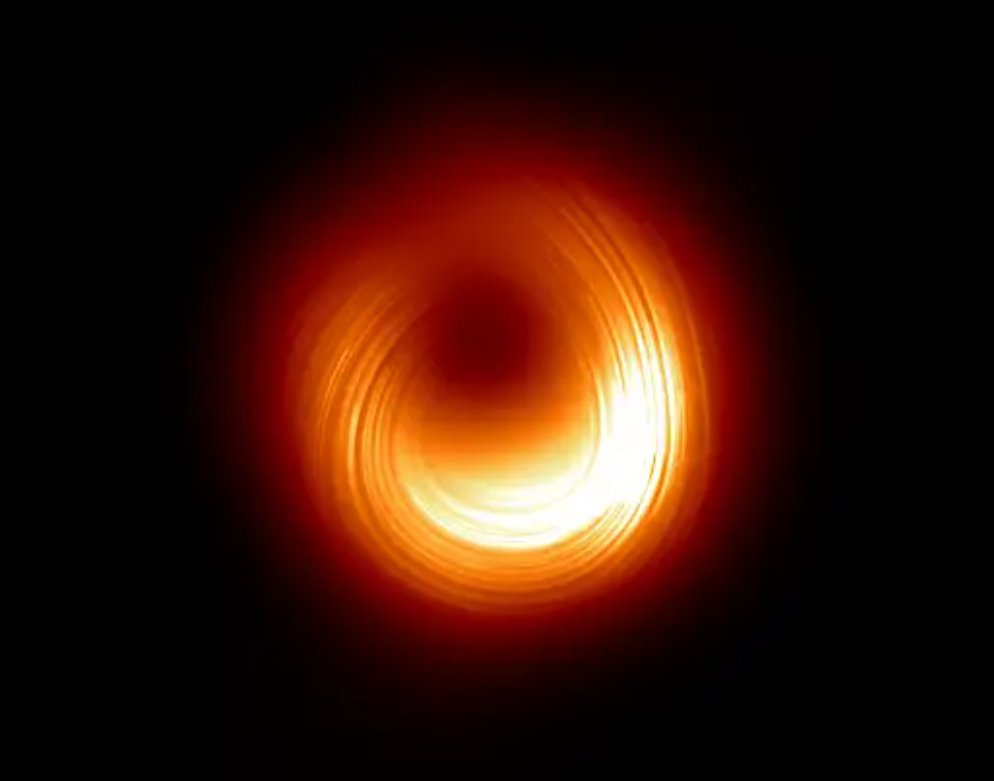
EHT researchers tracked polarized light around M87* across years, finding a stable ring but dramatic changes in magnetic patterns. (CREDIT: EHT Collaboration)
For a few brief nights each year, you get a rare chance to watch a monster blink.
The Event Horizon Telescope collaboration has released new, detailed views of M87*, the supermassive black hole at the heart of the galaxy M87. The images do not just show a glowing ring. They also track polarized light, a clue that reveals how magnetic fields behave near the edge of the black hole.
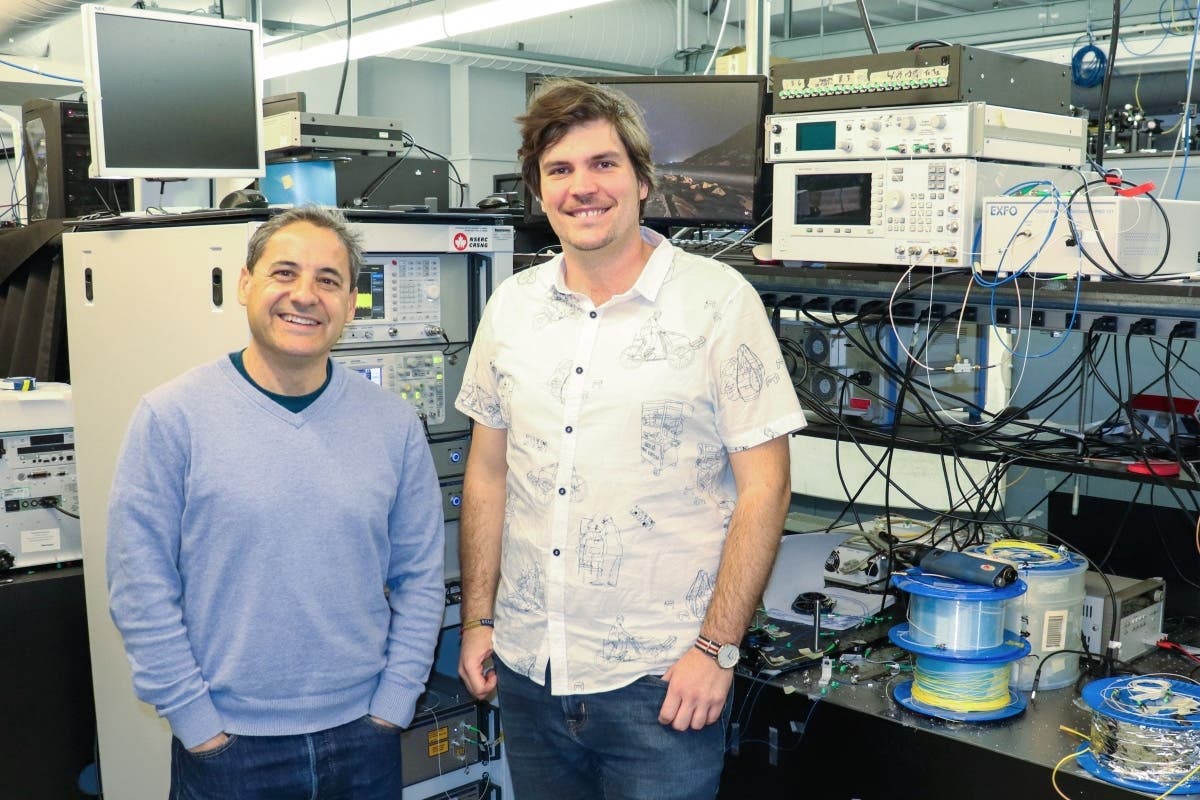
Researchers from the University of Waterloo and the Perimeter Institute for Theoretical Physics helped construct and validate the images. What they found is both steady and startling. The size of the ring stays consistent over time. Yet the polarization pattern, the “fingerprint” of magnetism, changes sharply from year to year.
That shift suggests a turbulent environment close to the event horizon. It also raises a simple question that is proving hard to answer: why did the magnetic signal fade, then flip?
A Ring That Holds Steady, Even as the Scene Shifts
In 2017, the EHT saw a spiraling polarization pattern near M87*. That spiral signaled a large-scale, twisted magnetic structure. It supported long-held ideas about how black holes shape their surroundings.
Then the story took a turn. In 2018, the polarization all but disappeared. By 2021, the faint remaining signal began to spiral the other way.
The changing pattern hints at a system that may evolve faster than expected. It suggests the magnetized plasma near the black hole does not sit still. It churns, shifts, and rearranges.
“What’s remarkable is that while the ring size has remained consistent over the years, confirming the black hole’s shadow predicted by Einstein’s theory, the polarization pattern changes significantly,” said Dr. Paul Tiede, an astronomer at the Center for Astrophysics | Harvard & Smithsonian. Tiede is also a graduate of Waterloo and Perimeter. “This tells us that the magnetized plasma swirling near the event horizon is far from static; it’s dynamic and complex, pushing our theoretical models to the limit.”
Even with that steady ring, the changing polarization makes the system feel alive. It is like watching the same stage, with a different play each night.
Magnetic Clues, and a Jet That Refuses to be Ignored
Popular stories paint black holes as perfect traps. Matter falls in, and nothing returns. M87* keeps complicating that picture.
Near this black hole, energetic material can get caught in a powerful electromagnetic field. That field can help fling material outward, feeding a jet that begins near the event horizon.
That jet eventually reaches about 90 percent the speed of light. The new polarization results offer a first, cautious hint of a link between the bright ring of plasma and the engine at the jet’s base.
You can feel the stakes in that connection. If the magnetic field near the ring changes, it may change how the jet turns on, steadies itself, or surges. That possibility puts new pressure on the models that try to explain how black holes power jets.
The EHT team returns to M87* again and again for that reason. Each year can capture a new moment in a long, violent process.
Sorting Signal From Noise in a Difficult Image
Turning EHT data into an image is not like taking a normal photograph. The network stitches together signals from far-flung telescopes. Then teams test what features are real and what might come from the instruments.
“Black holes hold their mysteries tight, but we are now prying the answers from their grasp,” said Dr. Avery Broderick, a professor in the Department of Physics and Astronomy at Waterloo, and associate faculty at Perimeter Institute. “Our team at Waterloo was central to reconstructing the images from the EHT data, and determining what we can be confident is real and what could be merely an instrumental artefact. We have been at the forefront of understanding how EHT images, and especially their evolution, can reveal the astrophysical dramas unfolding on gravity’s most extreme stage.”
That caution matters more when the signal is weak. In 2018, polarization nearly vanished. In 2021, it returned only as a small remnant.
A small remnant can still be real. It can also be fragile. That is why the team stresses validation, especially when comparing different years.
Still, the broad pattern is hard to ignore. The polarization did not just dim. It changed character.
The Black Hole Surroundings Are Not Simple
The stable ring size strengthens a famous idea. Physicists sometimes say black holes “have no hair.” It is a metaphor, not a literal claim. It means a black hole can be described by only a few basic traits, such as mass, spin, and charge.
Broderick points out the contrast. The black hole itself may allow clean predictions. The material around it can be messy.
“It’s one of the reasons why they’re so interesting as gravitational objects. You can make very crisp, clear predictions, and all the astrophysical phenomena don’t seem to matter a lot,” Broderick said. “But the stuff around it can have hair, and these magnetic fields are a striking example. We’ve had a clear sense for what kind of magnetic hairstyles should be allowed for a long time, but now we’re seeing that, like with humans, you can get a lot of different hairstyles over four years.”
That “hair” is the moving, magnetized plasma. It circles close to the event horizon. It glows in radio light. Its polarization carries information about the magnetic field that shapes it.
In 2017, the field looked organized enough to form a spiral. In 2018, that order faded. In 2021, the spiral returned with a reversed direction.
Astrophysicists now face a deeper problem than a simple flip. They need to explain what physical change could erase polarization, then restore it differently.
Broderick has been thinking about this problem for a long time. In 2009, he wrote a paper proposing that imaging M87* could reveal black hole physics through magnetic field variability. That idea has now become a multi-year effort, with real data and real surprises.
Practical Implications of the Research
These new images give researchers a time-lapse view of magnetism under extreme gravity. That matters because magnetic fields likely help shape how black holes swallow matter and launch jets. As the EHT collects more years of data, scientists can test which jet models survive contact with reality. They can also learn what makes a magnetic structure stay organized, or fall apart.
The work also strengthens confidence in the stable features of M87*. The consistent ring size supports predictions tied to Einstein’s theory. That stability helps researchers treat the ring as a reliable anchor. With that anchor, they can focus on the changing parts, like polarization, without doubting the whole picture.
Over time, better images and longer records can help connect near-horizon activity to what happens farther out in the jet. That connection could sharpen your understanding of how galaxies evolve, since jets can affect gas, dust, and star formation on huge scales. The payoff is not a gadget or a medicine. It is a clearer map of how the universe builds and reshapes itself.
Research findings are available online in the journal Astronomy and Astrophysics.
The original story "Event Horizon Telescope captures magnetic turbulence flickering at the edge of black hole M87*" is published in The Brighter Side of News.
Related Stories
- JWST discovers a massive primordial black hole that may have formed before stars
- Astronomers watch a supermassive black hole X-ray flare ignite an ultra-fast galactic wind
- Three black holes light up at once in rare three-galaxy collision
Like these kind of feel good stories? Get The Brighter Side of News' newsletter.
Joshua Shavit
Writer and Editor
Joshua Shavit is a NorCal-based science and technology writer with a passion for exploring the breakthroughs shaping the future. As a co-founder of The Brighter Side of News, he focuses on positive and transformative advancements in technology, physics, engineering, robotics, and astronomy. Joshua's work highlights the innovators behind the ideas, bringing readers closer to the people driving progress.