Fossil tracks in Italy record a turtle stampede from 80 million years ago
Fossil tracks on Italy’s Adriatic cliffs record a turtle stampede from 80 million years ago, likely triggered by an earthquake.

 Edited By: Joseph Shavit

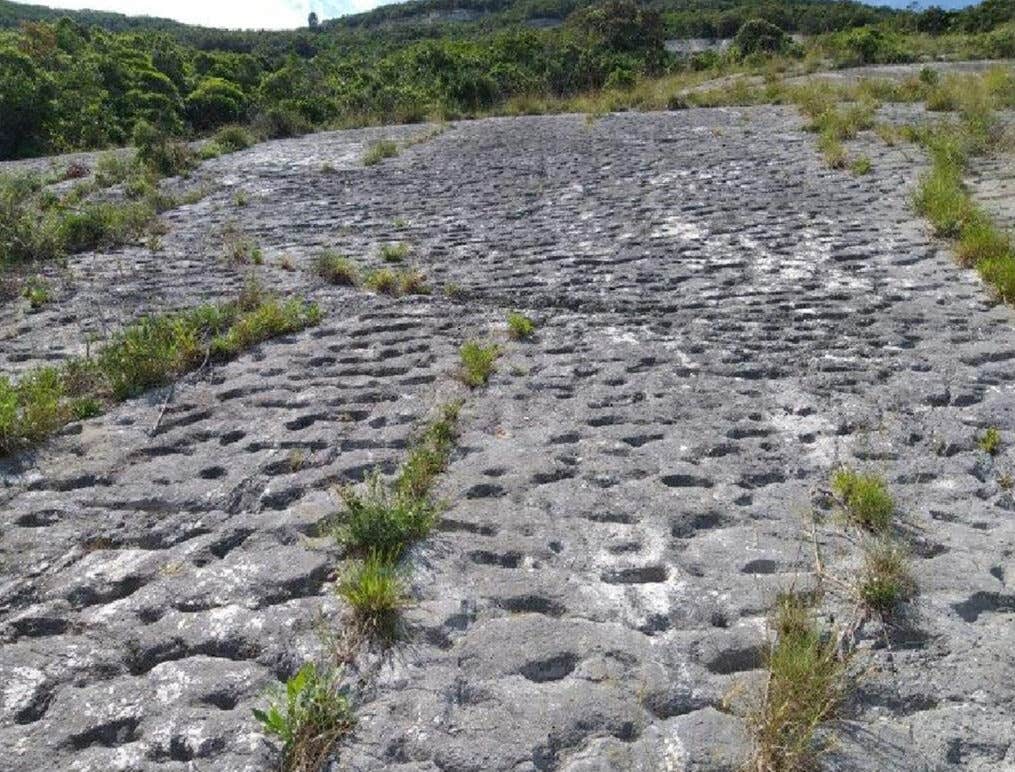
Climbers found ancient footprints on Italy’s cliffs. Scientists say they show a panicked turtle rush during an earthquake, preserved for 80 million years. (CREDIT: Cretaceous Research)
In the spring of 2019, free climbers scaling the risky cliffs of Monte Cònero on Italy’s Adriatic coast noticed something that stopped them cold. High on pale slabs of limestone that tilt toward the sea, the rock was pocked with strange, curved shapes. They looked like footprints. Hundreds of them.
The climbers were not researchers, but they sensed the marks mattered. The slabs, nicknamed “The Sail Slabs,” sit inside Cònero Regional Park, about five miles south of Ancona. The area is closed to the public due to falling rock. Still, the team reached the spot by rope and took photos.
Those images soon reached a fellow climber trained in geology. He returned with a research partner and a drone. From above, the full picture emerged. One slab alone measured about 10 by 20 meters and held an ocean of impressions. Most curved southwest. Some looked like shallow bowls. Others resembled the sweep of flippers through soft mud.
A Snapshot from 80 Million Years Ago
Back in the lab, scientists from the Norwegian University of Science and Technology and the University of Urbino cut paper-thin slices of stone and studied them under microscopes. The footprint layer turned out to be deep-sea limestone, built from tiny plankton shells that settled slowly on the ocean floor. The pace was glacial, about 10 millimeters every thousand years.
That matters because footprints rarely survive in deep water. Currents, worms, and other animals usually erase them quickly. Here, they lasted because something sudden happened.
Just above the prints sat a thicker, different rock. It showed streaks and layers that pointed to a fast, violent deposit. Geologists identified it as a turbidite, a blanket of sediment laid down by a roaring underwater flow.
The story clicked into place. Animals crossed soft seabed. Soon after, a surge of sediment raced across the floor and sealed their tracks in minutes or hours. The timing was perfect and tragic.
Tiny fossils within the rock, including the plankton Globotruncanita elevata, pinned the age to the early Campanian, roughly 80 million years ago. Central Italy lay beneath a deep sea then, perhaps a mile down in places. The site sat in the bathyal zone, a dark realm far from shore.
Who Could Leave Marks So Deep?
Fish were the first suspects. Then they were dismissed. Fins do not press into mud like feet or flippers.
That left marine reptiles, the giants of Cretaceous seas. Three groups fit the time and place: long-necked plesiosaurs, dragon-like mosasaurs, and sea turtles. Bones from these animals appear elsewhere in Italy. At Monte Cònero, only a single mosasaur tooth has surfaced. No turtle shells. No plesiosaur ribs.
Footprints, however, do not need skeletons to tell their tale.
The shapes held clues. Many marks were arched, as if a flipper brushed the bottom while the body hovered above. That differs from the deep body drags turtles leave on beaches. Modern turtles swimming low can scuff the seafloor with flipper tips or tail, leaving similar swirls.
Other fossils back this up. In China, trackways from a marine reptile called a nothosaur show repeated patterns left underwater. In South Africa, fossil turtles left trails near ancient shores.
The Monte Cònero marks look like they came from swimmers, not walkers. That points strongly to sea turtles.
The numbers add weight. On the main slab alone, scientists counted about 1,000 tracks, give or take 300. That is around five per square meter. Similar scars streak nearby rock faces. Lone hunters like mosasaurs would not leave this many signs. Herd behavior would.
The Day the Sea Shuddered
Why would scores of turtles surge together across the seafloor?
The answer may be earthquakes.
Long ago, Monte Cònero sat near a massive underwater slope. The early Campanian was a restless time. Faults cut through the crust. Slips could unleash submarine landslides and dark clouds of sediment.
The researchers believe a strong quake shook a shallow platform where turtles likely fed. Startled and confused, a group of them bolted toward deeper water. As they skimmed the mud, their flippers scratched the surface.
Then, as if on cue, a powerful flow swept in and buried their escape route. The same quake may have set it in motion.
The region’s rocks tell the same story. A giant underwater slide once scraped away millions of years of stone, leaving a gap. New layers later blanketed the scar, including the footprint bed.
This happened during the Early Campanian Event, a brief cold snap tied to climate shifts and perhaps a blow from space. Sea levels changed. Pressure built underground. Quakes may have grown more frequent.
A Rare Window into Panic
Deep-sea footprints may be the rarest of fossils. Here, they appear in great number and in sharp relief. Unlike scattered bones, these marks capture motion. They show fear.
The study, published in Cretaceous Research, admits some doubt remains. No shells confirm turtles. No bones seal the case. One day, a fossil may settle the debate.
For now, the slabs offer something rare. They preserve behavior. You can see a crowd in flight. You can sense the chaos.
What began as a climber’s hunch grew into a scientific find. Written in stone is a moment when the ocean jolted and ancient creatures fled. Eighty million years later, the panic still ripples across the rock.
Practical Implications of the Research
These findings push scientists to rethink the deep sea as a place where fleeting moments can fossilize. They also show how earthquakes shape life, not just land.
The work may help researchers connect tracks and bones across continents, improving models of ancient animal behavior.
It also offers insight into how modern sea life might respond to sudden shocks, from quakes to underwater landslides, which matter as oceans grow busier with cables, drilling, and shipping.
Research findings are available online in the journal Cretaceous Research.
Related Stories
- Rare Antarctic fossil discovery has rocked scientific understanding of ancient marine reptiles
- Anacondas became giants long before humans walked the Earth
- More Than 800 Baby Turtles Safe Thanks To Quick Thinking, Little Innovation
Like these kind of feel good stories? Get The Brighter Side of News' newsletter.
Mac Oliveau
Writer
Mac Oliveau is a Los Angeles–based science and technology journalist for The Brighter Side of News, an online publication focused on uplifting, transformative stories from around the globe. Passionate about spotlighting groundbreaking discoveries and innovations, Mac covers a broad spectrum of topics including medical breakthroughs, health and green tech. With a talent for making complex science clear and compelling, they connect readers to the advancements shaping a brighter, more hopeful future.