Humans are born musical, study finds
New research argues humans possess an innate biological capacity for music, visible even in newborn brain responses.

 Edited By: Joseph Shavit

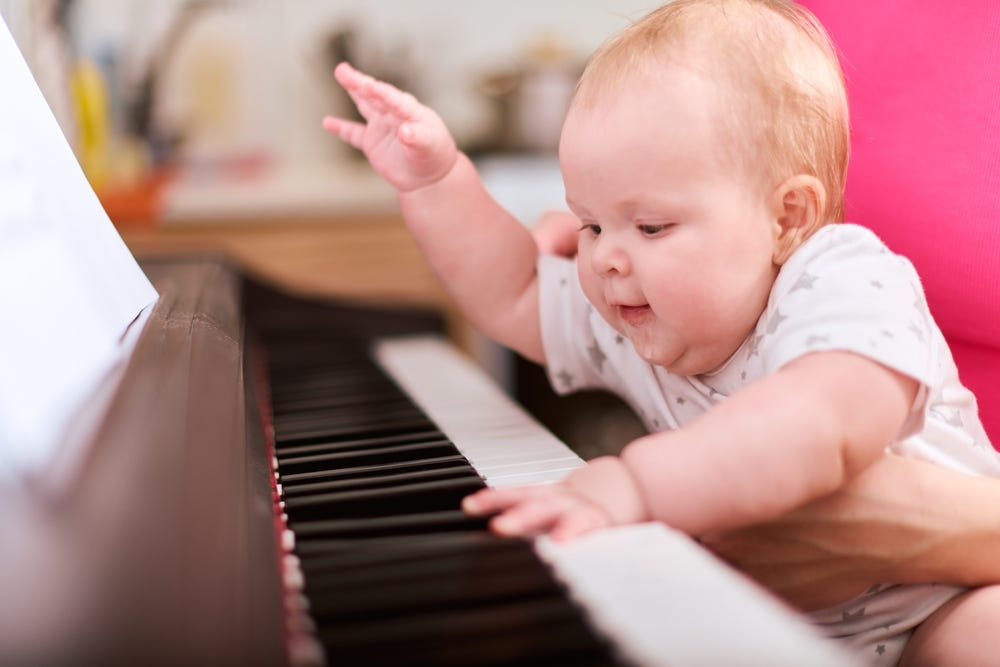
Research suggests humans may be biologically wired for music, with musical abilities appearing in infancy and across cultures. (CREDIT: Shutterstock)
A newborn cannot speak, read, or walk. Yet moments after entering the world, the infant brain already responds to rhythm and melody.
Researchers have found that babies detect patterns in timing and pitch almost immediately. Long before language develops, the human brain begins organizing sound in ways that resemble the foundations of music.
That observation sits at the center of a growing scientific argument. Humans may not simply enjoy music as a cultural pastime. Instead, many scientists now believe people possess an innate biological capacity for it.
University of Amsterdam music cognition professor Henkjan Honing describes how two decades of research across neuroscience, psychology, genetics, and animal cognition have reshaped how scientists think about music’s origins. The key shift, he argues, is moving attention away from music as an art form and toward “musicality,” the biological capacity that allows humans to perceive, produce, and enjoy structured sound.
“For much of the twentieth century, people thought studying the evolution of music was pure speculation,” Honing said. “Because music can’t be found in the fossil record, many assumed we could never investigate it scientifically. But that view is now outdated.”
Evidence from the earliest stages of life
One of the strongest clues comes from infancy.
Studies show newborns discriminate between rhythmic patterns and show preferences for certain melodic contours. They also form expectations about timing and pitch long before they understand words.
“These abilities emerge spontaneously,” Honing said. “Infants respond to rhythm and melody without being taught. That strongly suggests we are born with biological predispositions for musical structure.”
Children continue to display an intuitive sense of musical organization as they grow. Across cultures, young listeners recognize rhythmic groupings and melodic patterns even when exposed to unfamiliar musical traditions.
Researchers have also noticed recurring features across musical cultures worldwide. Systems that differ widely in style often rely on similar pitch intervals, rhythmic constraints, and melodic shapes. Scientists sometimes describe these recurring features as “statistical universals.”
“These similarities are unlikely to be accidents,” Honing said. “They point to shared cognitive biases, ways our brains naturally organize sound.”
Looking for music’s evolutionary roots
To understand where these abilities came from, scientists increasingly look beyond humans.
Comparative cognition research examines how other species perceive and respond to patterned sound. The goal is to identify which elements of musicality might be ancient and which appear uniquely human.
“If a musical trait is found in humans and other primates, it likely existed in our common ancestor,” Honing explained. “If we see similar traits in distantly related animals like birds, that suggests evolution arrived at similar solutions independently.”
Experiments with nonhuman primates offer one example. Trained macaque monkeys can adjust tapping patterns to complex human music under controlled laboratory conditions. The behavior hints at neural mechanisms that support rhythm perception and synchronization.
Scientists caution that producing sound alone does not demonstrate musical cognition. A songbird may sing complex sequences, but researchers must test what the animal actually perceives or prefers before drawing conclusions about its mental processing.
Comparative experiments focus on what animals can discriminate, generalize, or learn about sound patterns. Those results help scientists map how components of musicality might have evolved.
Honing describes the process as a “multicomponent hypothesis.” Musicality, he argues, is not a single trait but a mosaic of abilities such as beat perception, pitch processing, and emotional response. Each element may have followed its own evolutionary path.
Music and language may follow different paths
For decades, many scientists assumed music emerged as a side effect of language.
Growing evidence challenges that assumption.
Brain imaging research shows that music and speech rely partly on different neural pathways. Clinical observations support that separation. Some patients with severe aphasia lose language abilities but retain musical skills. Others with congenital amusia struggle to perceive musical pitch while their language abilities remain intact.
“Music is not just language with decoration,” Honing said. “The evidence increasingly suggests that musicality is an ancient biological capacity, possibly predating language itself.”
Comparative biology offers additional clues. Songbirds and marine mammals produce elaborate vocal displays with rhythmic and melodic structure despite lacking language systems. Such behaviors suggest some components of musicality can emerge independently of speech.
Rather than evolving from scratch, musicality may have formed by combining older neural systems already present in the brain.
“Musicality may have arisen by bringing together perceptual, motor and emotional building blocks in new ways,” Honing said.
A shift in how scientists study music
The study of musicality now sits at the intersection of neuroscience, developmental psychology, genetics, and evolutionary biology.
Researchers examine how organisms detect patterns, perceive beats, and experience pleasure from structured sound. Advances in genomics are also beginning to identify genes linked to auditory processing, rhythm sensitivity, and vocal learning.
The field has moved far beyond earlier debates about whether music could be studied scientifically at all.
“The study of musicality has moved from philosophical debate to empirical science,” Honing said. “We can now ask precise questions about how specific components evolved and how they function across species.”
Research findings are available online in the journal Current Biology.
The original story "Humans are born musical, study finds" is published in The Brighter Side of News.
Related Stories
- Music actively reshapes the brain in real time, study finds
- Music shapes your memory through emotional intensity, study finds
- Soundtracks of our lives: How age shapes musical preferences
Like these kind of feel good stories? Get The Brighter Side of News' newsletter.
Rebecca Shavit
Writer
Based in Los Angeles, Rebecca Shavit is a dedicated science and technology journalist who writes for The Brighter Side of News, an online publication committed to highlighting positive and transformative stories from around the world. Her reporting spans a wide range of topics, from cutting-edge medical breakthroughs to historical discoveries and innovations. With a keen ability to translate complex concepts into engaging and accessible stories, she makes science and innovation relatable to a broad audience.