Infant brains begin visual awareness as early as 2 months of age
Recent neuroscience research shows that our brain’s organization of the visual world occurs much earlier than previously thought by scientists. As early as 2 months of age, babies exhibit clear…

 Edited By: Joseph Shavit

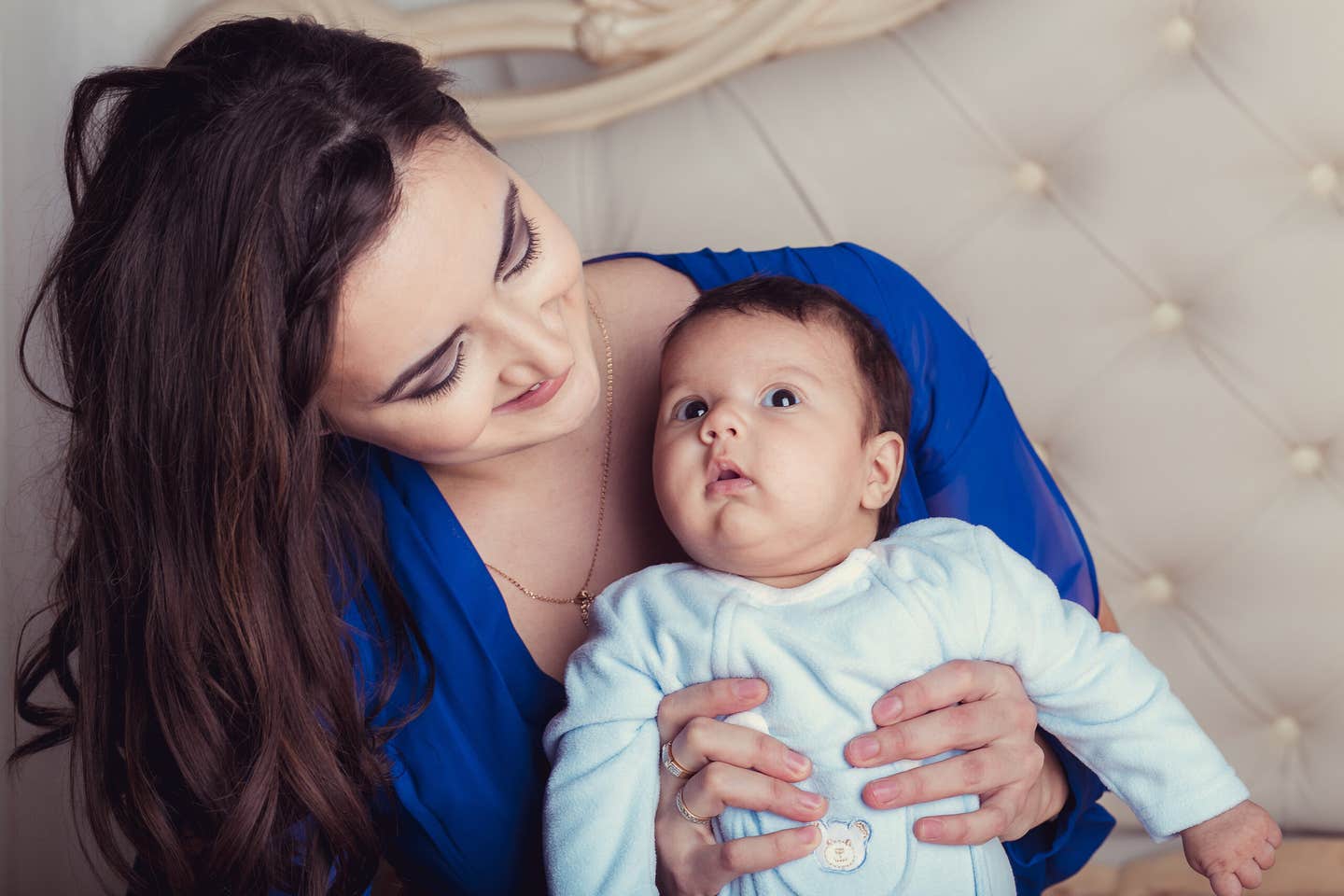
New brain scans show infants can recognize object categories by 2 months, earlier than scientists once believed. (CREDIT: Shutterstock)
Recent neuroscience research shows that our brain's organization of the visual world occurs much earlier than previously thought by scientists. As early as 2 months of age, babies exhibit clear evidence of distinguishing and grouping the objects they see within their environment. These results are documented in a study published this week in Nature Neuroscience.
The study, led by Cliona O'Doherty at Trinity College Dublin, Ireland, examined an international team of researchers who utilized advanced neuroimaging techniques to investigate how infants recognize differences in the images they see and sort them into various collections.
The researchers found that babies of two months old can identify and distinguish between both groups of living versus inanimate objects several weeks sooner than had been reported from other behavior-based studies. This research provides additional insight into how humans develop perceptions of the world and may ultimately assist researchers in gaining a greater understanding of atypical cognitive development.
According to O'Doherty, “It shows that infants are interacting with the world in a way that is much more sophisticated than we think of them.” “When we consider a two-month-old, we never would have conceived of their ability to perceive their environment in such detail.”
Investigating Early Visual Perception
To properly investigate the development of visual perception in newborns, the team took brain scans of 130 babies who were 2 months old. While all the babies stayed still during the scans, a very difficult but critical component to obtaining an accurate picture of the electrical activity in their brains in real time, the babies were able to view images associated with 12 well-known types of items, including animals, plants, and everyday items.
The difference between the electrical activity related to different images was tracked during the scan using functional magnetic resonance imaging. As an example, when an infant viewed a cat, their brain created a different pattern of brain activity than when the infant viewed an inanimate object. As a result, researchers were able to identify the organization of visual information within the infant's brain.
Traditionally, researchers relied on how many seconds an infant gazed at an object to identify their level of interest, a measurement that may be less accurate at younger ages, especially in infants. Brain imaging has allowed researchers to get a more precise and direct view of how visual stimuli are processed in the infant's brain. Previous studies indicated infants have developed basic category recognition capabilities by 3 to 4 months of age. This present research indicates infants can recognize categories as early as 2 months of age.
Early Category Recognition
“Basically, what we've found is that infants have this capacity to create categories based on visual input even at 2 months of age, which has more complexity than was previously believed,” O'Doherty stated. “The neural circuits that allow us to create categories are developing. They are present early.”
The majority of infants participated in the follow-up scan at 9 months of life. Researchers were able to obtain follow-up data on 66 infant subjects, which enabled them to evaluate how visual representations evolved from the first year after birth to 9 months. As expected, distinctions between categories became clearer as infants aged.
By 9 months of age, the brain is better able to distinguish between living things (cats, dogs) and non-living things (toys, books) than at 2 months of age. However, as demonstrated by the presence from 2 months of complex patterns of category recognition, the neural circuits necessary for visual understanding develop very rapidly. Liuba Papeo, a neuroscientist at the National Center for Scientific Research in France who was not part of the research, stated, “The technical achievement and the sample size are definitely impressive.”
Challenges of Infant Brain Imaging
“An obvious challenge is making sure that the infants can comfortably lie in the fMRI scanner while awake, and also making sure that they do not move,” Papeo wrote in an email.
According to O'Doherty, the research team paid a great deal of attention to the comfort of the infants. While inside the fMRI scanner, the infants lay on beanbags, and most of the images were projected above them.
“The images look like they're huge over their heads when they're lying back,” said O'Doherty. “It's almost like seeing an IMAX movie for infants.”
Visual Information Organization In The Brain
The researchers were particularly interested in the ventral visual stream. This group of brain regions aids in the identification of objects in adults through their corresponding stages of the visual system in the adult brain. The ventral visual stream processes visual information in the brain, moving from simple features like edge awareness to complex categories such as animals and tools.
Surprisingly, by 2 months of age, the infants not only exhibited organized activity in the two primary visual regions, early visual areas, but also in the higher ventral regions that help in object recognition in adults. By comparing the brain patterns of infants with those of adults, the researchers found that the patterns were highly similar. In particular, the earlier visual regions displayed similar patterns.
In higher ventral regions, the responses of infants were less developed than those of adults but still exhibited similarities. As an example, the higher ventral regions will likely continue to develop at an increased rate through the end of 9 months. This indicates that the representations of the higher ventral regions are going to become more developed rather than being reorganized completely.
The study also demonstrated that infants, even at 2 months, were capable of grouping objects into meaningful categories that are not simply based on how objects look. For instance, infants could differentiate between animate and inanimate objects and between large and small inanimate objects. Infants were already differentiating between these meaningful categories by using visual features other than only shape and color.
Multiple Pathways To Visual Development
Although not all visual areas developed at the same rate, some regions of the brain, such as the lateral occipitotemporal cortex, have been shown to take longer to develop in infants relative to the many roles they play for adults in object recognition. The fact that some visual regions did not develop in the same manner suggests that visual development does not necessarily follow a linear, hierarchical process.
The findings therefore suggest multiple overlapping developmental pathways. The emergence of some complex representations occurs early, while the emergence of others may take much longer to develop.
Additional Comparisons With Artificial Models
To further examine this issue, the researchers compared the brain data of infants with those of trained versus untrained artificial neural networks dedicated to object recognition. Even at 2 months of age, the brain data of infants more closely resembled fully developed models as opposed to the untrained models.
In addition, the models trained without the use of labeled images, using a self-guided learning technique, matched the brain data of the infants very closely.
The results provide strong evidence that infants learn visual representations by detecting shared patterns and regularities from visual experiences without utilizing explicit instruction.
Research findings are available online in the journal Nature Neuroscience.
Related Stories
- Babies exposed to dogs may have lower risk of asthma, study finds
- Babies can learn words with context clues, study finds
- Why some babies walk early and others late: It’s in their genes
Like these kind of feel good stories? Get The Brighter Side of News' newsletter.
Hannah Shavit-Weiner
Medical & Health Writer
Hannah Shavit-Weiner is a Los Angeles–based medical and health journalist for The Brighter Side of News, an online publication focused on uplifting, transformative stories from around the globe. Passionate about spotlighting groundbreaking discoveries and innovations, Hannah covers a broad spectrum of topics—from medical breakthroughs and health information to animal science. With a talent for making complex science clear and compelling, she connects readers to the advancements shaping a brighter, more hopeful future.