Introducing the world’s first production motorcycle powered by solid-state batteries
A Finnish startup says its electric motorcycle is the first to use solid-state batteries, promising longer range and faster charging.

 Edited By: Joseph Shavit

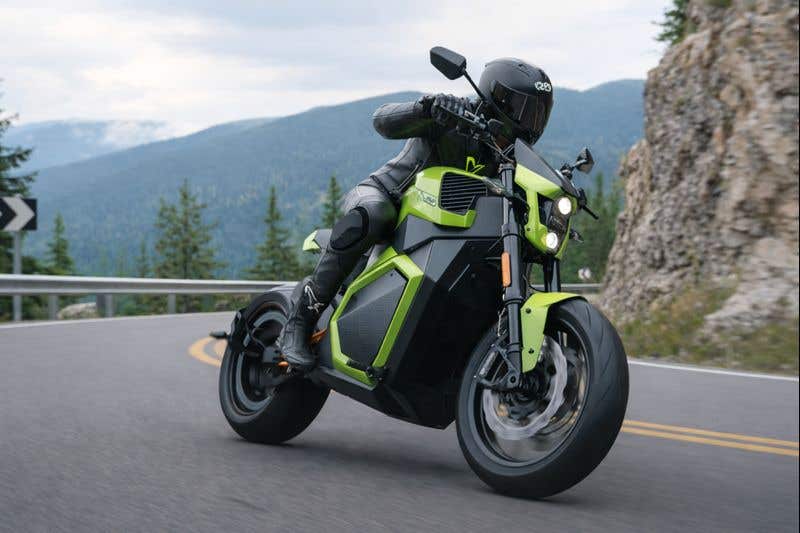
A Finnish electric motorcycle maker says it is bringing solid-state batteries to production vehicles, years ahead of major automakers. (CREDIT: Verge Motorcycles)
A small Finnish electric motorcycle maker is making one of the boldest claims the electric vehicle world has heard in years. Verge Motorcycles says it is preparing to deliver the world's-first production motorcycle powered by a solid-state battery, a technology long described as the future of electric transport.
The company, based in Finland, developed the new battery system with Donut Lab, a technology firm founded by the same team behind Verge. Together, they say the battery will debut in an updated version of the Verge TS Pro, with customer deliveries expected in early 2026. If the claim holds, it would mark the first time a solid-state battery reaches consumers in any vehicle.
Solid-state batteries replace the liquid electrolyte used in today’s lithium-ion cells with a solid material. Researchers and automakers have pursued the technology for years because it promises longer range, faster charging, and improved safety. Despite frequent announcements from major automakers, production timelines have repeatedly slipped.
Verge and Donut Lab argue their approach skips the concept phase entirely. Instead of prototypes or test vehicles, they say the TS Pro is headed straight to customers.
From Research Promise to Production Claims
Electric vehicle makers from Toyota to Volkswagen have described solid-state batteries as a breakthrough still years away. Verge’s announcement stands out because of its timing and its scale. Rather than previewing future plans, the company says its battery is already production-ready.
There has been real progress across the battery sector in the past 18 months, making commercial use more plausible. Even so, the idea that a motorcycle startup could beat global automakers to market has raised eyebrows across the industry.
Verge has already been producing the TS Pro since 2023 and unveiled a second-generation model at the 2025 EICMA motorcycle show. What the company did not reveal until a joint announcement at CES was that the latest version would carry Donut Lab’s solid-state battery. Because Verge already used Donut Lab’s hubless rear motor and electronics, the transition required fewer design changes.
The two companies’ shared origins help explain their close collaboration. Marko Lehtimäki, who helped found Verge, also launched Donut Lab. That connection may have allowed them to quietly develop the technology without public demonstrations or early teasers.
What the Verge TS Pro Promises
According to Verge, the solid-state battery transforms the TS Pro’s real-world usability. The company claims a maximum range of up to 370 miles on a single charge with an extended-range pack. That figure nearly doubles the range of many current electric motorcycles and rivals gas-powered touring bikes.
Charging speed is another focus. Verge says the TS Pro can gain about 186 miles of range in just 10 minutes when connected to a high-power charger. The company claims the bike can reach 80 percent charge in that time, assuming access to a 200-kilowatt fast charger.
Performance numbers remain unchanged. The TS Pro still delivers 1,000 newton-meters of torque and accelerates from zero to 62 miles per hour in 3.5 seconds. Donut Lab also updated the bike’s signature hubless motor, reducing its weight by about 50 percent while keeping the same output.
Ville Piippo, chief technology officer at Donut Lab, says the technology is ready now, not years from now.
“We are now ready to bring truly exceptional technology to the electric mobility market,” Piippo said. “Our battery technology can be used in all types of vehicles, from motorcycles and passenger cars to trucks, robotics and stationary energy storage.”
Why Solid-State Batteries Matter
Beyond range and charging, Donut Lab highlights safety and durability. Solid-state batteries are not prone to thermal runaway, a failure mode linked to fires in lithium-ion cells. The company says its batteries remain stable across extreme temperatures and deliver 99 percent of their power at minus 22 degrees Fahrenheit and 212 degrees Fahrenheit.
Donut Lab also claims an unusually long lifespan. Traditional lithium-ion batteries often last between 1,000 and 1,500 charge cycles, with high-end versions reaching about 5,000. Donut Lab says its solid-state cells can handle up to 100,000 charging cycles and should last the life of the vehicle without major loss of range.
Revealed to The Brighter Side of News at the 2026 CES show in Vegas, DL representatives said the new lithium-ion battery unit delivers an energy density of 400 Wh/kg.
The battery unit also shows minimal capacity loss over its lifespan, having been tested through 100,000 charge–discharge cycles and across temperatures from minus 30 to above 100 degrees Celsius, while retaining 99 percent of its capacity with no signs of ignition or degradation.
The company also emphasizes environmental and supply benefits. Its batteries rely on widely available elements, which could allow manufacturing in multiple countries. That flexibility could reduce costs and avoid tariffs tied to overseas production.
Still, skepticism remains common in the battery world. Countless solid-state announcements over the past decade have promised breakthroughs that never reached mass production. Some observers argue Verge’s range figures likely rely on ideal urban conditions and generous testing cycles.
Verge acknowledges the doubts but says it deliberately waited until production was underway before making its announcement. The company says real-world testing by riders will soon determine whether its claims hold up.
Related Stories
- Airwolf takes off: The 140 mph flying motorcycle is here
- Skyrider X1: The flying motorcycle that could redefine personal travel
- World's Fastest Formula 1-Inspired Motorcycle Can Break 400 KM/H
Like these kind of feel good stories? Get The Brighter Side of News' newsletter.
Shy Cohen
Writer