JWST discovers a massive primordial black hole that may have formed before stars
JWST found a huge early black hole with few stars. New simulations show a primordial seed could explain the odd system.
 Edited By: Joshua Shavit

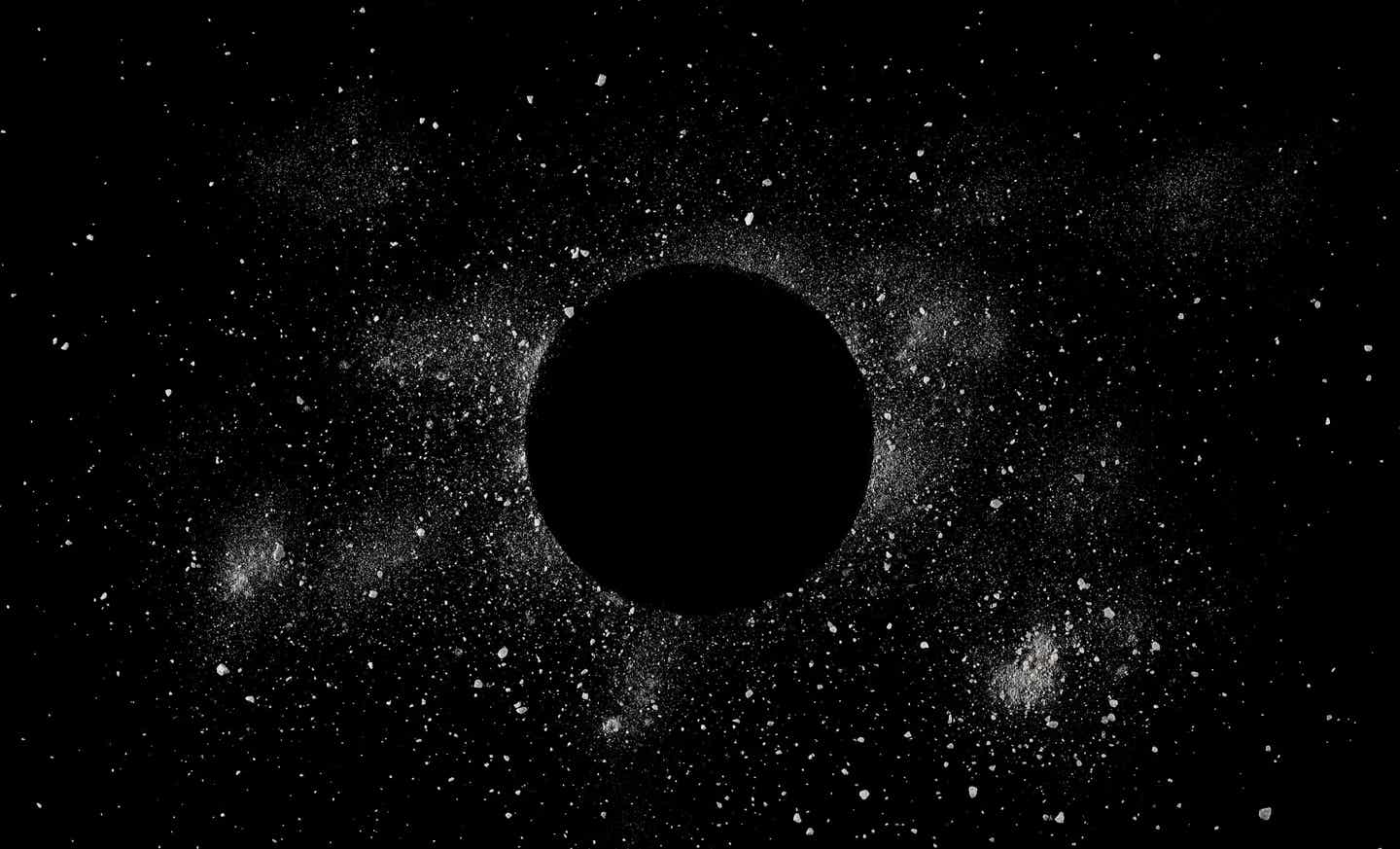
JWST has revealed a black hole so massive, and so star-poor, that it bends standard cosmic origin stories. (CREDIT: Shutterstock)
When astronomers look deep into the early universe, the expectation is simple. You should see young galaxies still assembling, with stars forming first and black holes growing later. That picture is why a new set of results, led by researchers including Boyuan Liu at the University of Cambridge, is causing a stir. Using observations from the James Webb Space Telescope and detailed computer simulations, the team explored how an unusually massive black hole could exist in a place with hardly any stars at all.
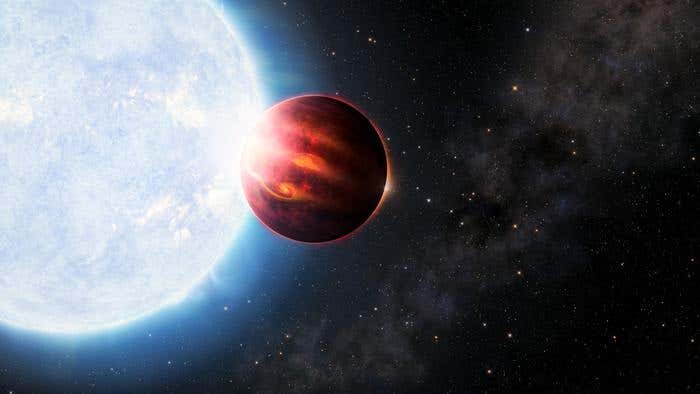
The object sits in a JWST source called Abell 2744–QSO1, a compact, very red system sometimes grouped with other strange JWST finds nicknamed “little red dots.” It appears about 700 million years after the Big Bang, at a redshift near 7. Yet its central black hole looks enormous for that era. Estimates put it at roughly 50 million times the mass of the sun.
What makes the system stand out is what seems to be missing. The surrounding stellar mass appears tiny. Some constraints place it below about 20 million solar masses. Other analyses push the limit far lower, closer to about one million solar masses. Either way, the black hole seems to outweigh the stars in a way that standard growth stories do not easily explain.
“This is a puzzle, because the traditional theory says that you form stars first, or together with black holes,” Liu said.
Why Abell 2744–QSO1 strains the usual story
In standard astrophysics, stars and black holes grow together. Gas collapses into stars. The most massive stars die. Some leave black holes behind. Those black holes gain mass as they pull in gas and merge with others.
That step-by-step process takes time. That is the problem. When JWST looks at the first billion years, it keeps finding black holes that already look mature. Abell 2744–QSO1 is one of the most extreme examples because the galaxy around it looks underbuilt.
The object also appears chemically primitive. Measurements suggest it is extremely metal-poor, with metallicity constrained below about 1 percent of the sun in the central region. In astronomy, “metals” mean elements heavier than helium. Those elements are made inside stars and spread by supernovae. So, low metallicity usually implies limited star formation.
Put those clues together and the contradiction sharpens. A black hole that massive normally implies a long history of growth. A lack of stars and metals implies the opposite.
Black holes from the early universe itself
To address the mismatch, the researchers revisited a concept that dates back decades: primordial black holes. These are hypothetical black holes that would not come from dead stars. Instead, they would form directly from extreme density variations shortly after the Big Bang, an idea associated with work by Stephen Hawking and Bernard Carr in the 1970s.
Most primordial black holes, if they formed, would have been small. Many would not survive. The question is whether a rare, very massive one could exist, then shape its environment early enough to produce a system like Abell 2744–QSO1.
“With these new observations that normal (black hole formation) theories struggle to reproduce, the possibility of having massive primordial black holes in the early universe becomes more permissible,” Liu added.
That statement is careful. The study does not claim proof. It argues plausibility, based on how well a particular simulated pathway reproduces what JWST sees.
Building a black hole-dominated system
To test the idea, the team ran simulations designed to mimic an isolated black hole growing in the early universe. They used the GIZMO simulation code and evolved the system from very early times down to the era JWST observed, tracking dark matter, gas, star formation, and feedback.
The setup used Planck18 cosmology parameters and modeled a small comoving volume chosen to focus on structure formation around a single central seed. The simulation placed a black hole with a mass of 50 million solar masses at the center, then followed how gas moved, cooled, formed stars, and responded to energy injected by both the black hole and supernovae.
A key point was treating black hole feedback and stellar feedback together. Earlier work often simplified one or the other. Here, the simulations included both. Gas could form stellar “sink” particles only when it became unstable enough to collapse and survive long enough to avoid being disrupted or swallowed.
"Our team compared two main runs. One allowed star formation but treated the resulting stellar particles as passive. The other included full stellar feedback, such as heating, supernova energy, and metal enrichment, Liu told The Brighter Side of News.
What happens when the black hole is already huge
The simulations produced a consistent storyline. A heavy seed speeds up halo growth and draws in gas, but it also becomes a powerful heater. Feedback grows stronger with black hole mass, so the same object that attracts fuel can also keep that fuel from cooling into stars.
In both main runs, the black hole accreted at about 1 to 10 percent of the Eddington rate. That range aligns with the inferred accretion level of about 0.01 to 0.03 for Abell 2744–QSO1. By redshift 7, the simulated black hole reached about 60 million solar masses, close to the JWST-inferred value.
Star formation, however, was delayed. Even with gas present, feedback kept conditions hostile until redshifts below about 10. When stars did appear, they formed in bursts.
In the run without full stellar feedback, the first starburst lasted about 50 million years, then paused for about 50 million years, then resumed. By redshift 7, it produced around 20 million solar masses of stars, near the upper observational limits some analyses allow.
In the full stellar feedback run, stars formed only once, in a roughly 50-million-year episode. Then the system shut down. By redshift 7, the total stellar mass near the black hole was about 770,000 solar masses, including both Population III and Population II stars. That result fits constraints that push the stellar mass below about one million solar masses.
The stars ended up in a compact cluster, with a half-mass radius around 55 parsecs. Outside that core, gas dominated. A steep dark matter spike formed close to the center, which the study notes would be hard to separate observationally from the unresolved black hole itself.
Metals get made, then get blown out and diluted
"We found that the chemistry story mattered because Abell 2744–QSO1 appears metal-poor. In the full feedback run, Population III stars formed first in dense gas. Their short lifetimes, around 3 million years, led to rapid local enrichment. That enrichment pushed metallicity above the threshold that allowed Population II stars to form," Lui explained to The Brighter Side of News.
"At the same time, black hole growth intensified. Dense gas clouds near the center boosted accretion by about a factor of 10. Then the black hole’s thermal feedback drove strong outflows," he continued.
Those outflows expelled metal-enriched gas from the center. Meanwhile, pristine gas continued to flow inward from the intergalactic medium. The result was a push and pull. Metals were produced, but they were also removed and diluted. That cycling lowered the average metallicity near the black hole to levels the authors describe as consistent with Abell 2744–QSO1, depending on exactly when JWST is catching the system.
What this does and does not settle
The simulations offer a coherent pathway to a black hole-heavy, star-poor system by redshift 7. But the study also flags limits.
For instance, primordial black hole models often do not produce seeds this large under typical assumptions. One workaround is clustering. If primordial black holes formed in dense groups, they might merge and gain mass faster. That remains uncertain and difficult to model.
There are also modeling choices that could matter. The simulation used an isolated seed in a small box and did not include a broad primordial black hole mass spectrum, clustering, or mergers with forming galaxies. Black hole feedback was treated as thermal rather than including jets or radiation pressure. Supernova feedback used subgrid bubbles that may smooth chemical mixing more than reality.
Even so, the match to JWST constraints on accretion level, stellar mass, and metallicity gives the scenario weight. The key claim is not certainty. It is that this pathway fits the data when other pathways struggle.
Practical Implications of the Research
If systems like Abell 2744–QSO1 turn out to be common, the findings could reshape how you think about the earliest stages of cosmic structure. A primordial black hole seed would mean some black holes did not wait for stars. Instead, they could have helped organize matter early, pulling gas into halos and shaping when, where, and how the first stars formed.
That shift would ripple across research. It would change what astronomers look for in JWST surveys, especially among “little red dots” with extreme black-hole-to-stellar mass ratios. It could also affect models of early metal production, since strong black hole feedback can both trigger brief star formation and then shut it down.
Over time, this line of work may help explain why the early universe contains surprisingly massive black holes, and it may point to new ways to test the physics of the Big Bang through rare, extreme objects.
Research findings are available online in the journal arXiv.
Related Stories
- Evidence of primordial black holes could be hiding inside Earth rocks
- Astronomers solve cosmic mystery surrounding two massive black holes that shouldn't exist
- Runaway black hole defies growth limit, expands at record rate
Like these kind of feel good stories? Get The Brighter Side of News' newsletter.
Joseph Shavit
Writer, Editor-At-Large and Publisher
Joseph Shavit, based in Los Angeles, is a seasoned science journalist, editor and co-founder of The Brighter Side of News, where he transforms complex discoveries into clear, engaging stories for general readers. With vast experience at major media groups like Times Mirror and Tribune, he writes with both authority and curiosity. His writing focuses on space science, planetary science, quantum mechanics, geology. Known for linking breakthroughs to real-world markets, he highlights how research transitions into products and industries that shape daily life.