Large parts of the world’s oceans are growing darker, study finds
A global study reveals that ocean darkening is reducing the depth of sunlit waters that support most marine life, raising concerns for ecosystems and climate.

 Edited By: Joshua Shavit

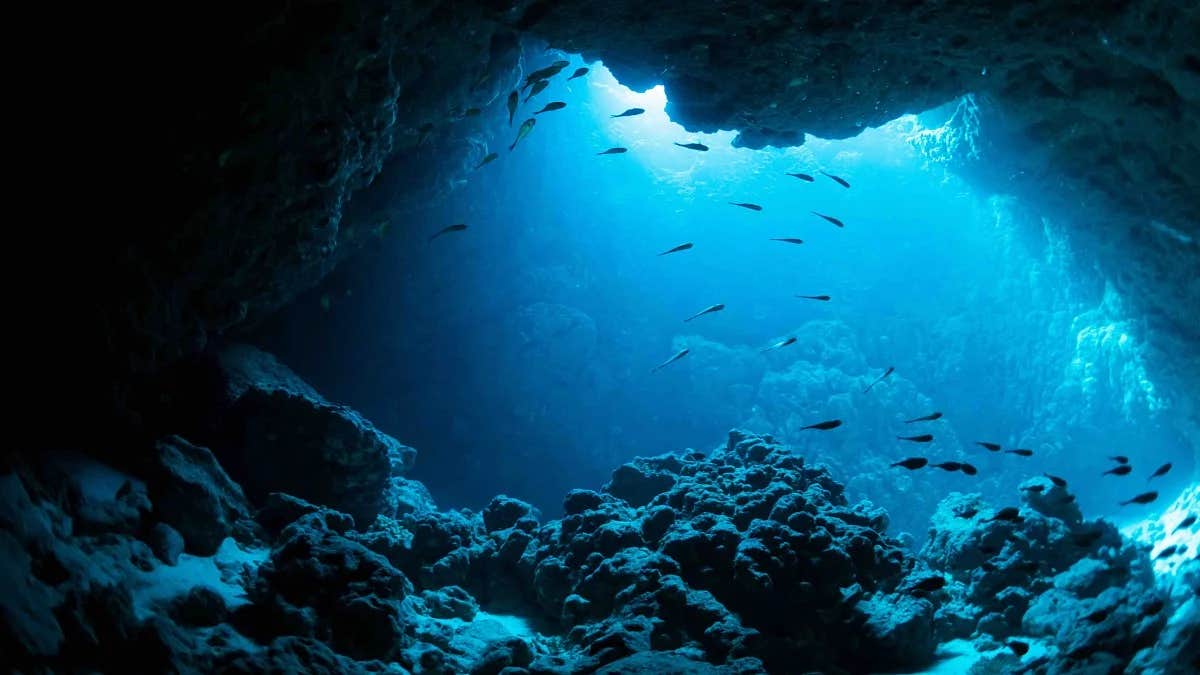
New research shows more than 20% of the global ocean has darkened in 20 years, shrinking vital sunlit habitat for marine life. (CREDIT: Wikimedia / CC BY-SA 4.0)
Scientists at the University of Plymouth and Plymouth Marine Laboratory found evidence that large portions of the world's oceans are darkening, and the sunlit zone, vital for marine organisms, is decreasing in size. Data collected over the past two decades shows that one-fifth of the global ocean has been affected by this phenomenon.
The research team conducted a global analysis from 2003 to 2022, determining the amount of light that penetrates the ocean's surface. Researchers believe the change is indicative of a substantial environmental shift, which will impact fish migration patterns and the ocean's ability to help mitigate climate change. Their findings indicate that the blue water zone to the east of Indonesia has been darkened, while other regions have also experienced significant loss of light in deeper layers, including the Northern Pacific Ocean, Northern Indian Ocean, and Southern Ocean.
The researchers used long-term data from satellite images to quantify the changes occurring in the photic zone, which is the upper layer of the ocean where sunlight and moonlight penetrate deeply enough to stimulate living systems. Approximately 90% of marine species depend on this region, which reaches greater depth than approximately 200 m.
Measuring Light in a Changing Ocean
To monitor these changes over time, the researchers utilized data from NASA's Ocean Color Web, which categorizes the global ocean into approximately 9 km grid squares. The research team studied how the ocean's color and clarity changed each year with data from satellites; they were then able to determine the rate of degradation of light with distance from the surface of different oceanic regions.
The researchers utilized computer simulations along with satellite measurements to determine how far light could penetrate into the ocean under both solar and lunar conditions. This enabled the researchers to evaluate not just changes in the ocean's photic zone during daylight hours, but also the impact of low levels of light on animals that are most affected by lunar light.
Overall, the data indicate stark changes. Between 2003 and 2022, the photic zones of more than 21 per cent of the world's oceans (~75 million km2) have been reduced in size, and in excess of 9 per cent of the world's photic zone now resides at a depth of more than 50 meters, while 2.6 per cent has dropped in excess of 100 meters.
Furthermore, the reductions in size of the photic zones are not uniform; roughly 10 per cent of the global ocean is more illuminated than before, suggesting that a variety of processes influence the vertical movement of light in seawater.
Why Darker Water Matters
Thomas Davies, a marine conservation expert from the University of Plymouth, expressed concern regarding these results. The color of the surface of the ocean has changed over time due to changing communities of plankton and new research has demonstrated the extent to which widespread darkening of parts of the ocean limits the habitat for animals living in those areas who require light from both the sun and the moon to survive and reproduce,' said Davies.
"Furthermore, humans rely upon the health of the photic zone for a number of reasons. For example, we depend on it for the health of our airways, for the fish we consume, for the capability to mitigate against the impacts of climate change, and for the overall health and well-being of the planet. Therefore, our findings are a cause for great concern," Davies stated.
An Ecosystem in Flux
Professor Tim Smyth, Head of Marine Biodiversity and Ocean Dynamics at Plymouth Marine Biochemical Laboratories, highlighted the vast variations in light levels found at different depths in the ocean and their influence on the behaviors of marine species. Smyth stated, "There is a great deal of variation in light levels over a 24-hour period and those species of marine animals that are directly impacted by light are very sensitive to these variations."
Smyth warned that if the depth of the photic zone continues to decrease, the marine animals that live in those zones will be forced to live in closer proximity to one another.
“If current trends continue, the majority of light-dependent marine species will be forced to compete for limited food resources within the photic zone,” said Dr. Galbraith. “The result will be major shifts in how marine ecosystems are structured and function.”
As the results indicate, ocean darkening can occur through many mechanisms, rather than a single mechanism. Coastal areas are subject to sediment and organic matter runoff from land, which can provide nutrients for plankton. Plankton can absorb a significant amount of light and thereby contribute to the opacity of the water column. Open oceans may also experience similar losses due to changes in sea surface temperature and shifting patterns of phytoplankton growth (blooms).
Regional Patterns Across the Globe
At the regional level, there are areas where climate change has already impacted darkening significantly, including regions close to major currents (such as those found near the Arctic and Antarctic), as well as places along the Gulf Stream. Enclosed or semi-enclosed water bodies (like the Baltic Sea) experienced widespread darkening, which was found to be directly related to land-based influences.
Regions surrounding the United Kingdom demonstrated a complex relationship with respect to darkening, with the North Sea, Celtic Sea, eastern coasts of England/Scotland, the vast majority of Wales, and northern sections of the Irish Sea exhibiting increases in darkness within their respective areas. The English Channel and surrounding waters have also become lighter.
The dramatic difference in this map represents how local and global factors interact with one another. Climate-driven changes in ocean currents directly impact the areas that plankton populate. At the same time, human activity on land influences how much organic matter flows into coastal waters.
Light Above and Beyond Common Definitions
Traditionally, scientists considered the photic zone to be the point at which sunlight reaches only 1% of the surface light. While this definition is useful to determine the optimum depth for photosynthesis, it does not capture the precise sensitivity many marine organisms have to very low light conditions.
To account for these low light levels, we looked at the light sensitivity of Calanus copepods as our reference species. These microscopic crustaceans move from the water surface to the depths of the ocean in response to changes in both sunlight and moonlight.
"By utilizing an organism-based threshold, we were able to identify changes in photic depth that are important for many marine organisms whose life cycles depend on these faint light cues. Our study showed that the largest reduction in photic depth occurs during the daytime. Although there may be a reduced photic depth during the night, under the illumination of the moon, this will also have an ecological impact," Davies said.
The Potential Impacts of This Research
"Our research results suggest the presence of a new type of habitat, defined by light instead of geography. If this trend continues, competition among marine animals for food may increase, predator-prey relationships may change, and the reproductive cycles of marine organisms may become dislocated. Moreover, since the density of fish and plankton may shift due to changes in the location where they are found, they will impact the catch patterns and long-term viability of fisheries, Smyth told The Brighter Side of News.
"For marine science, these results indicate our need to rethink the current methodology of measuring ocean health. Light levels have a direct impact on the cycling of carbon, the production of oxygen, and the capacity of ocean ecosystems to absorb carbon dioxide from the atmosphere. Therefore, by understanding how and why photic zones are changing, we may be able to enhance climate models and improve conservation efforts," he continued.
For society, this research highlights the close connections between human health and well-being and the relationships between oceans and all other ecosystems. Clean air, food from the ocean, and stable climate processes all rely on the life within sunlit waters. Thus, protecting water quality on land and mitigating the effects of climate change can potentially slow or reverse some of the negative effects associated with the "darkening" of our oceans.
Research findings are available online in the journal Global Change Biology.
Related Stories
- Dark oxygen discovery in the deep ocean sparks debate over life’s origins
- Ocean storms under Antarctic ice found to rapidly boost melting
- Melting polar ice supercharges ocean 'stirring', threatening marine climate
Like these kind of feel good stories? Get The Brighter Side of News' newsletter.
Joseph Shavit
Writer, Editor-At-Large and Publisher
Joseph Shavit, based in Los Angeles, is a seasoned science journalist, editor and co-founder of The Brighter Side of News, where he transforms complex discoveries into clear, engaging stories for general readers. With vast experience at major media groups like Times Mirror and Tribune, he writes with both authority and curiosity. His writing focuses on space science, planetary science, quantum mechanics, geology. Known for linking breakthroughs to real-world markets, he highlights how research transitions into products and industries that shape daily life.