Living hydrogel grown by fungi could revolutionize wound healing
Researchers grew a living hydrogel from fungi that mimics soft tissue and heals after stress, opening new paths for medicine.

 Edited By: Joseph Shavit


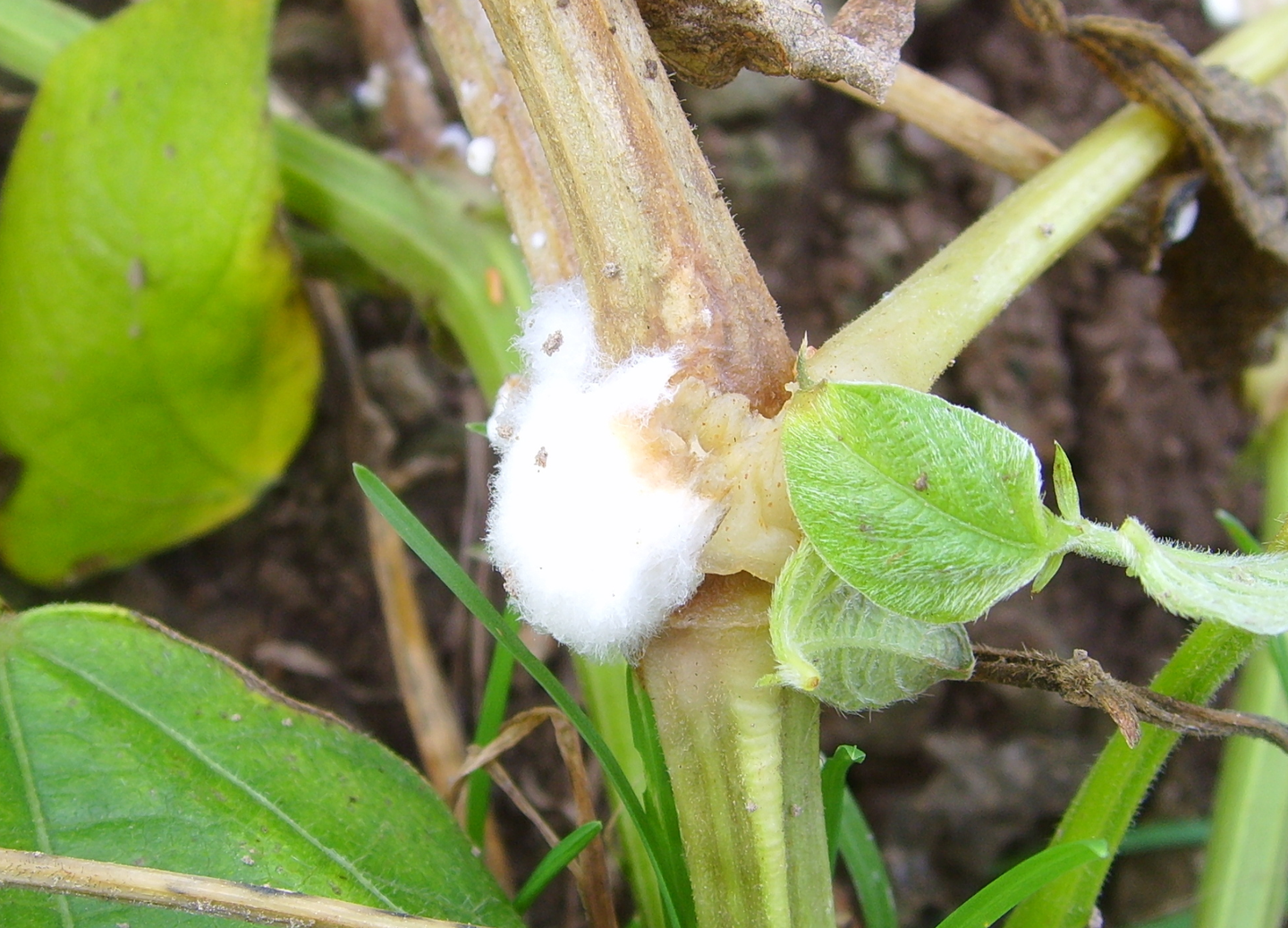
Living fungi grow a self-assembling hydrogel that mimics human tissue. (CREDIT: Shutterstock)
When you think about materials used in medicine, you likely picture metals, plastics, or synthetic gels. Researchers at the University of Utah are asking you to imagine something very different. Their latest work explores a hydrogel that grows itself, built not in a factory, but by a living fungus.
The research brings together engineers, materials scientists, and biologists to examine whether a soil-dwelling mold can form a soft, layered material that behaves much like human tissue. The study focuses on Marquandomyces marquandii, a filamentous fungus recently reassigned to its own genus. The findings suggest this organism can naturally assemble a thick, water-rich hydrogel with mechanical traits suited for biomedical use.
“Hydrogels are regarded as a promising alternative for applications in tissue regeneration and engineering, cell culture scaffolds, cell bioreactors, and wearable devices, owing to their ability to closely mimic the viscoelastic properties of soft tissues,” writes lead author Atul Agrawal, an engineer at the University of Utah, along with his collaborators.
Hydrogels sit between solids and liquids. They are three-dimensional polymer networks that can hold between 30 and 99.9 percent water without dissolving. Their softness and elasticity allow them to resemble tissues such as skin, cartilage, and muscle. But most lab-made hydrogels are uniform throughout. Real tissues are not. They are layered, with stiffness and structure that shift gradually with depth. Those gradients help tissues bend, stretch, and heal without tearing.
Letting Biology Do the Building
Instead of forcing a synthetic material to copy nature, the Utah team let biology take the lead. Fungi grow as mycelium, networks of microscopic threads called hyphae. These threads are made from chitin, β-glucans, and proteins, all known for strength and biocompatibility.
Researchers confirmed the identity of M. marquandii using DNA sequencing, then grew it under two conditions. On solid potato dextrose agar, the fungus spread mostly above the surface. In liquid potato dextrose broth, grown without stirring, it behaved differently. Over several weeks, the mycelium fused into a thick, cohesive sheet that floated, then slowly sank, forming what the team calls a mycelium-hydrogel.
Across three growth batches, the researchers produced 21 samples. They measured thickness, structure, chemistry, thermal behavior, and mechanical response. Their goal was to understand how the hydrogel forms over time and whether it develops the layered architecture needed for medical use.
Growth patterns changed dramatically depending on environment. On solid agar, the mycelium reached about 3 millimeters thick after four weeks, mostly above the surface. In liquid, growth accelerated. By week four, the submerged hydrogel reached about 4.5 millimeters thick, with a faster peak growth rate.
Surface behavior shifted as well. Early samples were strongly hydrophobic, meaning water beaded up on the surface. By week three, once the mycelium sank fully below the liquid surface, most of the hydrogel became completely hydrophilic. Water spread instantly instead of forming droplets. This change likely reflects a rearrangement of fungal surface proteins as the organism adapts to a submerged environment.
A Naturally Layered Internal Structure
"Microscopy revealed a striking internal design. The mature hydrogel contained multiple layers with different pore densities. The top layer had about 40 percent porosity. Beneath it were alternating bands of roughly 90 percent and 70 percent porosity. Overall porosity averaged about 83 percent," Agrawal shared with The Brighter Side of News.
"These transitions were gradual, not abrupt. Porosity shifted smoothly across depth, reducing weak points where layers could separate. Three-dimensional reconstructions showed that pores remained connected throughout the material, allowing water and nutrients to move freely," he continued.
Researchers believe the layered pattern reflects changes in growth strategy over time. Near the air–water interface, the fungus spreads sideways, forming a denser surface. Deeper layers grow under different oxygen and nutrient conditions, producing more open structures.
Hyphal thickness supported this idea. At the bottom of the hydrogel, where growth was most active, hyphae became thinner as growth rates increased. Statistical analysis showed a strong negative link between growth speed and filament diameter. In simple terms, faster growth came with finer threads.
Chemistry, Water Content, and Strength
Chemical tests confirmed that the hydrogel is built from familiar fungal components. Infrared spectroscopy detected hydroxyl, carboxyl, and amide groups, along with signals from proteins, polysaccharides, and chitin. Thermal analysis showed that about 83 percent of the fresh hydrogel’s weight came from water, closely matching porosity measurements.
Mechanical testing revealed one of the most important traits. When sheared, even at low strain, the hydrogel quickly softened and flowed. When the stress was removed, it recovered.
After ten cycles of large deformation, the material regained about 93 percent of its original stiffness each time. Microscopy showed no tearing between layers. Stress appeared to spread smoothly across the graded structure rather than concentrating at interfaces.
“What you are seeing here is a hydrogel with multilayers,” Agrawal says, pointing to a fungal colony growing in a glass flask. “It’s visible to the naked eye, and these multiple layers have different porosity.”
Steven Naleway, a materials engineer at the University of Utah, sees wide potential. “This one in particular was able to grow these big, beefy mycelial layers, which is what we are interested in,” he says. “Mycelium is made primarily out of chitin, which is similar to what’s in seashells and insect exoskeletons. It’s biocompatible, but also it’s this highly spongy tissue.”
Understanding fungal growth is key. Mycologist Bryn Dentinger of the Natural History Museum of Utah explains, “As they grow forward, they lay down these cross walls that then compartmentalize a really long filament into many, many individual cells. They will grow forever as long as there’s enough nutrition around.”
Practical Implications of the Research
This work points toward a new class of living-inspired biomaterials. Because the hydrogel forms without chemical crosslinking, it avoids toxic residues linked to some synthetic gels. Its natural layering could reduce failure in implants or scaffolds that must bend and compress repeatedly.
In the future, researchers could tune growth conditions, such as oxygen or temperature, to shape the material for skin repair, cartilage support, or soft tissue scaffolds. Long-term safety studies remain essential, especially given rare allergic responses to chitin.
Still, the approach shows how living systems can solve engineering problems that have challenged materials science for decades.
Research findings are available online in The Journal of The Minerals, Metals & Materials Society.
Related Stories
- First-ever piezoelectric bandage can heal broken bones much faster, study finds
- ‘Smart’ bandages monitor wounds and provide targeted treatment
- Fungi may revolutionize treatment of cancer, obesity, Type 2 diabetes
Like these kind of feel good stories? Get The Brighter Side of News' newsletter.
Mac Oliveau
Writer
Mac Oliveau is a Los Angeles–based science and technology journalist for The Brighter Side of News, an online publication focused on uplifting, transformative stories from around the globe. Passionate about spotlighting groundbreaking discoveries and innovations, Mac covers a broad spectrum of topics including medical breakthroughs, health and green tech. With a talent for making complex science clear and compelling, they connect readers to the advancements shaping a brighter, more hopeful future.