Researchers convert recycled household plastics into anti-cancer medication
New catalyst turns PET bottles and textiles into a drug-making chemical, cutting waste and lowering environmental impacts.

 Edited BY: Joseph Shavit

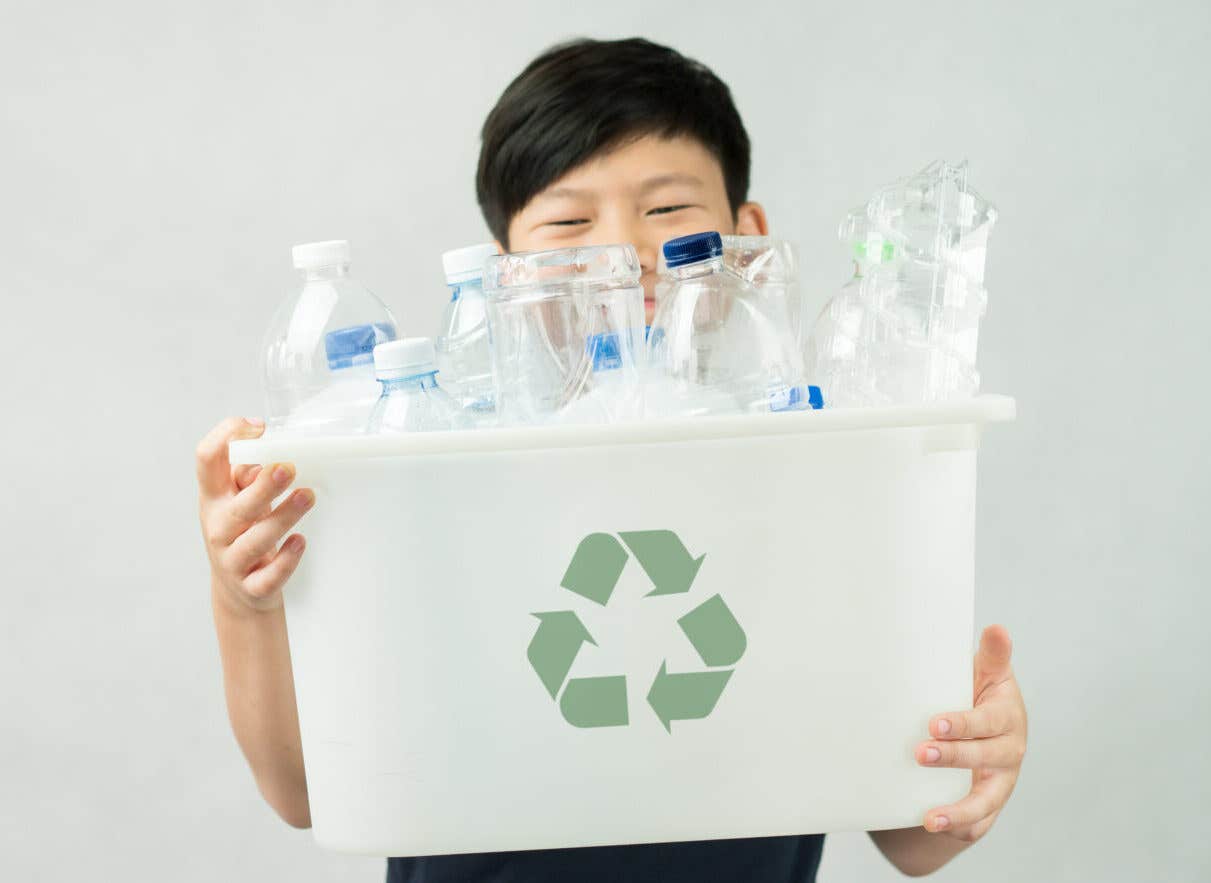
Plastic bottles and polyester textiles may become feedstock for medicines. (CREDIT: Shutterstock)
You see PET plastics every day, even if you do not notice them. They show up as drink bottles, food packaging, and synthetic fabrics. More than 80 million tons of PET, short for polyethylene terephthalate, are produced each year. A lot gets recycled, but much of that recycled plastic ends up as lower-grade material. That “downcycling” limits what manufacturers can do with it.
Now, researchers say they have a way to turn common PET waste into a high-value chemical used to make medicines and other products. The work, published in Angewandte Chemie International Edition, was led by Dr. Amit Kumar at the School of Chemistry at the University of St. Andrews. The team collaborated with TU Delft in the Netherlands, led by Professor Evgeny Pidko, and with the chemical and pharmaceutical company Merck KGaA, including Dr. Benjamin Kuehne and Dr. Alexander Dauth.
Instead of breaking PET back into the same starting ingredients for new PET, the researchers focused on “upcycling.” That means converting plastic waste into more valuable chemicals, including intermediates used in drug and agrochemical production.
Why “upcycling” PET matters
Chemical recycling can already break PET down into building blocks used to remake PET. Many of those routes need high energy, which raises cost. The St Andrews-led group aimed for a different outcome. They targeted a single compound with broad usefulness: ethyl 4-(hydroxymethyl)benzoate, or EHMB.
EHMB matters because it can be turned into key starting materials for several important products. Those include the anticancer drug Imatinib, the antifibrinolytic drug tranexamic acid, and the insecticide fenpyroximate. The study also links plastic waste to another environmental burden. Pharmaceutical manufacturing generates a lot of waste for each kilogram of product. It also carries a substantial climate footprint.
Dr. Benjamin Kuehne and Dr. Alexander Dauth from Merck KGaA put the challenge plainly: “Pharmaceutical manufacturing generates substantial amounts of waste per kilogram of product, highlighting the urgent need for innovative sustainable chemical processes and raw materials with reduced environmental footprints.”
A catalyst that changes what PET becomes
To make EHMB, the team used a ruthenium-based catalyst in a hydrogenation reaction. Hydrogenation is a common tool in chemistry. Here, it helped break PET apart and convert it into targeted products. The reaction ran at 80 °C under 50 bar of hydrogen for 18 hours. The solvent system used bioderived 2-methyltetrahydrofuran mixed with ethanol.
A base, potassium tert-butoxide, played a central role. The researchers found that PET first undergoes base-driven ethanolysis to form diethyl terephthalate. Then the ruthenium catalyst hydrogenates that product further. By adjusting how much catalyst they used, they could shift the reaction toward a fully hydrogenated product or stop earlier at EHMB.
That tuning mattered. With very low catalyst loadings, the system favored EHMB with less over-reduction. At 0.01 mol% catalyst, the team reported 84% EHMB, with much smaller amounts of other products. This selectivity, paired with strong efficiency, drove high turnover numbers.
Watching the chemistry slow down
Catalysts do not run forever. One reason this paper drew attention is that it did not treat deactivation as an afterthought. The team used kinetic and mechanistic studies to understand what keeps the catalyst active, and what shuts it down.
They saw that base choice changed performance sharply. Potassium and sodium tert-butoxide supported much higher hydrogenation than lithium tert-butoxide. Temperature also mattered. Moderate heat improved speed, but high heat quickly killed activity.
They also proposed a practical reason for the slowdown. Some reaction products, including ethylene glycol and alcohol-containing intermediates, can bind to the catalyst and inhibit it. When the team added ethylene glycol or related alcohol products, hydrogenation slowed. That kind of insight helped them choose conditions that kept the reaction moving longer.
Professor Pidko, of TU Delft, tied those observations to real-world scale-up: “For catalytic upcycling to become practical, the catalyst must operate efficiently at low loadings and maintain activity over long periods. All catalysts eventually deactivate, so understanding when and how this happens is critical to pushing turnover numbers to levels relevant for real applications. In this study, we combined detailed kinetic and mechanistic analysis to understand catalyst behaviour under the reaction conditions and used this knowledge to optimize the system towards record turnover numbers of up to 37,000. This emphasizes the importance of fundamental mechanistic insights to optimize catalyst durability and overall process efficiency.”
Real bottles and textiles, not just lab plastic
A key test for any recycling chemistry is whether it works on messy, real materials. The researchers did not limit trials to purified PET powder. They ran gram-scale reactions using postconsumer PET from colorless bottles and from textiles.
Under practical conditions, they produced high EHMB yields from waste streams. In one set of trials, 5 grams of bottle PET produced about 80–84% EHMB at low catalyst loading. Textile PET from items like a hairband and ribbon also performed well. Even a fleece jacket, which needed stronger conditions, still yielded a high fraction of EHMB.
These results matter because they suggest the chemistry can tolerate typical consumer inputs, including dyes, additives, and processing history.
From EHMB to drugs, and to a new polymer
"Once you have EHMB, you can transform it into other useful chemicals using standard reactions. Our paper mapped several routes. Hydrolysis converts EHMB into 4-(hydroxymethyl)benzoic acid, a compound already used as a linker in automated peptide synthesis. Other steps can form key building blocks used in drug and agrochemical synthesis," Pidko noted in comments to The Brighter Side of News.
The study highlighted drug-relevant routes tied to well-known compounds. It also described a path to a new polyester made from the EHMB-derived acid. The team produced poly(4-(hydroxymethyl)benzoate), or PHMB. They reported that PHMB showed strong chemical resistance and could be depolymerized back to its monomer by simple saponification. That gives the material a potential “closed loop” pathway.
Mechanical and thermal tests placed PHMB between high-density polyethylene and PET in stiffness and strength. It kept comparable ductility. It also showed high thermal stability, though some properties differed from PET.
Practical implications of the research
If you care about plastic waste, this research offers a different endgame for PET. Instead of turning bottles into lower-quality goods, you could treat them as a carbon source for higher-value chemistry. That could shift incentives. Waste that becomes a valuable feedstock is less likely to be discarded.
For researchers, the work provides a clear example of how mechanistic insight can drive practical gains. Understanding catalyst shutdown helped the team push turnover numbers higher. That approach can translate to other plastic-upcycling reactions, not just PET.
For industry, the most important impact may be flexibility. EHMB is a gateway to several pharmaceutical and agrochemical intermediates, and the route uses bioderived solvents under moderate temperature.
If future studies improve robustness and economics, the process could reduce reliance on fossil-derived feedstocks for certain chemical building blocks. It may also lower overall environmental burdens, especially if paired with low-carbon hydrogen and scaled responsibly.
Research findings are available online in the journal Angewandte Chemie International Edition.
Related Stories
- Scientists identify nine Nigerian plants with powerful anticancer effects
- New anticancer drugs could significantly improve immunotherapy
- Scientists create nanoparticle vaccine that prevents cancer
Like these kind of feel good stories? Get The Brighter Side of News' newsletter.
Mac Oliveau
Writer
Mac Oliveau is a Los Angeles–based science and technology journalist for The Brighter Side of News, an online publication focused on uplifting, transformative stories from around the globe. Passionate about spotlighting groundbreaking discoveries and innovations, Mac covers a broad spectrum of topics including medical breakthroughs, health and green tech. With a talent for making complex science clear and compelling, they connect readers to the advancements shaping a brighter, more hopeful future.