Scientists can now detect early signs of Alzheimer’s through the nose
A quick nasal swab detects early Alzheimer’s signals in living cells, offering a new path to diagnose the disease sooner.

 Edited By: Joseph Shavit

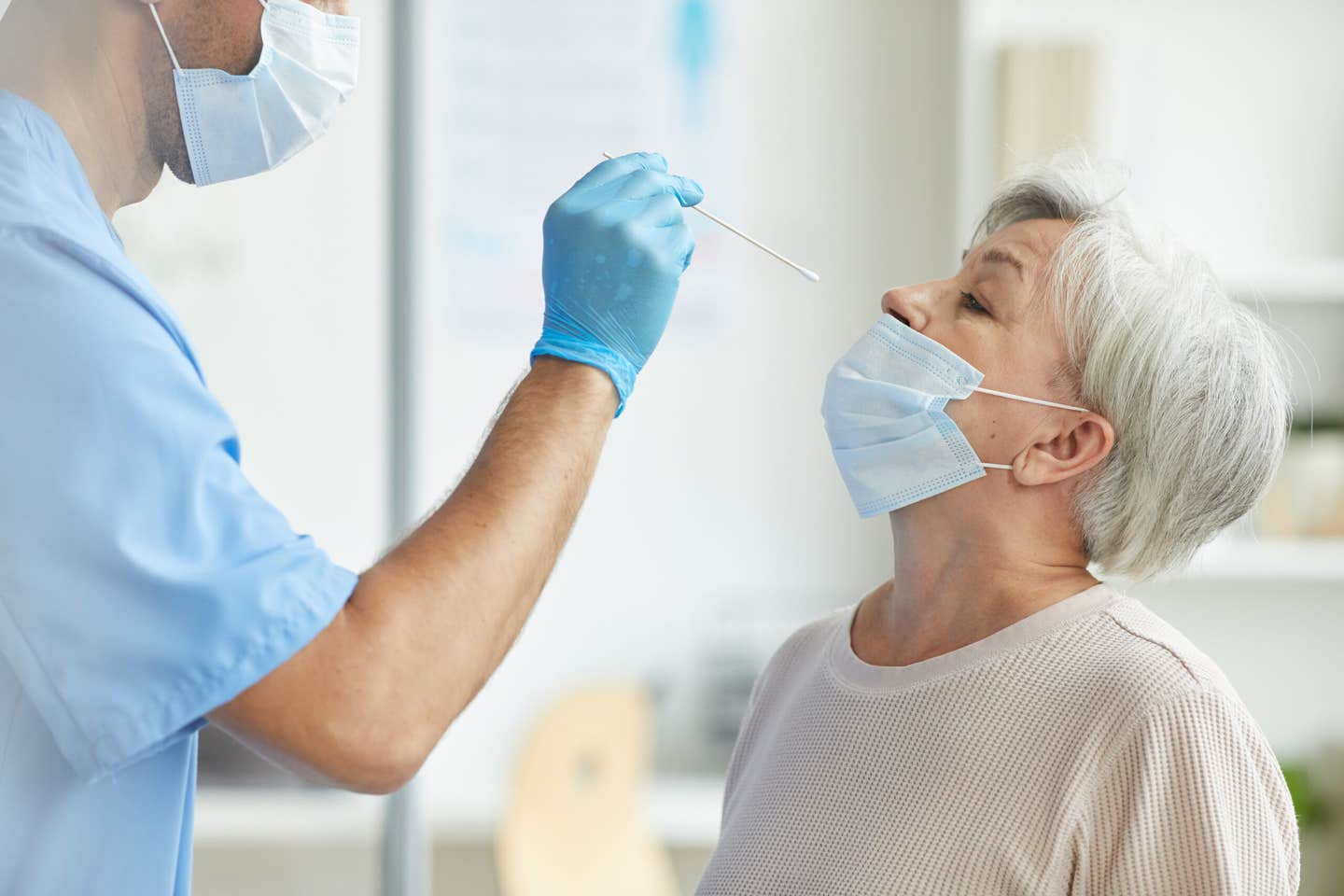
A nasal swab may detect Alzheimer’s early by analyzing living nerve cells, offering a new path for diagnosis before symptoms appear. (CREDIT: Shutterstock)
A thin brush reaches deep into the upper nose, where smell begins. The motion takes only minutes. What it collects may carry early signs of a disease that usually hides for years. At Duke Health, researchers have tested a nasal swab that captures living nerve and immune cells, then reads their genetic activity for clues tied to Alzheimer’s disease. The approach points to a different kind of diagnostic window, one that opens before memory loss becomes obvious.
“We want to be able to confirm Alzheimer’s very early, before damage has a chance to build up in the brain,” said Bradley J. Goldstein, the study’s corresponding author. That timing matters.
Where Early Clues Have Been Hard to Find
Alzheimer’s affects millions worldwide, yet its earliest phase often slips by unnoticed. By the time symptoms appear, changes in the brain have already taken hold. Current blood tests detect markers that emerge later in the disease process, which limits their usefulness for catching the condition at its start.
Families often sense something is wrong long before a diagnosis arrives. Mary Umstead, who volunteered for the study, recalled her sister’s experience. Mariah Umstead was diagnosed with young onset Alzheimer’s at 57, but the family noticed changes well before that point.
“When the opportunity came along to be part of a research study, I just jumped at it because I would never want any family to have to go through that kind of loss that we went through with Mariah,” she said. Her decision reflects a broader frustration. Early warning signs exist, but tools to detect them in living patients remain limited.
A Different Place to Look
The idea behind the study rests on location. The upper nasal cavity contains smell-detecting nerve cells that connect closely to the brain. That makes the area unusually informative for studying neurological disease. To collect samples, clinicians applied a numbing spray and guided a small brush high inside the nose. The procedure took only a few minutes. From there, researchers examined which genes were active inside the collected cells, using that activity as a signal of underlying biological changes.
“Much of what we know about Alzheimer’s comes from autopsy tissue,” said Vincent M. D’Anniballe, the study’s first author. “Now we can study living neural tissue, opening new possibilities for diagnosis and treatment.” That shift, from postmortem analysis to living cells, marks a quiet but important change in how scientists approach the disease.
Patterns Hidden in Millions of Data Points
The study analyzed samples from 22 participants. Researchers measured gene activity across hundreds of thousands of individual cells, generating millions of data points. Within that volume, patterns began to separate groups.
Some participants had early or diagnosed Alzheimer’s. Others did not. The nasal cell data distinguished between them. A combined gene score based on nose tissue correctly separated early and clinical Alzheimer’s cases from healthy controls about 81 percent of the time. The signal also appeared in people who showed laboratory evidence of Alzheimer’s but had not yet developed symptoms.
That detail stands out. The swab did not rely on late-stage markers. Instead, it captured shifts in nerve and immune cell behavior that may occur earlier in the disease process.
Linking the Nose to the Brain
The connection between smell and Alzheimer’s is not new. Changes in smell can precede memory problems. What this study adds is a way to measure biological activity in that system directly.
The nasal samples contained both nerve cells and immune cells. Their gene activity reflected processes that may mirror what is happening deeper in the brain. Researchers did not need to access brain tissue itself. They used a more accessible location to gather clues. Goldstein emphasized the potential impact of timing.
“If we can diagnose people early enough, we might be able to start therapies that prevent them from ever developing clinical Alzheimer’s,” he said. That possibility remains a goal rather than a guarantee. Still, it shapes how researchers think about early detection.
A Procedure Designed for the Clinic
The simplicity of the swab matters almost as much as the data it produces. It is an outpatient procedure. It requires only a few minutes. It does not involve surgery or complex imaging.
Those features could make it easier to repeat the test over time. The Duke team, working with the Duke & UNC Alzheimer’s Disease Research Center, is exploring whether the swab can track how patients respond to treatment.That idea introduces a second use. Beyond diagnosis, the method could help monitor disease progression or therapy effectiveness.
The researchers have also filed a U.S. patent related to the approach, signaling plans to develop it further.
What the Study Does and Does Not Claim
The findings are promising, but the study remains small. Only 22 participants were included. Larger groups will be needed to confirm how well the test performs across different populations. The accuracy, about 81 percent in this early analysis, leaves room for improvement. The researchers do not present the swab as a standalone diagnostic tool yet. Instead, it represents a step toward earlier detection.
Another limitation comes from the stage of development. The method works in a research setting. It has not been widely tested in everyday clinical practice. Even so, the approach addresses a gap that has long challenged Alzheimer’s research: how to observe early disease changes in living tissue without invasive procedures.
Expanding the Work
The team plans to broaden the study and refine the technique. They are examining whether the nasal swab can consistently identify early-stage changes and whether it can track disease over time.
Other researchers involved in the work include Sarah Kim, John B. Finlay, Michael Wang, Tiffany Ko, Sheng Luo, Heather E. Whitson, and Kim G. Johnson. The project received funding from the National Institutes of Health through several grants. Each step builds toward a clearer picture of how Alzheimer’s begins and progresses in living patients.
A Shift in Perspective
For decades, much of Alzheimer’s research depended on studying brain tissue after death. That approach provided critical insights but limited opportunities for early intervention.
This study suggests another route. It looks at living cells in a place that is easier to reach. It focuses on gene activity rather than structural damage. It searches for signals before symptoms become visible. The method is not a cure. It is a tool. Still, tools shape what scientists can see.
Practical Implications of the Research
A quick nasal swab could one day help identify Alzheimer’s before memory loss begins, giving doctors a chance to act earlier.
The approach may also allow repeated testing to monitor disease changes over time.
If confirmed in larger studies, it could complement existing diagnostics and help guide treatment decisions at a stage when interventions may be more effective.
Research findings are available online in the journal Nature.
The original story "Scientists can now detect early signs of Alzheimer’s through the nose" is published in The Brighter Side of News.
Related Stories
- Scientists solve the mysteries of why and how brain cells die from Alzheimers
- Breakthrough discovery could reduce the effects of Alzheimers disease by 80%
- Six minutes of exercise is key to healthy aging and avoiding Alzheimers and Parkinsons
Like these kind of feel good stories? Get The Brighter Side of News' newsletter.
Rebecca Shavit
Writer
Based in Los Angeles, Rebecca Shavit is a dedicated science and technology journalist who writes for The Brighter Side of News, an online publication committed to highlighting positive and transformative stories from around the world. Her reporting spans a wide range of topics, from cutting-edge medical breakthroughs to historical discoveries and innovations. With a keen ability to translate complex concepts into engaging and accessible stories, she makes science and innovation relatable to a broad audience.