Scientists develop a shelf-stable ‘smart’ plastic that hardens only when you trigger it
A new Ben-Gurion University polymer stays inactive for weeks, then cures on demand with light or gentle heat, Nature Chemistry reports.

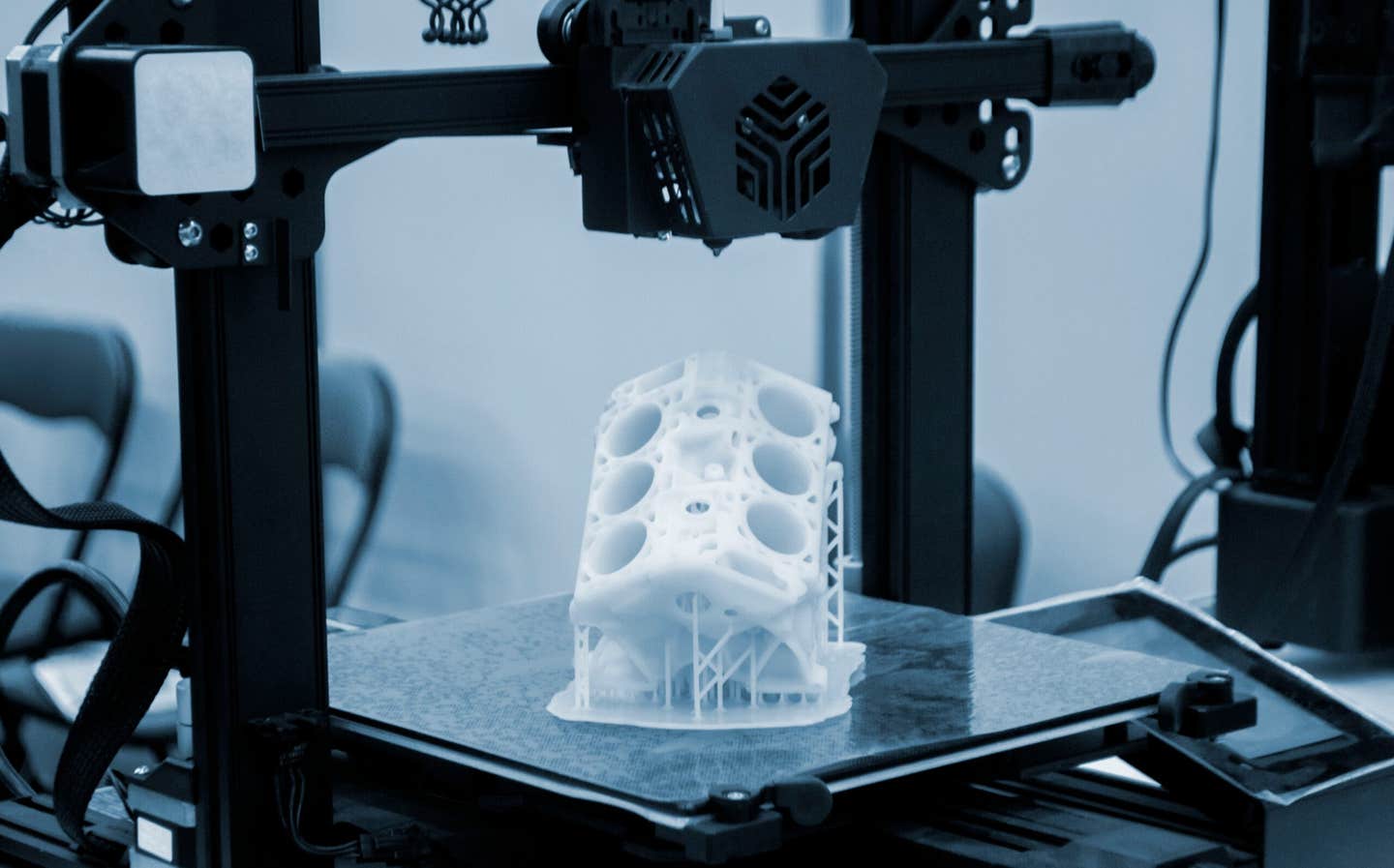
Chemists built the on-off switch into plastic building blocks, enabling shelf-stable liquids that harden only when triggered by light or heat. (CREDIT: Shutterstock)
A bucket of liquid plastic that never hardens sounds like a fantasy in a factory. It is also the kind of problem that drives real-world waste, delays, and safety risks. Chemists at Ben-Gurion University of the Negev say they found a new way around it, and they did it by moving the “on switch” into the material itself.
Their work, describes a “smart” polymer system designed to stay quiet for weeks, then harden only when you decide. The team says the approach could simplify industrial curing, 3D printing, and repairs while cutting energy use and reducing risky handling.
For decades, many researchers tried to control curing by designing “sleeping” catalysts. Those catalysts sit dormant until triggered by heat, light, or another signal. But they can be finicky, costly, and hard to work with. The Ben-Gurion team flipped the idea. They built the sleeping behavior into the plastic building blocks instead.
“This work demonstrates a new way of thinking about a general problem in polymer science and will hopefully inspire scientists in the field to look at the challenges in their own work with a fresh point of view,” said PhD student Nir Lemcoff, one of the lead authors.
The Switch Moves into the Building Blocks
Instead of relying on a delicate catalyst to behave perfectly, the researchers created what they call “latent monomers.” A monomer is a small molecule that links into long chains to form plastics. In this case, the monomers can sit as stable liquids for weeks. They do not react, even though the catalyst is already present.
The key ingredients come from small molecules called norbornadienes. Under normal conditions, norbornadienes can open and link into chains using a standard polymer-making method called ring-opening metathesis polymerization, or ROMP. The team uses a standard industrial catalyst to drive that chain-building reaction.
Then comes the trick. When UV light shines on norbornadienes, they convert into a different form called quadricyclane. Quadricyclane acts like the “off” state. In that form, the building blocks refuse to link into chains.
Later, gentle heating can flip quadricyclane back into norbornadiene. Once that happens, the monomers snap into action and begin forming solid material. The researchers used tiny gold nanoparticles to make that heating more targeted and efficient.
“Instead of a ‘sleeping’ catalyst, we created ‘sleeping’ building blocks of the material itself,” said Prof. Yossi Weizmann of the Department of Chemistry at Ben-Gurion University of the Negev, who led the study. “The mixture can sit quietly on the shelf for weeks and will snap together into a solid only when you shine light on it or warm it up. That kind of on-demand, light-driven curing could make industrial production, printing, and repair processes safer, simpler and more energy-efficient.”
How Light Can Cure Only Where You Want
The system relies on three parts working together. First, there are the switchable building blocks. Second, there is the standard catalyst, already mixed in. Third, there are gold nanoparticles that act like microscopic heaters.
When near-infrared light hits the gold particles, they warm their immediate surroundings. That local heat flips quadricyclane back into the active norbornadiene form. Then polymer chains start forming quickly in that spot.
This matters because it offers control over location, not just timing. In principle, you could coat or fill a part first. Then you could cure only selected areas using light patterns or masks.
Regular heating can also flip the switch, but the team says it does not work as efficiently. The photothermal heating from the nanoparticles concentrates energy where it is needed most.
That targeted approach can change how you think about manufacturing. A ready-to-use liquid could be stored and shipped without thickening. A printed part could stay workable until the final curing step. A repair mixture could be applied first, then hardened on command.
Materials That Change As They Build
The study also points to a bigger promise than simple on and off control. By blending monomers that are active from the start with monomers that stay latent until heated, the team can create polymer chains with two distinct sections. That can combine different traits in one material.
The researchers also describe a pathway to shape a softer material first, then lock it into a tougher, more durable solid later. That kind of staged hardening could matter in repairs, coatings, and printed structures.
"Because chemists can make many different norbornadienes, this approach could lead to hundreds of new plastic-like materials. Some of those materials may be difficult to produce with today’s standard methods," Weizmann told The Brighter Side of News.
The paper lists additional researchers from Ben-Gurion University of the Negev, including Ronny Niv, Keren Iudanov, Gil Gordon, Aritra Biswas, Uri Ben-Nun and Ofir Shelonchik. Weizmann is a member of the Zuckerman STEM Leadership Program. The work was supported by the Israel Science Foundation and the United States–Israel Binational Science Foundation.
Practical Implications of the Research
This strategy could make manufacturing safer by limiting unwanted curing during storage and handling. It could also cut waste by reducing discarded batches that hardened too early.
The approach may reduce energy use by curing only where needed, instead of heating entire volumes for long periods. That matters in industrial settings with large parts and tight timelines.
For 3D printing, the system suggests more precise control over when a printed feature becomes rigid. That could support more complex shapes and fewer printing failures.
For repairs, a shelf-stable liquid that hardens on command could simplify field work. It could also help with selective reinforcement, where only certain zones need strength.
For research, the method offers a new design toolbox. Scientists could explore new polymers by changing the monomer structures, not the catalyst.
Research findings are available online in the journal Nature Chemistry.
Related Stories
- Spray on polymer shield helps plants fight bacteria and survive drought
- Revolutionizing indoor air quality with 3D-printed geopolymer tiles
- Researchers convert recycled household plastics into anti-cancer medication
Like these kind of feel good stories? Get The Brighter Side of News' newsletter.

Shy Cohen
Writer