Scientists discover Africa’s oldest cremation pyre revealing complex rituals from 9,500 years ago
Evidence from a rock shelter at Mount Hora shows hunter-gatherers in Malawi cremated an adult woman on an open pyre 9,500 years ago.

 Edited By: Joseph Shavit

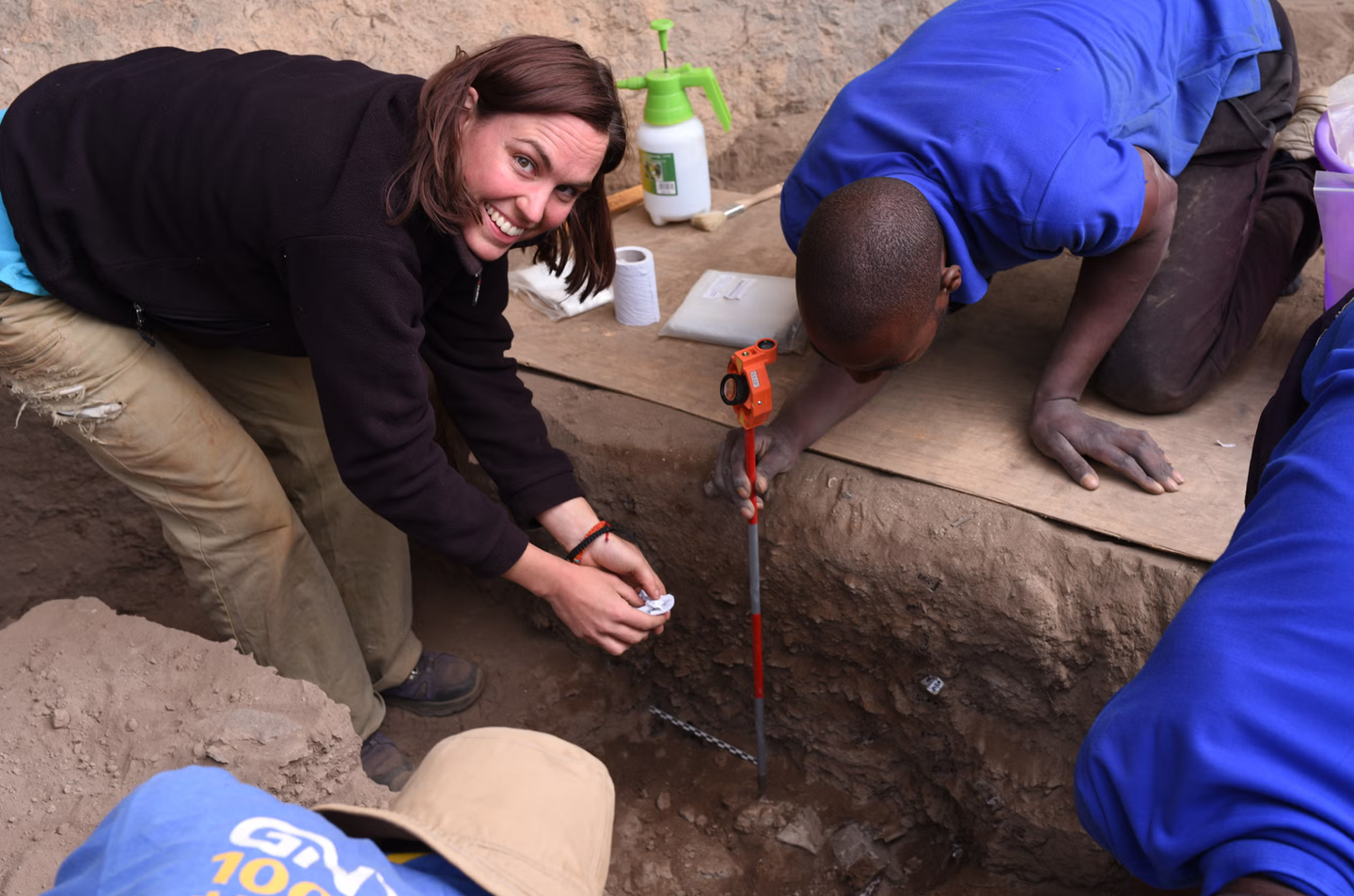
Jessica Thompson and team members excavating and mapping the pyre. (CREDIT: Grace Veatch)
A team led by University of Oklahoma anthropologist Jessica Cerezo-Román and Yale University anthropologist Jessica Thompson has documented something archaeologists have long struggled to find in Africa’s hunter-gatherer record: a clear, intentional cremation on an open pyre from about 9,500 years ago.
The work, published in Science Advances, centers on a rock shelter site in northern Malawi called Hora 1, also known as HOR-1, at the base of Mount Hora. The researchers say it is the earliest evidence of intentional cremation in Africa and the world’s oldest known in situ cremation pyre holding the remains of an adult.
“Cremation is very rare among ancient and modern hunter-gatherers, at least partially because pyres require a huge amount of labor, time, and fuel to transform a body into fragmented and calcined bone and ash,” said Cerezo-Román, an associate professor of anthropology at the University of Oklahoma.
“Not only is this the earliest cremation in Africa, it was such a spectacle that we have to re-think how we view group labor and ritual in these ancient hunter-gatherer communities,” adds Thompson, an assistant professor of anthropology at Yale University who leads long-term research at the site with the Malawi Department of Museums and Monuments.
A landmark shelter with a long memory
HOR-1 sits under an overhang at the base of a granite inselberg, a steep rocky rise that stands out from the surrounding plain. The shelter opens to the east and forms a flat, dry area that people could reach from many directions.
Thompson’s team began new work at the site in 2016. Their excavations show people used the shelter for at least about 21,000 years. They also used it as a burial place for a long stretch, from roughly 16,000 to 8,000 years ago. Those earlier burials at the site generally involved complete bodies placed in the ground.
That pattern is why the cremation stands out. The pyre event appears as a single, distinct episode in a place better known for intact burials. No other person at HOR-1 was cremated before or after.
The wider record makes the find even more striking. Burned human remains can appear for many reasons, including accidents. Clear signs of deliberate cremation, especially on built pyres, are scarce in the deep past. The oldest known in situ pyre before this adult case comes from Alaska’s Xaasaa Na’ (Upward Sun River) site around 11,500 years ago, and it contains the remains of a child.
The “queen bed” of ash and a single woman
The cremation feature at Hora 1 was part of a large ash deposit, about the size of a queen bed. Inside it, researchers excavated 170 human bone fragments, most from arms and legs. The pattern points to a single adult woman between 18 and 60 years old who stood just under 5 feet tall.
Bone cracking and color changes show the body burned while it still held moisture. That means the cremation likely happened within days of death, before full decomposition. The fire did not heat every part of the body the same way, and the team’s analysis suggests the flames reached more than 500 degrees Celsius in places.
Evidence in the sediments shows this was not a quick blaze left to die out. People gathered fuel, built the pyre, and kept it going.
"Building the pyre required at least 30 kilograms of deadwood and grass," Thompson told The Brighter Side of News. "Ash layers and burned sediments suggest participants disturbed the fire during burning and kept adding fuel to maintain high temperatures," she continued.
Stone tools found within the pyre add another clue. Their presence suggests people placed objects into the burning area or embedded them with the remains, possibly as offerings.
Signs of handling before and during the burning
Cutmarks on several limb bones suggest people removed flesh or separated parts of the body. Some of that handling may have happened before the fire, and some may have happened during the cremation itself.
“These hands-on manipulations, cutting flesh from the bones and removing the skull, sound very gruesome, but there are many reasons people may have done this associated with remembrance, social memory, and ancestral veneration,” said Cerezo-Román. “There is growing evidence among ancient hunter-gatherers in Malawi for mortuary rituals that include posthumous removal, curation, and secondary reburial of body parts, perhaps as tokens.”
One detail remains especially hard to ignore. Teeth and skull fragments, which often survive cremation, are essentially missing here.
“Surprisingly, there were no fragments of teeth or skull bones in the pyre,” said Elizabeth Sawchuk, Curator of Human Evolution at the Cleveland Museum of Natural History and a bioarchaeologist involved in the study. “Because those parts are usually preserved in cremations, we believe the head may have been removed prior to burning.”
The team weighed the recovered cremated bone at 585 grams, far less than what is often expected from a fully collected adult cremation. That gap fits with the missing head and suggests other parts may have been removed or treated separately.
A mystery that kept drawing people back
The researchers can outline the steps of the cremation, but the reason for it stays unclear. At Hora 1, most people were buried intact. Only this woman was treated with fire in this way.
“Why was this one woman cremated when the other burials at the site were not treated that way?” Thompson said. “There must have been something specific about her that warranted special treatment.”
What happened after the cremation adds another layer. The team found evidence of large fires at the location about 700 years before the cremation. They also found signs that people lit multiple major fires on top of the pyre area within about 500 years after the event, even though no other cremations occurred.
That pattern suggests the community remembered the exact spot and returned to it. In practical terms, this was a landmark funeral site in a landmark landscape, revisited within a time span that could fit living memory.
Research findings are available online in the journal Science Advances.
Related Stories
- Ancient DNA reveals southern Africa’s hidden role in the rise of modern humans
- Every single human being alive today first originated from this African country
- Royal tomb discovery changes what’s known about Maya history
Like these kind of feel good stories? Get The Brighter Side of News' newsletter.
Joshua Shavit
Writer and Editor
Joshua Shavit is a NorCal-based science and technology writer with a passion for exploring the breakthroughs shaping the future. As a co-founder of The Brighter Side of News, he focuses on positive and transformative advancements in technology, physics, engineering, robotics, and astronomy. Joshua's work highlights the innovators behind the ideas, bringing readers closer to the people driving progress.