Scientists engineer bacteria to produce lower calorie, healthier sugar
Researchers have developed a new bacterial method to produce tagatose, a rare sugar that tastes like table sugar but has fewer calories and health risks.

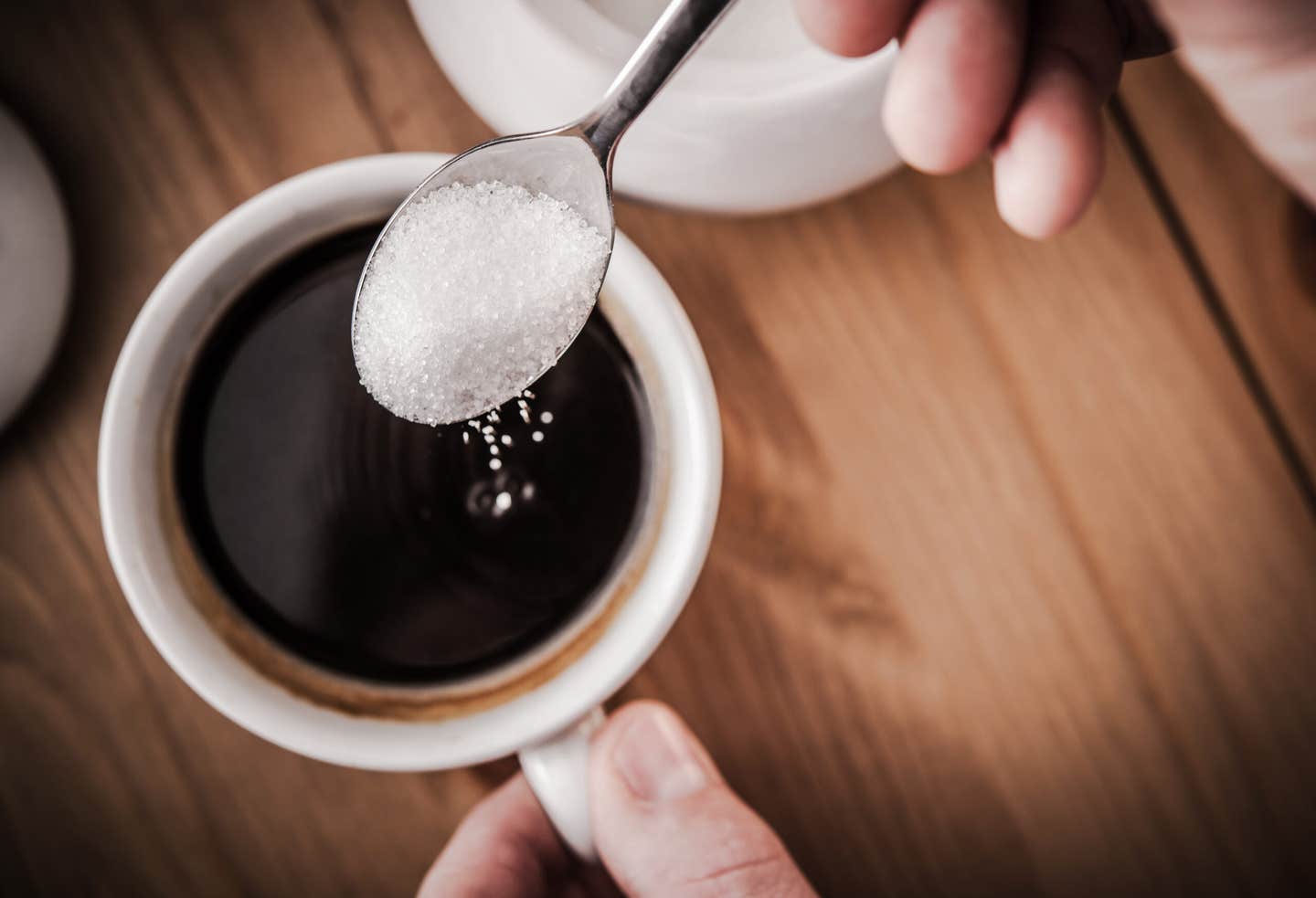
Tufts scientists engineer bacteria to make tagatose, a low-calorie sugar that tastes like sucrose and may benefit health. (CREDIT: Shutterstock)
For more than a century, food scientists have searched for ways to satisfy a sweet tooth without the health risks tied to sugar. From early artificial sweeteners to modern plant-based options, the goal has stayed the same. You want sweetness without excess calories, tooth decay, or higher risks of obesity and diabetes.
Researchers at Tufts University now report a major step toward that goal. In a study published in Cell Reports Physical Science, a team led by Nik Nair, an associate professor of chemical and biological engineering, describes a new biological method to make tagatose, a rare sugar that tastes much like table sugar but carries fewer health drawbacks.
Tagatose occurs naturally in tiny amounts. You can find traces in dairy products after lactose breaks down and in fruits like apples and oranges. Because it usually makes up less than 0.2% of natural sugars, it is rarely extracted from food. Instead, it must be manufactured, a process that has long been costly and inefficient.
“There are established processes to produce tagatose, but they are inefficient and expensive,” Nair said. “We developed a way to produce tagatose by engineering the bacteria Escherichia coli to work as tiny factories.”
Why tagatose matters
Tagatose is about 92% as sweet as sucrose and contains roughly one-third the calories. It has received “generally recognized as safe” status from the U.S. Food and Drug Administration, the same category as common ingredients like salt and baking soda.
Unlike table sugar, tagatose is only partly absorbed in the small intestine. Much of it reaches the colon, where gut bacteria ferment it. Because of that, it causes only small increases in blood glucose and insulin. Clinical studies show very low spikes after people consume it.
Tagatose also behaves like sugar in cooking. It provides bulk, browns during heating, and closely matches sugar’s taste and texture. That makes it appealing to food makers who want to reduce sugar without relying on high-intensity sweeteners that lack volume.
Yet production has limited its use. Older methods often start with galactose, which usually comes from lactose in milk. Only half of lactose can feed tagatose-making reactions, leading to built-in waste. Other routes start from fructose but stall before most of the sugar converts.
Rewriting biology inside bacteria
"Our research team aimed to solve that problem by starting with glucose, one of the cheapest and most abundant sugars available. To do that, we turned to a natural sugar-processing route in E. coli called the Leloir pathway. This pathway normally breaks down galactose into glucose for energy," Nair told The Brighter Side of News.
"The challenge was to run it backward," he continued.
To make that reversal possible, the researchers searched for a special enzyme. After testing several candidates, they found one from a slime mold, Dictyostelium discoideum. The enzyme, called galactose-1-phosphate-selective phosphatase or Gal1P, removes a phosphate group from a galactose-linked molecule.
What made it stand out was its precision. Galactose and glucose differ only slightly, yet this enzyme strongly favored galactose-related compounds. That selectivity helped pull the pathway in reverse, turning glucose into galactose inside the cell.
“The key innovation in the biosynthesis of tagatose was in finding the slime mold Gal1P enzyme and splicing it into our production bacteria,” Nair said.
Once galactose formed, a second enzyme called arabinose isomerase converted part of it into tagatose.
What the bacteria produced
Early tests showed clear gains. When fed galactose, the engineered bacteria made more tagatose than unmodified strains. The real test came with glucose. Ordinary strains showed no tagatose output. After additional genetic changes that blocked glucose from normal energy use, the bacteria began diverting it into the new pathway.
From 30 grams per liter of glucose, the system produced up to 8.7 grams per liter of galactose and about 1.4 grams per liter of tagatose. These results came without heavy optimization. The team also found that increasing production of the slime mold enzyme boosted both galactose and tagatose levels, confirming its central role.
The pathway’s theoretical yield could reach nearly 95%, far higher than traditional manufacturing methods that reach 40% to 77%. Some sugar still supports cell growth, but the efficiency remains striking.
Pushing the balance toward tagatose
One limitation remains. The bacteria make far more galactose than tagatose. That reflects the natural balance of the galactose-to-tagatose step. To improve it, the researchers tested several strategies.
Higher temperatures favored tagatose formation, but too much heat killed the cells. Moderate heat helped without shutting the system down. The team also adjusted how sugars move across the cell membrane. Removing certain transport genes kept more galactose inside, increasing tagatose output by up to 1.66 times.
These results suggest clear paths for future improvement, including fine-tuning temperature, transport, and feeding conditions.
Research findings are available online in the journal Cell Reports Physical Science.
Related Stories
- Popular artificial sweetener could make cancer treatment less effective
- Calorie-free sweeteners could be making you hungrier, study finds
- Natural sweetener Stevia found safe and effective at killing pancreatic cancer cells
Like these kind of feel good stories? Get The Brighter Side of News' newsletter.

Rebecca Shavit
Writer
Based in Los Angeles, Rebecca Shavit is a dedicated science and technology journalist who writes for The Brighter Side of News, an online publication committed to highlighting positive and transformative stories from around the world. Her reporting spans a wide range of topics, from cutting-edge medical breakthroughs to historical discoveries and innovations. With a keen ability to translate complex concepts into engaging and accessible stories, she makes science and innovation relatable to a broad audience.