Scientists found the last universal common ancestor for all life on Earth
A new study suggests the last universal common ancestor lived about 4.2 billion years ago and already had complex cellular traits.

 Edited By: Joseph Shavit

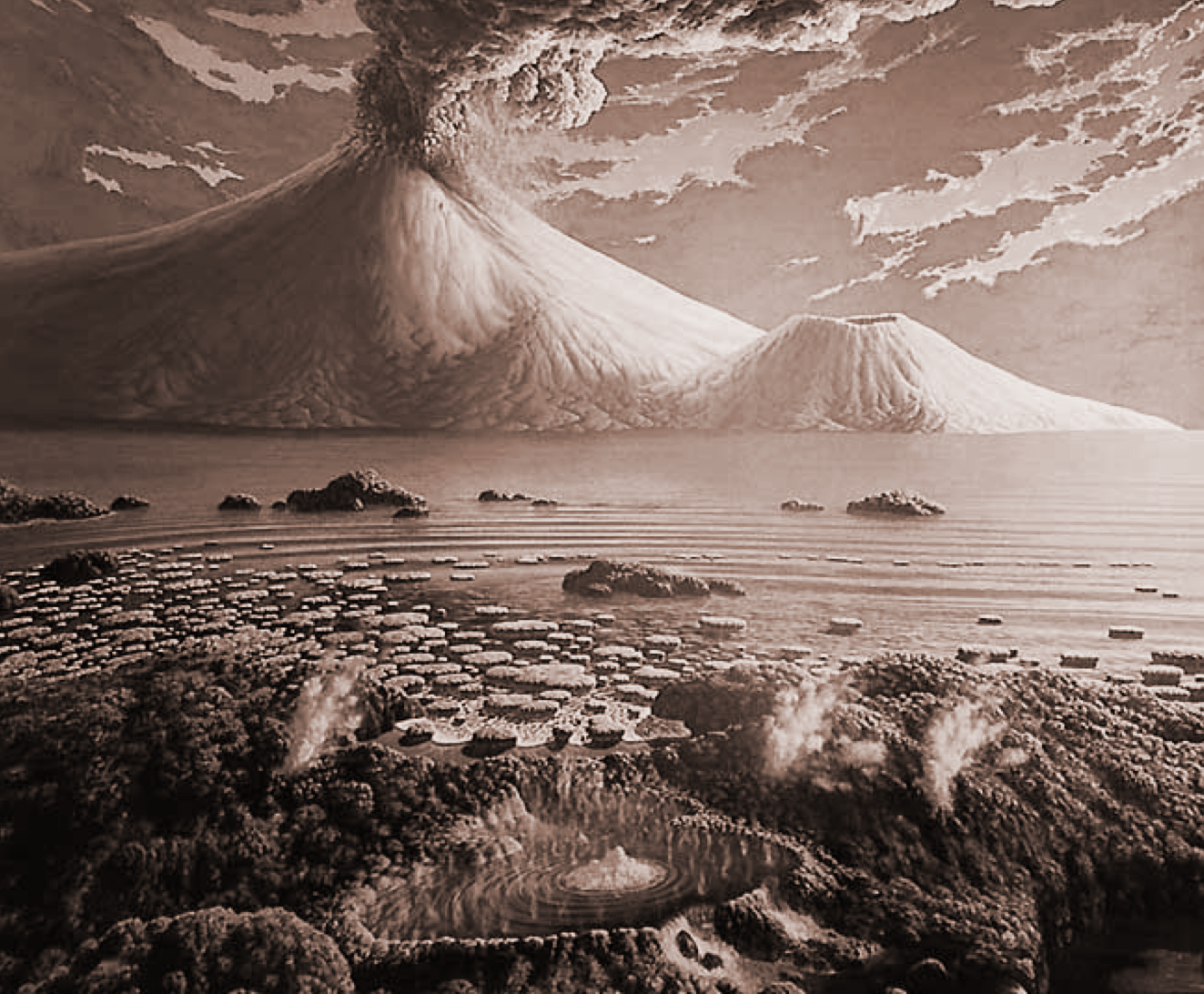
New research suggests LUCA was a complex microbe that lived about 4.2 billion years ago, reshaping ideas about life’s origins. (CREDIT: Wikimedia / CC BY-SA 4.0)
Four billion years ago, Earth was violent, hot, and unstable. Yet new research suggests that by then, life had already reached a surprising level of complexity. At that time lived the last universal common ancestor, known as LUCA. This ancient microbe sits at the base of the tree linking all modern bacteria and archaea, and indirectly, you as well.
LUCA was not the first life on Earth. Instead, it was the last shared ancestor of every cellular organism alive today. Many earlier life forms likely existed before it and vanished. Understanding LUCA gives you a rare look at a moment when life had already diversified but had not yet split into the major domains you see today.
For decades, scientists have argued over what LUCA was like. Some studies pictured a very simple organism with about 80 core proteins. Others proposed a genome rivaling modern microbes, with more than 1,500 gene families. A new study, published in Nature Ecology & Evolution, takes a fresh approach. It combines molecular clocks, genome reconstructions, and models of early Earth to estimate LUCA’s age, biology, and environment.
The work reflects several years of collaboration by an international team. “Understanding what LUCA was like, and when it lived, is important for helping us figure out how life has evolved on Earth,” said Edmund R. R. Moody, a senior research associate in computational evolutionary biology at the University of Bristol. Sandra Álvarez-Carretero, a research fellow at UCL, also contributed to the study.
Dating life’s last shared ancestor
Dating LUCA is difficult. Fossils from Earth’s earliest era are rare and disputed. Molecular clocks can drift over billions of years. Earlier studies often relied on single-copy genes shared across all life and tried to date the root of those trees. Small errors grew larger when scientists worked backward in time.
"To reduce that uncertainty, we focused on genes that duplicated before LUCA existed. These duplicated genes, called pre-LUCA paralogues, left at least two copies in LUCA’s genome. By comparing both copies across modern species, we could “cross-brace” their timelines and anchor age estimates more securely," Moody explained to The Brighter Side of News.
"Our analysis used five sets of these duplicated genes, including ATP synthase subunits, elongation factors, signal recognition proteins, and tRNA synthetases. Thirteen fossil and geochemical markers helped us calibrate the clock, while the maximum age was tied to the Moon-forming impact about 4.51 billion years ago. This likely sterilized early Earth. The minimum age came from geochemical signs of oxygenic photosynthesis in South Africa’s Mozaan Group, dated to nearly 3 billion years ago," he continued.
Using Bayesian models, the researchers reached similar results under different assumptions. LUCA most likely lived around 4.2 billion years ago. That places it surprisingly close to the time when Earth and the Moon formed. If correct, life became complex very quickly.
Rebuilding an ancient genome
To understand LUCA’s biology, the team reconstructed its genome. They analyzed 700 modern genomes, split evenly between bacteria and archaea. Eukaryotes were excluded because they likely arose later from a merger of bacterial and archaeal lineages.
The researchers built a species tree using 57 genes found across all sampled organisms. They then compared thousands of gene family trees from the KEGG Orthology database to this species tree. This method allowed them to estimate where genes were duplicated, transferred, or lost over time.
Rather than requiring a gene to appear in nearly all lineages, the study assigned probabilities. Each gene family had a chance of being present in LUCA. By combining these probabilities, the team inferred that LUCA likely had a genome of about 2.75 megabases. That genome probably encoded around 2,657 proteins. Those numbers fall within the range of many modern microbes.
A conservative core of 399 gene families showed strong support for being present in LUCA. These genes formed the backbone of its metabolic network and cellular machinery.
A complex life without oxygen
The reconstruction suggests LUCA was far from primitive. It likely had a cell membrane, a structured cell wall, and rotary ATP synthase complexes to generate energy. Genes for peptidoglycan synthesis and an actin-like protein called MreB point to a well-organized cell.
Metabolically, LUCA appears to have lived without oxygen. There is no strong evidence for oxygen-based respiration. Instead, LUCA likely relied on the Wood–Ljungdahl pathway, also called the reductive acetyl-CoA pathway. This ancient route allows organisms to fix carbon dioxide using hydrogen, producing simple organic molecules.
LUCA also seems to have had parts of the tricarboxylic acid cycle and enzymes for glycolysis and gluconeogenesis. That mix suggests metabolic flexibility, similar to many modern bacteria and archaea.
Photosynthesis appears unlikely. Genes tied to both oxygenic and anoxygenic photosystems show low probabilities. Methanogenesis also seems to have evolved later, since key enzymes for that process were missing.
One of the most striking findings involves defense. The study found evidence for early CRISPR–Cas systems, including several class 1 effector proteins. However, genes needed to acquire new viral spacers were absent. This pattern suggests LUCA already faced viral threats and used early immune-like tools to survive.
Life in a hydrogen-rich world
LUCA’s metabolism offers clues about where it lived. The Wood–Ljungdahl pathway works best in environments rich in hydrogen and carbon dioxide. Such conditions existed near hydrothermal systems on early Earth.
Evidence for reverse gyrase, an enzyme linked to heat-loving microbes, points toward hot environments like deep-sea vents. At the same time, a DNA repair enzyme tied to ultraviolet damage hints that surface or shallow settings remain possible.
Early Earth likely produced large amounts of hydrogen through volcanic activity and reactions between water and rock. LUCA could have used this hydrogen to fuel carbon fixation. In turn, its metabolic byproducts would have supported other microbes, including early methanogens.
Photochemical reactions in the atmosphere may have recycled methane back into hydrogen, boosting energy supplies. Models suggest this recycling could have supported a modest but stable early biosphere.
A rapid rise to complexity
Taken together, the findings portray LUCA as a fully cellular organism with a genome and metabolism similar to modern microbes. It lived in hot, oxygen-free settings, relied on hydrogen-based chemistry, and already battled viruses.
For you, the message is striking. If LUCA lived around 4.2 billion years ago, the leap from a molten planet to complex cellular life happened fast. Many steps between chemistry and biology may have unfolded in a narrow window of time.
As the authors note, this reconstruction is not final. Many early lineages likely vanished without leaving genetic traces. As more genomes are sequenced and models improve, LUCA’s picture will sharpen. For now, the study offers one of the clearest views yet of life’s shared starting point.
Research findings are available online in the journal Nature Ecology & Evolution.
Related Stories
- Three million years ago, our ancestors were vegetarian, study finds
- How did early primate ancestors survive the asteroid led extinction of the dinosaurs?
- Surprising research finds that human ancestors may have evolved in Europe, not Africa
Like these kind of feel good stories? Get The Brighter Side of News' newsletter.
Joshua Shavit
Writer and Editor
Joshua Shavit is a NorCal-based science and technology writer with a passion for exploring the breakthroughs shaping the future. As a co-founder of The Brighter Side of News, he focuses on positive and transformative advancements in technology, physics, engineering, robotics, and astronomy. Joshua's work highlights the innovators behind the ideas, bringing readers closer to the people driving progress.