Study reveals new way to fully regenerate skin without scarring
Harvard researchers found a nerve-related block that stops skin from regenerating without scars in mice.
 Edited By: Joshua Shavit

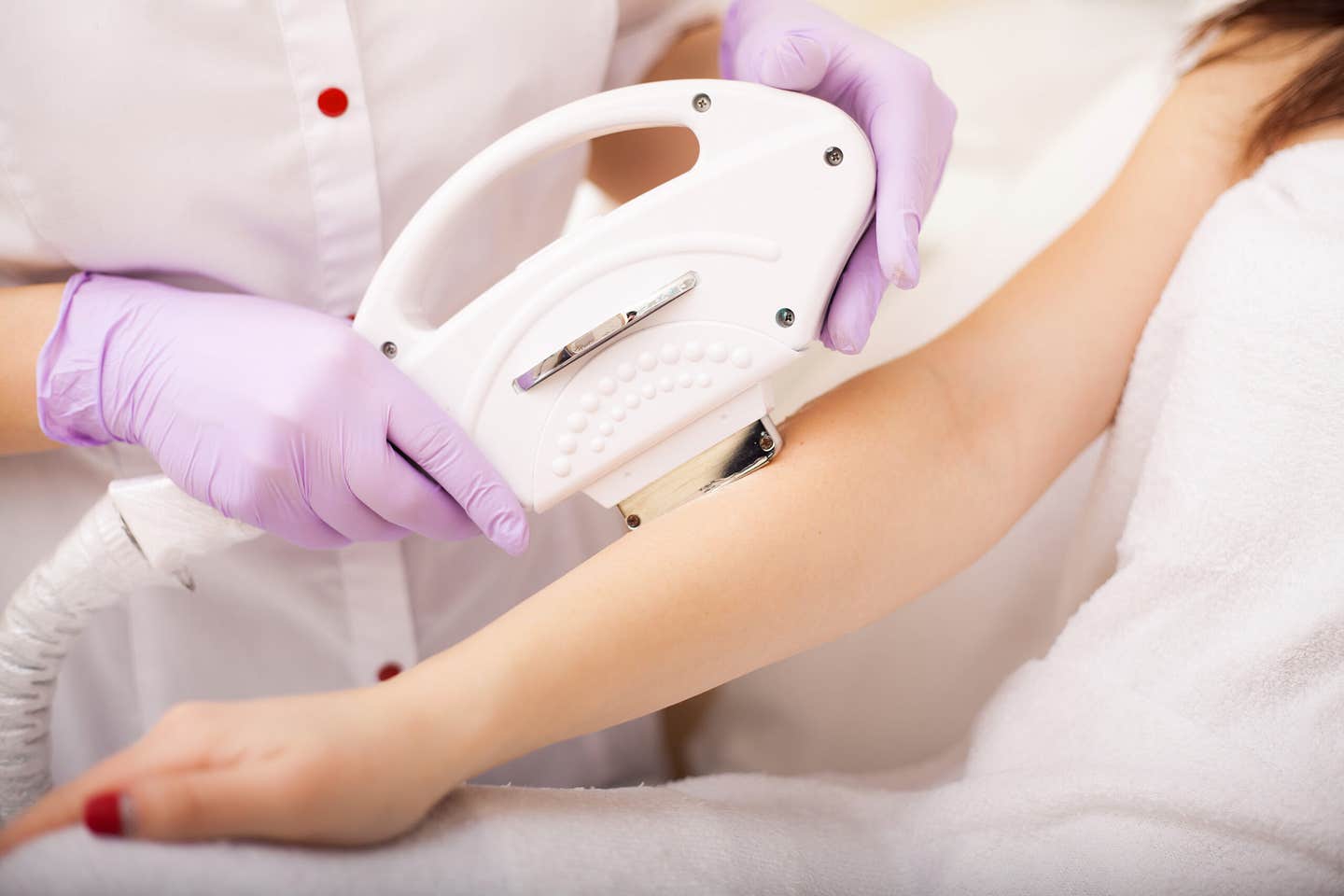
Mouse study suggests scar-free skin healing may be possible by blocking a nerve-related regeneration brake. (CREDIT: Shutterstock)
A cut in the womb can vanish almost without a trace. The same injury a few days after birth leaves behind a scar.
That sharp shift, described in a March 20 study in Cell, helps explain why skin loses much of its ability to rebuild itself so quickly, and it points to a possible way to restore some of that lost talent. In mice, Harvard stem cell biologists found that blocking a signal tied to excess nerve growth let wounded skin regenerate a far wider range of cell types instead of healing with the usual fibrous scar.
“Essentially, we found a way to make wound healing outcome a lot better by learning how embryos do this so well,” said senior author Ya-Chieh Hsu, a professor of stem cell and regenerative biology and principal faculty member at the Harvard Stem Cell Institute.
That matters because skin repair is often mistaken for true regeneration. After injury, the surface usually closes. Beneath it, though, much of the organ does not come back the way it was.
Scars form when fibroblasts deposit dense collagen into the wound bed. Hair follicles, fat cells, pigment cells, lymphatic vessels, nerves, and other specialized structures usually fail to return in full, leaving healed skin permanently changed.
When healing stops being regeneration
Lead author Hannah Tam, a PhD ’26 graduate of Harvard’s biological and biomedical sciences program, compared full-thickness skin wounds in embryonic mice and mice injured at several points after birth. The team tracked the wound sites with fluorescent beads and henna ink because embryonic wounds healed so completely they became hard to find later.
The biggest change came fast. Regenerative ability dropped steadily after birth, but the most dramatic shift took place in an eight-day window, from three days before birth to five days after.
When mice were wounded three days before birth, the skin regrew a striking variety of cell types and came to resemble normal skin. By five days after birth, the outcome looked very different. The wounds closed over, but the site filled with collagen scar tissue, abnormal nerve density, and extra immune cells, while many other skin structures never returned.
The difference did not appear to be a simple delay. Even 50 days later, wounds made at the later stage still lacked many cell types. Embryonic wounds, by contrast, restored hair follicles, melanocytes, adipocytes, lymphatic vessels, and sensory structures. They even rebuilt the circuitry needed for goosebumps, which depend on coordination among hair follicles, muscles, and sympathetic nerves.
The brake, not the engine
At first, Hsu expected the answer would involve rebuilding a complicated mix of embryonic “regeneration-promoting factors.” The study turned up something simpler.
“I didn’t think that we’d have to retract a brake, which actually is good news, it’s a lot easier,” she said. “It gives me hope that this might be applicable to improving wound healing in humans.”
Using single-cell RNA sequencing, the researchers found that postnatal wounds produced a distinct fibroblast population absent in embryonic wounds. These fibroblasts switched on several genes, including Cxcl12. That gene, the team found, helped draw an excess of nerve fibers into the wound site, causing what the researchers call hyperinnervation.
That nerve buildup appeared to be a major obstacle. When the team increased immune cell infiltration in embryonic wounds, regeneration still went forward. But when they artificially boosted innervation, regeneration broke down.
“The surprising part is that we identify a block,” Tam said. “And this block is through fibroblast-nerve interaction. The relationship between those two different cell types has not been the focus in wound healing studies. I feel that this is very helpful to the field, because now we can really consider these two as actual communicators.”
Loosening the block
The researchers then tested whether removing that brake could improve healing after birth.
In postnatal mice, deleting Cxcl12 in fibroblasts reduced hyperinnervation and allowed wounds to regenerate hair follicles, adipocytes, lymphatic capillaries, melanocytes, and both sensory and sympathetic nerves. Blocking nerve signaling locally with botulinum toxin A produced similar effects. The same general strategy also improved healing in adult mice, though the regeneration was less complete than in the youngest animals.
Hsu said the findings hint that some organs may still hold onto regenerative ability, but keep it suppressed.
“Our findings suggest that some organs retain an inherent regenerative potential that is simply held in check, and that removing this block may be sufficient to allow regeneration to occur,” she said. “In other words, regeneration may not need to be built anew, but simply set free.”
The study does come with an important limit. These experiments were done in mice, not people, and the paper points to possible human therapies rather than demonstrating one. Adult regeneration also remained incomplete, even when healing improved.
Still, the work reframes a familiar problem. Scar formation may not just reflect missing ingredients. It may also reflect a biological brake that arrives with development and could, at least in part, be lifted.
Practical implications of the research
This study suggests future wound treatments might do more than speed closure or soften scars.
If the same biology holds in people, therapies that limit early hyperinnervation or block signals such as CXCL12 could help injured skin rebuild more of its original structures, including hair follicles, pigment cells, and supportive tissue.
That could matter for surgical wounds, burns, chronic wounds, and other serious injuries where restored skin function is just as important as appearance.
Research findings are available online in the journal Cell.
The original story "Study reveals new way to fully regenerate skin without scarring" is published in The Brighter Side of News.
Related Stories
- Pigs and grizzly bears may be the key to youthful human skin
- Scientists create skin graft health monitor that glows in response to inflammation
- Tanning beds turn young skin genetically old, study finds
Like these kind of feel good stories? Get The Brighter Side of News' newsletter.
Joseph Shavit
Writer, Editor-At-Large and Publisher
Joseph Shavit, based in Los Angeles, is a seasoned science journalist, editor and co-founder of The Brighter Side of News, where he transforms complex discoveries into clear, engaging stories for general readers. With vast experience at major media groups like Times Mirror and Tribune, he writes with both authority and curiosity. His writing focuses on space science, planetary science, quantum mechanics, geology. Known for linking breakthroughs to real-world markets, he highlights how research transitions into products and industries that shape daily life.