The coldest ever hunt for dark matter has begun deep underground
SuperCDMS has reached its target temperature in a Sudbury mine and is now preparing to search for dark matter.

 Edited By: Joseph Shavit

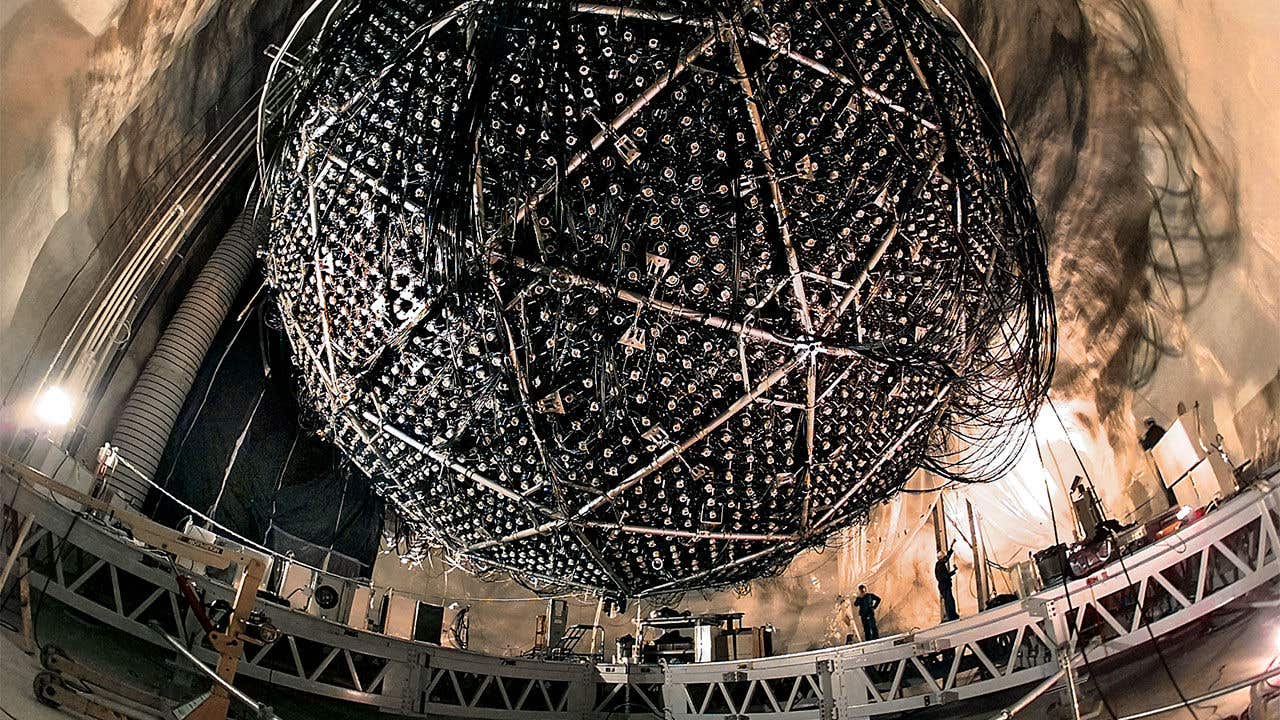
SuperCDMS reaches base temperature deep underground, opening a new search for ultralight dark matter particles. (CREDIT: Christopher Smith/SLAC National Accelerator Laboratory)
Two kilometres underground near Sudbury, Ont., a machine has reached a temperature so low it barely seems real. Inside SNOLAB, scientists have cooled the Super Cryogenic Dark Matter Search, or SuperCDMS, to just tens of milliKelvin above absolute zero, roughly a hundred times colder than outer space.
That number matters because the experiment’s detectors cannot truly come alive until they reach it.
“Reaching this base temperature now allows us to turn on the detectors, make sure they are all working and start collecting data that potentially is coming from dark matter particles hitting our detectors,” says Miriam Diamond, a co-principal investigator in the international collaboration and an assistant professor in the University of Toronto’s department of physics in the Faculty of Arts & Science.
For the team behind SuperCDMS, hitting base temperature marks a turning point. The project is no longer mainly about construction and installation. It is moving into commissioning and, soon after that, science operations.
Where the silence matters most
The experiment is housed at SNOLAB, a research facility built in an active nickel mine near Sudbury. Its location is not a dramatic flourish. It is a practical shield. At that depth, the rock overhead blocks cosmic rays and other background particles that could hide the faint signals scientists are trying to isolate.
SLAC National Accelerator Laboratory serves as the lead laboratory for the project, while University of Toronto physicists have played a major role in helping get the system ready for this moment. Diamond’s fellow co-principal investigators from U of T’s department of physics are Assistant Professor Ziqing Hong and Professor Pekka Sinervo.
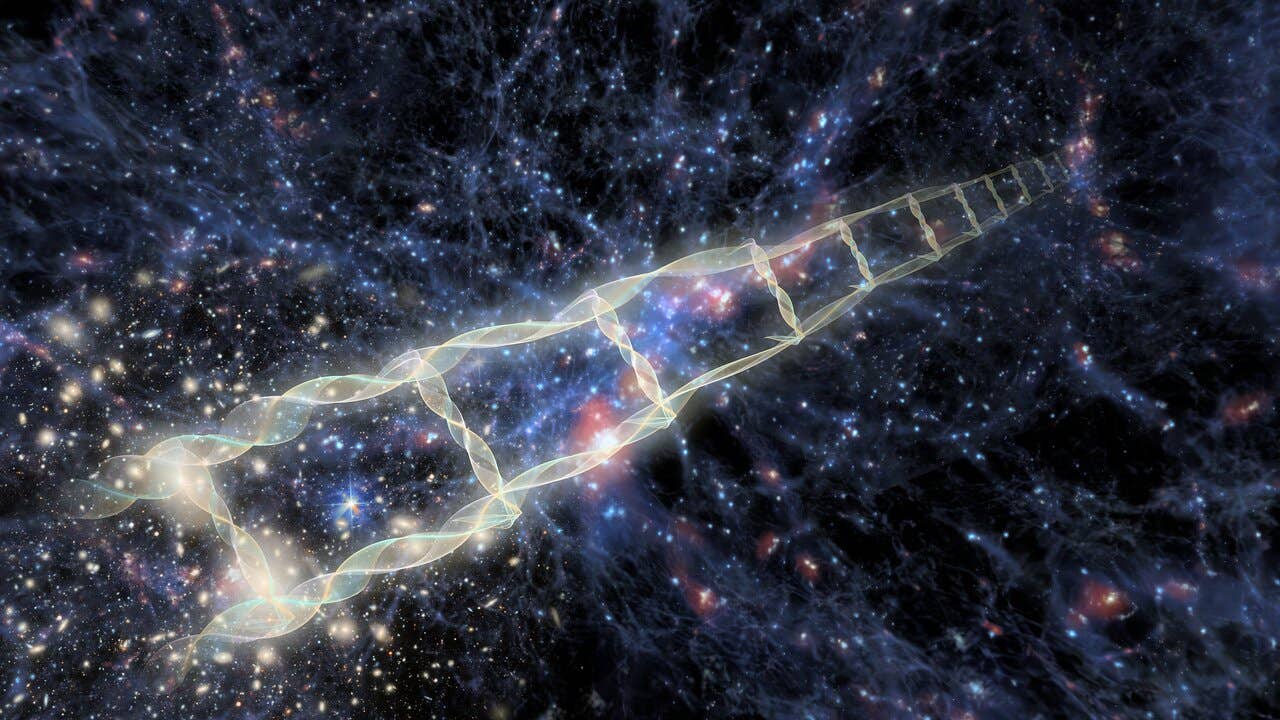
The goal is one of modern physics’ most stubborn targets: direct detection of dark matter, the mysterious substance that makes up about 75 per cent of the matter in the universe. Galaxies, including the Milky Way, are thought to sit inside large clouds of it. Yet no one knows exactly what dark matter is.
“Dark matter is going through us all the time. Our challenge is to build a detector quiet and sensitive enough to notice when one of those particles interacts,” Diamond says.
That is what makes the mine, the shielding and the cold so important. The quieter the detector, the better the odds of spotting something that rarely, if ever, leaves a clear trace.
Built for particles that barely leave a mark
SuperCDMS is designed to search for very light dark matter particles, ones whose interactions with ordinary matter may be so tiny they have escaped direct detection so far. The experiment will be among the first to probe that part of the search space.
“Our experiment is able to have this level of sensitivity because we have worked very hard to eliminate all other possible sources that could mimic a dark matter particle hitting our detectors,” Hong says.
At the center of the instrument are ultra-pure silicon and germanium crystals, each about the size of a hockey puck.
If a dark matter particle hits one of those crystals, the collision should create a tiny vibration, called a phonon, and also produce a small electrical signal. Those signs are incredibly faint. To catch them, the crystals are fitted with superconducting sensors that only function when they are kept extremely cold.
That is where the refrigerator comes in.
Cooling the experiment strips away thermal noise, the random motion of atoms that can drown out subtle signals. SuperCDMS has to descend through a sequence of cooling stages, first from room temperature to 50 Kelvin, then to four Kelvin, then one Kelvin, and finally into the milliKelvin range. A separate system cools the readout cables so they do not leak heat or noise back into the detectors.
Years of work for a single temperature
Reaching this point took more than simply turning on a machine and waiting.
Over the last year, the collaboration developed a detailed cooldown plan, step by step, and worked with cryogenics experts responsible for different parts of the system. The milestone comes after years of preparation and months of close planning.
Hong says University of Toronto researchers helped lead the assembly of the experiment and the operations needed to reach base temperature. Graduate students and postdoctoral fellows worked both underground at SNOLAB and at the university over the last three years.
“Our team of graduate students and postdoctoral fellows have been working both underground at SNOLAB and here at the university for the last three years to help make this happen. Reaching this milestone is a reflection of their expertise and commitment,” Hong says.
Now the project enters detector commissioning, a process expected to take months. Scientists will turn on each detector channel, calibrate it and optimize its performance. Only after that will the first science run begin.
That run is expected to last about a year.
What scientists may find, or fail to find
Even the first few months of data could be enough to produce a discovery, but only under certain conditions described by the team. The source notes that dark matter could be detected early if the particles are around the mass of a proton and if they are attracted strongly enough to ordinary matter.
That is the hopeful scenario.
The harder truth is that no one can promise such particles will appear in the data, or even that dark matter behaves in a way this instrument can catch. SuperCDMS is entering what the team calls uncharted territory precisely because these particles, if they exist in this mass range, have not yet been directly seen.
Still, the search is not limited to one outcome. If no expected dark matter signal appears, the experiment could still sharpen the boundaries of what dark matter can be. It may also point researchers toward something stranger.
The collaboration says SuperCDMS could do more than hunt dark matter. It may also help scientists study rare isotopes, investigate feeble particle interactions with unusual precision and perhaps uncover entirely new kinds of particle interactions.
Practical implications of the research
This milestone does not mean dark matter has been found. It means the experiment built to search for it can finally begin working as intended. That alone is important. SuperCDMS has been designed to listen for some of the faintest possible interactions in nature, and reaching base temperature is what makes that listening possible.
If the detector records a convincing signal, it could change how scientists understand the makeup of the universe. If it does not, the results would still help narrow the search and guide future experiments. Either way, the work inside that Sudbury mine is now shifting from preparation to evidence.
The original story "The coldest ever hunt for dark matter has begun deep underground" is published in The Brighter Side of News.
Related Stories
- 6,800 feet below ground, in the search for dark matter, something has gone very, very cold
- Astronomers discover a mysterious duality in dark matter
- Gravitational waves may be responsible for dark matter in the universe
Like these kind of feel good stories? Get The Brighter Side of News' newsletter.
Shy Cohen
Writer