The long-term effects of repeated head trauma in football
Longer football careers were linked to worse cognition and depression scores in a large study of former players.

 Edited By: Joseph Shavit

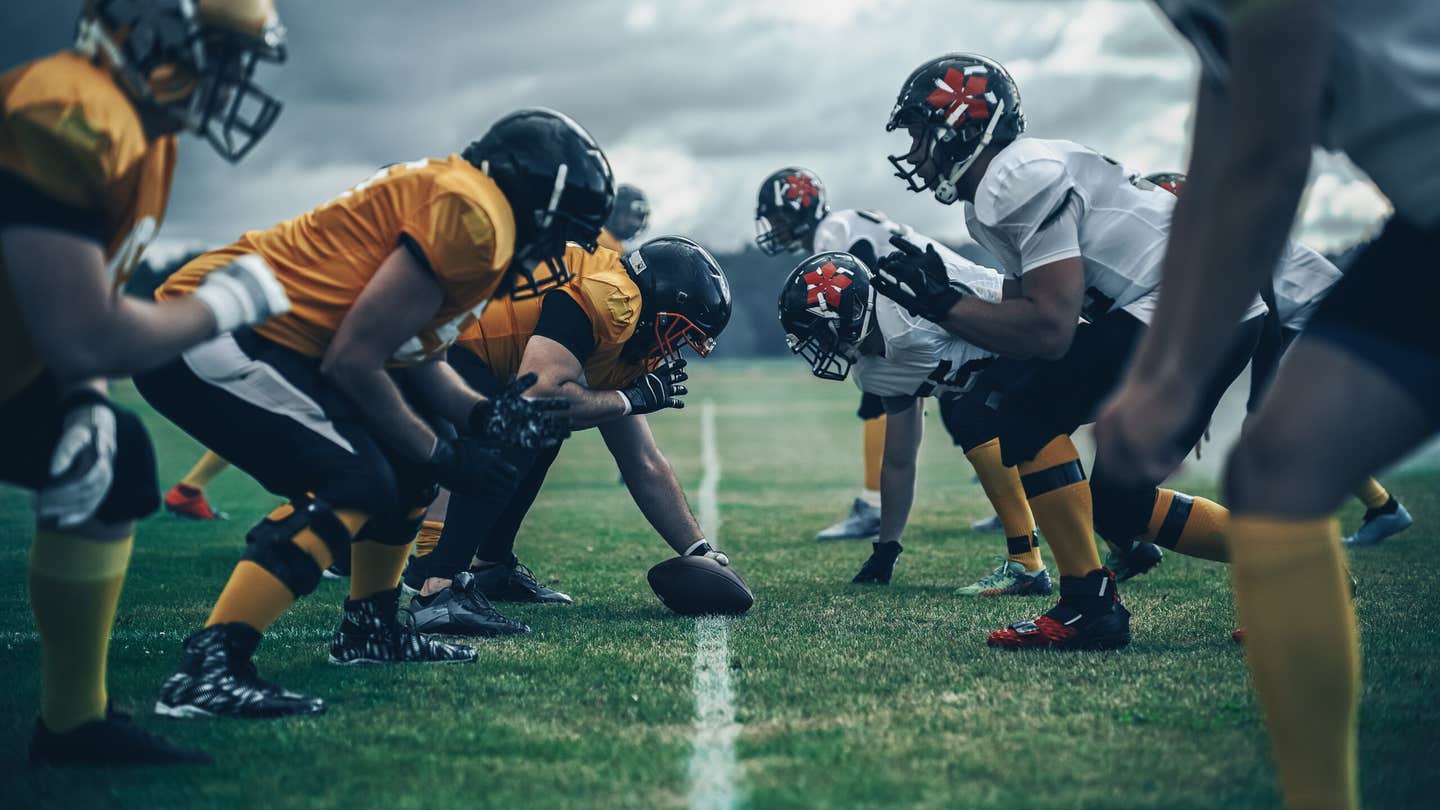
Former football players show worse memory and mood outcomes, with risk rising by years and level of play. (CREDIT: Shutterstock)
Scores on a memory test dropped as football experience rose, and the pattern held across thousands of former players.
This trend was the focus of a large analysis of retired American football players aged 40 and older. Researchers compared men who played the sport with a control group that reported no prior history of repeated head trauma due to contact sports. Additionally, the control group reported no head trauma from military service or substance abuse.
Overall, men who played football had poorer scores on memory tests and reported more cognitive problems. In addition, participants in the football group with longer careers and higher levels of competition experienced poorer cognitive performance than their peers.
The current study uses data from the Head Impact & Trauma Surveillance Study, or HITSS. This is a nationwide study within the Brain Health Registry at the University of California, San Francisco. It has more than 100,000 participants. These participants will be followed into the future.
Participants in HITSS completed a 90-minute battery of online questionnaires and cognitive assessments at home. The questionnaires addressed their medical history, exposure to sports, mood, and computerized neuropsychological assessment.
Current and Previous Study Data and Samples
The current study utilized the data collected during the recruitment period from May 2022 to February 2025.
Using a larger sample than prior studies, many previous studies regarding brain injury due to football have been conducted on small numbers of elite athletes. In addition, many studies have used post-mortem examination of the brains of deceased athletes as their primary source of information.
These studies have shown that repeated head impacts can lead to chronic traumatic encephalopathy and other forms of brain injury. However, they do not allow researchers to answer questions regarding the long-term effects of these injuries on the broader population of football players.
Study Population and Comparison Groups
In this study, the researchers aimed to fill that gap by including 3,970 men who played the game at any level, from youth through professional levels. The participants' mean age was approximately 56 years.
A matched cohort made up of 661 retired athletes and 282 nonathletes, matched on age, race/ethnicity, and educational level, was a major comparison group. The matched cohort's average age was approximately 58 years.
The controls were required to have been free of head injury exposure throughout their lives.
Prior to formal statistical testing, some observable differences existed. Using a self-report of cognitive performance, the average score was 1.56 for the former athletes. For the controls, it was 1.38. A higher number indicates less cognitive ability. Similarly, the average depression score for the former athletes was 6.22. This compared with 5.56 for the controls.
Cognitive and Mood Differences
Significant differences were identified in cognitive functioning and in mood. Regression analyses performed confirmed the differences.
Compared to the controls, former athletes performed more poorly on the computerized memory test, the Paired Associates Learning First Try Memory Test. The controls' average test score was lower than that of the former athletes. The average number of errors made by the athletes was greater than that of the controls. In addition, the differences were statistically significant, with standardized effect sizes ranging from −0.15 to 0.18.
The greatest observed differences occurred in self-reported symptomatology. The Everyday Cognition Scale's standardized beta was 0.38 (P < .001). The average depression score increased for former athletes, with a standardized beta of 0.37 (P < .001).
Based on these findings, a history of playing football is associated with a decreased ability to function in memory. It is also associated with increased difficulty engaging in everyday cognitive tasks and increased feelings of depression, relative to men who did not have repeated contact with head injuries.
Key Factors of Exposure to Sports
The second analysis focused on the football cohort. The analysis examined the number of years of playing football, level of competition, age when first starting to play, and position played as possible indicators of the amount of cumulative exposure. These factors were also looked at for risk of injury from playing football.
Within the professional group, there were clear trends when comparing years of football played to the levels of competition. Professional football players averaged about 14 years of playing football, compared to college football players at about 10 years. Youth or high school football players averaged approximately 6 years.
The level of competition that each football player participated in had a correlation with how poorly he performed on multiple measures of performance. These measures included cognitive (memory) functioning and emotional measures such as behavioral regulation and depressive symptoms.
Statistical Results
The results of the statistical analysis indicated that all football players were negatively impacted by the years of participation and level of competition. The adjusted P values for all of the measures were statistically significant and ranged from .03 to less than .001.
The results of the post hoc analysis illustrated a dose-response pattern. In this pattern, professional football players were more likely than college football players, and college football players were more likely than youth football players, to experience poor performance on the performance measures.
The number of years of football participation was a predictor of outcome. With each additional year of playing, the likelihood of experiencing problems related to behavioral regulation and cognitive complaints in daily life increased. At the same time, the incidence of depression increased. A rough estimate of the increase in the likelihood of depression was 0.03 for every year of playing football.
Additional Risk Patterns and Implications
The likelihood of having clinically significant elevations of symptoms had a similar trend to the number of years of playing football. Professionals had increased likelihoods of having elevated scores on everyday cognitive and behavioral regulation problems and depression when compared to youth or high school players. Likewise, college football players had increased likelihoods of having elevated scores compared to youth or high school players.
Age at first exposure to football and the position a player played did not have any significant relationships with outcome, as seen in the current analysis.
What can be concluded based on the results of this research? The findings of this research do not prove causality. They provide a snapshot of the collective experiences of many individuals.
Limitations of the Research
There are several limitations of this research that may have affected the results. Participants in this study were all volunteers who had access to the internet and adequate levels of digital literacy. The football player cohort also lacked diversity in race and educational backgrounds.
Individuals who had experienced symptoms may have been more likely to participate in this study, which may have introduced selection bias in the findings. Many of the measures used to assess performance relied on self-reported data, which is subject to potential bias (recall bias) and error.
Matching study participants to control participants for age, sex, education, race, and income was done in a retrospective manner. This matching was not randomized.
The placebo effects of any participants in the Brain Health Registry could also have been affected by geographic location and methods of recruitment. These differences could affect the ability of the Brain Health Registry to recruit participants similar to those in the HITSS study.
Despite the limitations of the current study, the significant correlations between exposure levels of football played and multiple measures of performance demonstrate a consistent finding between the two data sets. Previous literature related to the neurological effects of multiple head impacts on the brain also supports this finding.
Research findings are available online in the journal JAMA Network Open.
The original story "The long-term effects of repeated head trauma in football" is published in The Brighter Side of News.
Related Stories
- Scientists develop a light-based approach to protecting football players’ brains
- Largest study of its kind reveals CTE as cause of dementia
- The cause of post-concussion issues experienced by athletes identified
Like these kind of feel good stories? Get The Brighter Side of News' newsletter.