Traditional Chinese exercise routine reduces blood pressure as much as brisk walking
A traditional Chinese exercise routine reduced blood pressure as much as brisk walking in a year-long clinical trial.

 Edited By: Joseph Shavit

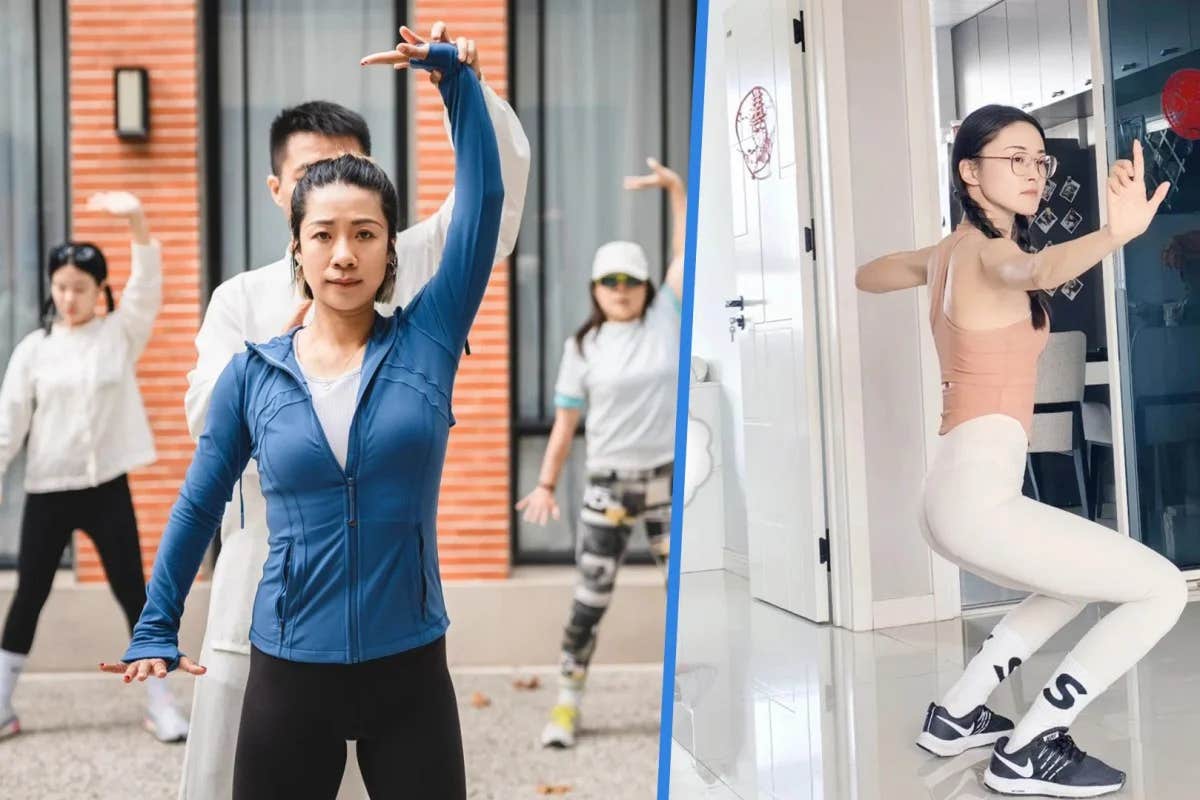
A clinical trial finds baduanjin lowers blood pressure as effectively as brisk walking, with benefits lasting one year. (CREDIT: SCMP)
The Baduanjin exercise has been practiced for hundreds of years as a way to achieve relaxation and improve mental and physical health through gentle movement.
Recently, scientists completed a large clinical study to evaluate whether performing Baduanjin has any cardiovascular health benefits.
According to the results, researchers found that practicing Baduanjin reduces blood pressure to a similar degree as brisk walking in people with high blood pressure. The reduction in blood pressure occurs after three months of practicing Baduanjin. The reduction is also sustained for 12 months following cessation of practice. These findings were published in the Journal of the American College of Cardiology.
High blood pressure remains one of the greatest modifiable risk factors for cardiovascular disease. Physicians often recommend exercise to lower blood pressure. However, many patients find it difficult to maintain a regular exercise regimen due to the need for specialized equipment, gym access, or structured exercise programs.
An Accessible Model
Baduanjin provides a feasible alternative model for achieving these same goals.
The Baduanjin exercise consists of eight standardized movements performed at a slow rate, using either only body weight or with the assistance of a mat. Additionally, the exercise incorporates both aerobic and resistance components through muscle engagement with very light resistance applied to the body.
The Baduanjin exercise is a very low-to-moderate intensity routine that provides a safe, effective, and inexpensive source of cardiovascular fitness for many adults. This includes individuals who may have difficulty continuing to exercise by participating in higher-intensity programs.
Dr. Jing Li, MD, PhD, the senior author of this study and director of the Department of Preventive Medicine at the National Center for Cardiovascular Diseases in Beijing, stated that “due to Baduanjin’s simplicity, safety, and ease to maintain over time, it could be an effective, accessible and scalable intervention for people with hypertension trying to lower their blood pressure.” This trial was the first large multicentered randomized trial examining the benefits of exercise over time, specifically its impact on blood pressure.
Study Design And Participants
To determine how Baduanjin works, researchers followed a sample of 216 adults aged 40 and older from seven cities in different geographic regions. All participants had a systolic blood pressure measurement between 130 and 139 mm Hg, placing them into Stage 1 hypertension according to the ACC/AHA guidelines.
The participants were randomly assigned to one of three different treatment groups for 52 weeks. One group performed Baduanjin five days a week. The second group was instructed to do their own exercises without any guidance, and the third group walked briskly.
Researchers monitored participants’ mean change from baseline to 12 weeks and 52 weeks in 24-hour systolic blood pressure. The mean age was 57.3 years old, and 64.8% were female. The study enrolled 108 participants in the Baduanjin group, with the other two groups each having 54 participants enrolled.
Blood Pressure Findings
The primary finding of this study was that Baduanjin produced greater reductions in 24-hour systolic blood pressure compared with self-guided exercise. At both time points, the mean 24-hour systolic blood pressure was approximately 3 mm Hg lower in the Baduanjin group than in the self-guided group. The mean office measurement, where the physician took the blood pressure, was also approximately 5 mm Hg lower in the Baduanjin group. Those reductions fall within the average reductions seen with certain first-line blood-pressure-lowering medications.
After one year, the blood pressure outcomes for the Baduanjin group and brisk walking groups were very similar. Additionally, researchers found no statistically significant differences in the frequency of adverse events experienced by any of the three treatment groups.
One other interesting observation was that the improvement in blood pressure status continued to be significant even without ongoing monitoring. This is a common obstacle that often hinders many lifestyle interventions once the participant stops receiving supervision.
Broader Implications
Baduanjin is an ancient form of exercise that dates back approximately 800 years. This study demonstrates that modern randomized clinical research can also validate ancient, traditional cultural practices. “Baduanjin has been practiced in China for over 800 years, and this study provides us with evidence of how ancient, low-cost, and easily accessible practices can be validated through high-quality randomized clinical trials,” stated Harlan M. Krumholz, MD, FACC, editor-in-chief for JACC and the Harold H. Hines, Jr. Professor at Yale School of Medicine.
“The size of the effect on blood pressure is comparable to large clinical trials that have evaluated medications, yet no medication, cost, or side effects were involved,” Dr. Krumholz continued. “As such, Baduanjin can be easily implemented at a community level, including in areas with limited resources.”
Furthermore, researchers observed that the blood pressure effects from participating in Baduanjin did not differ among subgroups of study participants. This suggests Baduanjin provided the same benefit to all participants in the study.
Research findings, including referenced videos, are available online in the Journal of the American College of Cardiology.
The original story "Traditional Chinese exercise routine reduces blood pressure as much as brisk walking" is published in The Brighter Side of News.
Related Stories
- Traditional Chinese herb can protect the brain from Alzheimer's disease
- Lifechanging cancer drug produced from plant found only in rainforests
- Classical Indian dance is teaching robots how to move and use their hands
Like these kind of feel good stories? Get The Brighter Side of News' newsletter.
Hannah Shavit-Weiner
Medical & Health Writer
Hannah Shavit-Weiner is a Los Angeles–based medical and health journalist for The Brighter Side of News, an online publication focused on uplifting, transformative stories from around the globe. Passionate about spotlighting groundbreaking discoveries and innovations, Hannah covers a broad spectrum of topics—from medical breakthroughs and health information to animal science. With a talent for making complex science clear and compelling, she connects readers to the advancements shaping a brighter, more hopeful future.