Ukrainian skeleton racer banned from the Olympics receives $200,000 after honoring fallen athletes
After an Olympic ban over a memorial helmet, a Ukrainian athlete receives major financial backing and national praise.
 Edited By: Joseph Shavit

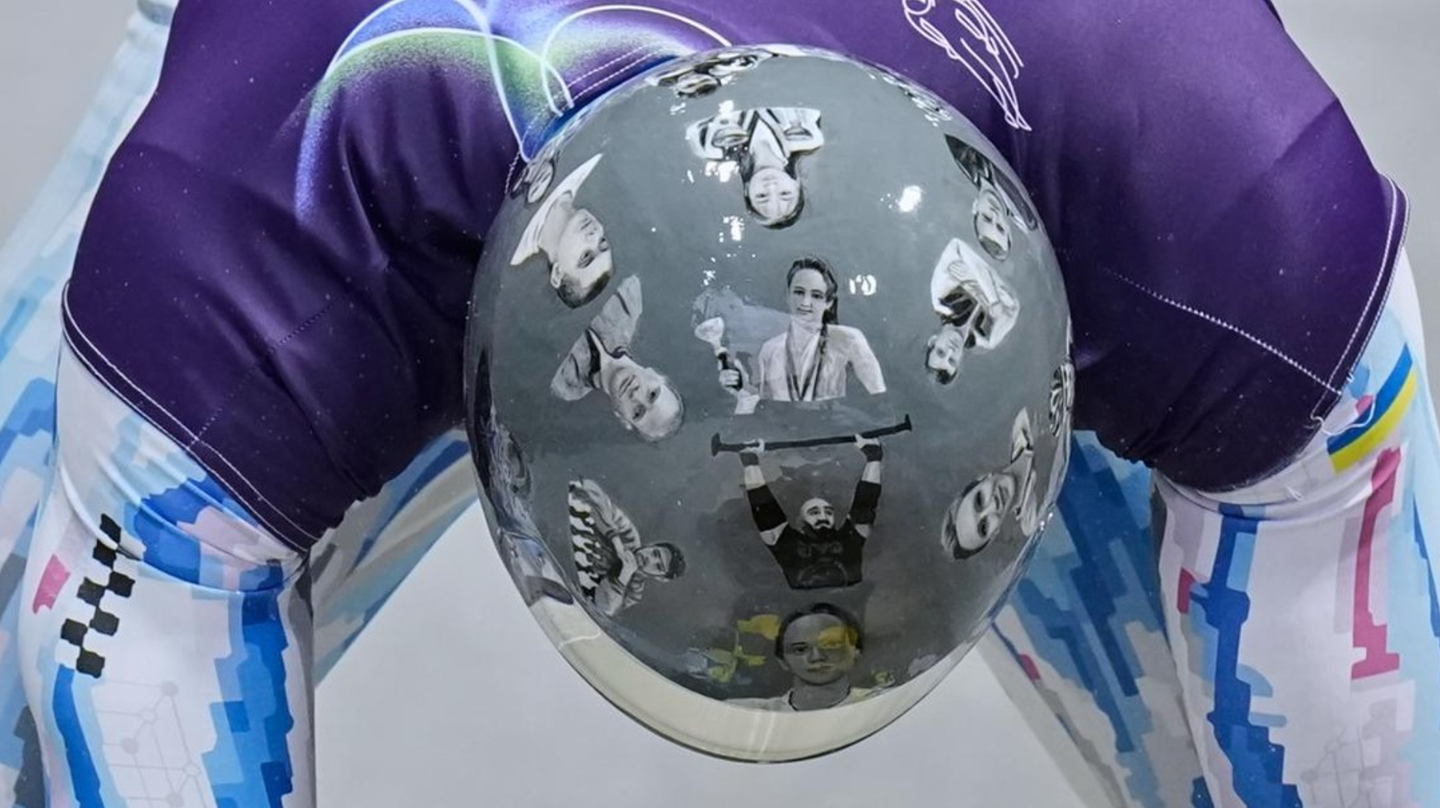
A Ukrainian skeleton racer banned from the Olympics receives $200,000 after honoring fallen athletes on his helmet. (CREDIT: Instagram / Fox West Texas)
The symbol of the helmet was not a collection of abstract designs; it was actually a visual representation of real people. The faces of over 20 members of the Ukrainian Olympic Team killed during Russia's ongoing war against Ukraine were designed as part of the helmet.
Skeleton racer Vladyslav Heraskevych had planned on wearing this helmet at the winter games in Milan Cortina but was disqualified before completing any races at these games.
After being disqualified, Vladyslav returned home with an unexpected gift — a donation from Rinat Akhmetov, the owner of Donetsk Shakhtar FC and Mariupol Azovstal Steel Factory, in excess of $200,000 intended as a financial contribution to support his athletic career as well as promote his message.
The total amount of the donation coincidentally matched the value of the prize awarded to Olympic Gold medal winners by Ukraine.
“Vlad was deprived of a chance to compete for glory at the Olympic Games, but he is a true champion for returning to Ukraine,” said Akhmetov. “He is a hero in the eyes of many Ukrainians today because he stood for Ukraine during a difficult time. I hope that he uses this gift to help continue his work as a professional athlete, to advocate for the ideals of freedom and democracy, and to honor the memory of those who sacrificed everything for Ukraine.”
Disqualification Before the Starting Line
The controversy surrounding Vladyslav’s situation began when officials deemed that his helmet constituted a violation of Olympic policies against political statements made during competition. The International Bobsleigh and Skeleton Federation (IBSF) disqualified Heraskevych when it ruled that the helmet design violated the Federation's regulations on athlete representation. The helmet design included the names of 24 deceased members of Ukraine's 2022 Olympic Team.
In an attempt to reverse this ruling, he appealed to the Court of Arbitration for Sport. The ruling was dismissed shortly before the two final rounds of the bobsled race but it was too late because he had already missed the first two rounds due to his suspension.
The Ad Hoc Tribunal concluded that the restrictions imposed by the IBSF were proportionate and reasonable.
This situation received international attention during the early days of the XXIII Winter Olympics. Kirsty Coventry, President of the International Olympic Committee, met with Heraskevych to negotiate a resolution at the sliding venue just before the start of the Games.
Officials suggested he wear a black armband while competing and present the helmet both pre- and post-race. They claimed that wearing the helmet during competition violated the rules prohibiting the use of political symbols on the competition surface.
Heraskevych had been wearing the helmet for several training days in Cortina d'Ampezzo before receiving a letter of warning about it from Olympic officials the day before the start of the Games.
Recognition and National Support
Support within and outside Ukraine grew as the media became aware of the event.
Ukrainian President Volodymyr Zelenskyy lauded him, as well as presenting Heraskevych with the title of The Order of Freedom. This award placed a national component on an issue that began as a sporting dispute.
Akhmetov made a financial contribution to Heraskevych's charity organization. The organization stated that these funds will allow him and his coaches to continue training and working together to promote Ukraine worldwide.
The soccer club Shakhtar Donetsk donated money to his organization and described it as an expression of support for Heraskevych's right to represent and protect Ukraine's interests in the international arena.
The club itself symbolizes, in modern Ukrainian history, the ongoing war. Since the annexation of Crimea by Russia in 2014 and the beginning of the conflict in the east of Ukraine, Shakhtar has not played in its home stadium, Donbas Arena. The club now plays all of its home games in Lviv, Ukraine, and competes in European competitions in Poland and Germany.
Despite the loss of its home venue and its frequent displacements due to the war, the club is still competing in Europe and currently occupies the second position in the country's Premier League.
A National Debate Beyond Sport
This case brought forth greater discussion of both the political nature of Olympic neutrality and the role of political expression.
Many critics believe that honoring fallen athletes is primarily a matter of respectful remembrance, while Olympic officials state that competition venues should be free of any activities or demonstrations related to political activism and conflict.
Every instance of the tension described above has raised similar questions about the nature of Olympic neutrality and political expression; however, each is based upon its own circumstances.
The original story "Ukrainian skeleton racer banned from the Olympics receives $200,000 after honoring fallen athletes" is published in The Brighter Side of News.
Related Stories
- The Hidden Infrastructure Shaping Milano Cortina 2026’s Climate Strategy
- Inside Tokyo’s growing movement toward inclusive Para sports
- What Olympic Coverage Reveals About Who Belongs in America
Like these kind of feel good stories? Get The Brighter Side of News' newsletter.