Why humans are helpless at birth and what it tells us about human nature
A new paper argues that infant helplessness may be central to human social and psychological development.

 Edited By: Joseph Shavit

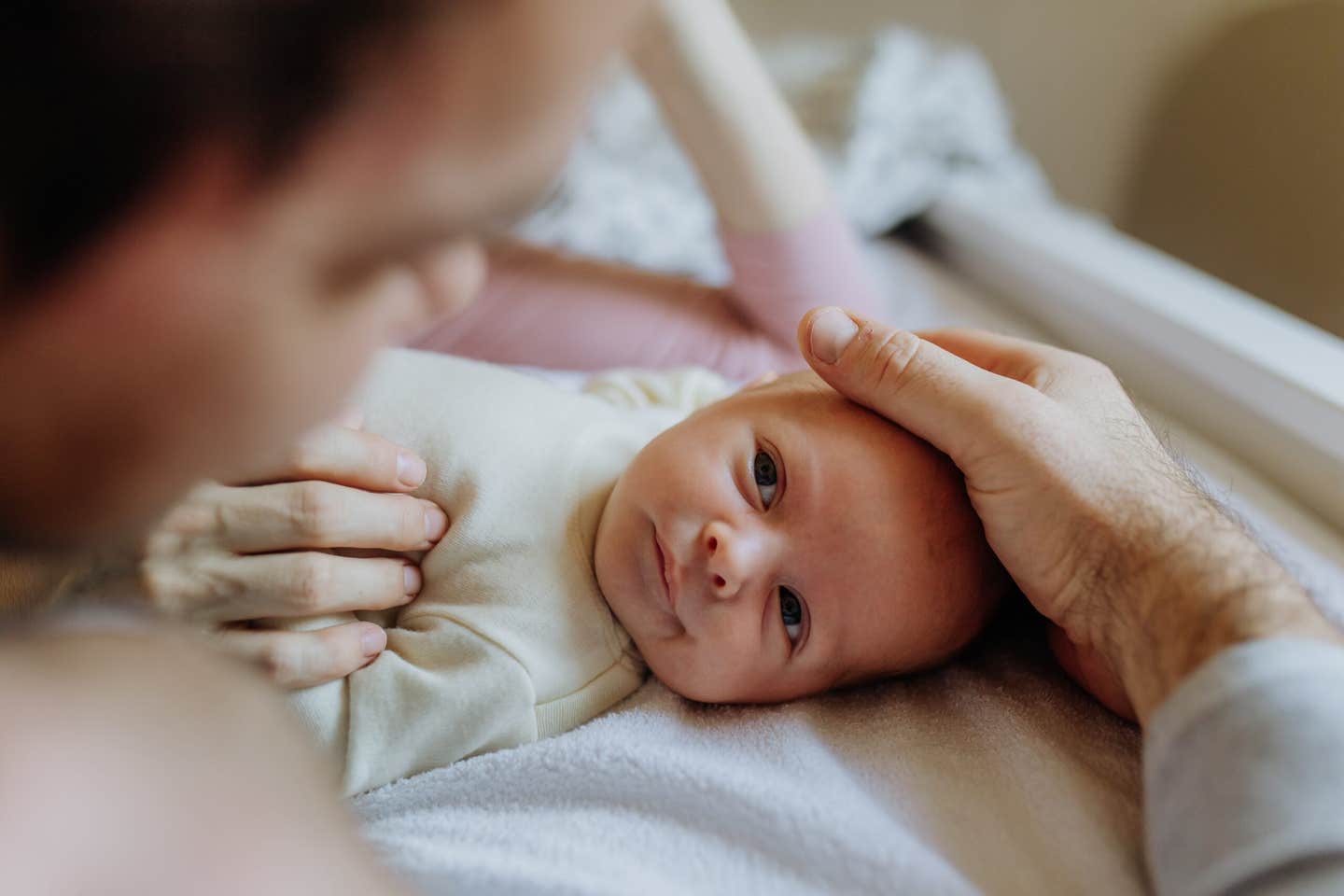
Human infants’ helplessness may help explain cooperation, learning and social development, researchers argue. (CREDIT: Shutterstock)
A human baby arrives in the world in a strange state, eyes open, ears working, brain growing fast, yet unable to move through the world in any meaningful way.
That mix is the heart of a new argument from University of Ottawa psychologist Stuart Hammond, who says developmental science has not paid enough attention to what human helplessness might mean. Writing in Child Development Perspectives, Hammond argues that this long period of dependence is not just an inconvenience of birth or an uninteresting early stage. It may help explain how humans became such a socially cooperative and adaptable species.
Human newborns do not fit neatly into the usual animal categories. Some mammals are born highly helpless, or altricial, with weak sensory and motor systems. Others are more precocial, meaning they arrive with stronger senses and movement. Rats fall toward the helpless end. Horses fall toward the capable end. Humans, Hammond notes, are unusual because they seem to combine traits from both sides.
Human infants have open eyes and ears at birth, like more precocial animals, but weak motor abilities and no real locomotion, more like altricial ones. Their brains are also in an in-between state. A newborn rat’s brain is about 15% of adult size. In humans, that figure is about 25%. In prototypical precocial mammals, it is about 45%.
Not weak, but differently active
Hammond’s argument is not that babies are passive. Quite the opposite.
He describes the human infant as a uniquely active creature, one whose agency is shaped by this unusual combination of strong sensory systems and weak motor systems. In the first year of life, babies cannot do much physically on their own, but they are highly tuned to what is happening around them. They watch, listen, anticipate and engage.
That engagement can show up early. The paper points to research finding that at 3 to 5 months, infants begin to anticipate being picked up by changing posture, arching their backs and stretching their limbs. Those actions may seem small, but Hammond treats them as part of a larger social process, what he calls participation in “conversations of gestures.”
That matters because human infants cannot cling to caregivers the way some other primates can. By five months, chimpanzees can climb. Human children do not typically reach that milestone until closer to age two. So the human infant’s dependence changes the terms of interaction. Adults must bring babies into the flow of social life, and babies respond within those limits.
The paper suggests that this structure may shape early psychological development in deep ways, including cooperation and prosocial behavior. Babies rely on feeding, holding and close care to survive. In those repeated exchanges, caregivers may recognize and encourage infants’ attempts to help, even when those attempts are modest or awkward.
A species built around care
Hammond also argues that helpless infants place constraints not just on families, but on whole social systems. Human babies are not viable on their own. They require sustained feeding and care from others, and that means development unfolds inside a larger network of relationships.
This idea, which Hammond calls the “relationally constrained infant,” connects individual development to the organization of communities. Societies must find ways to meet infants’ needs if they are going to persist. Some of those solutions have lasted a long time, such as breastfeeding. Others have changed with history, including infant formula, neonatal intensive care and kangaroo care. The paper also notes the retreat of alloparenting in industrialized societies in favor of the nuclear family.
That framing pushes back against a familiar cultural story that treats dependence as weakness. Hammond says that view misses something basic about humans. Unlike “super precocial” species, people have evolved to depend on each other.
He also argues that helplessness may help move developmental psychology beyond the old fight between nativism and empiricism. If infants are treated either as born with key ideas or as blank slates, helplessness is easy to ignore. But from a developmental systems perspective, it becomes a powerful condition that shapes how infants act, how caregivers respond and what kinds of development become likely.
Helplessness does not end in infancy
The paper extends this idea beyond the crib.
Hammond points to longstanding scientific interest in the fact that humans retain juvenile traits longer than other apes, and in some ways even into adulthood. Researchers once noted that both infant and adult human skulls and spinal orientation resembled those of juvenile apes more than adult apes. More recent work is more nuanced, but still supports the broader point that humans develop slowly in some respects and hold onto juvenile features across life.
That slower path may matter. Birth occurs earlier than in other primates, the paper says, and some brain development that would usually happen before birth in other species occurs after birth in humans. Hammond suggests that shift may open more opportunities for learning outside the womb.
The paper does not paint helplessness as a simple good. Hammond is careful on that point. He notes that difficult births, maternal and infant mortality, and the heavy demands placed on social organization, especially on women, are all part of the story.
Still, he argues that helplessness should not be dismissed. It may be one of the reasons humans became who they are.
Practical implications of the research
This research could change how developmental scientists study infancy, especially work on early cooperation, gestures and caregiver-infant interaction.
It also offers the public a different way to see babies, not as inactive or incomplete, but as socially engaged from the start within a long period of care.
More broadly, the paper suggests that dependence is not a flaw in human development. It may be one of the foundations of human social life.
Research findings are available online in the journal Child Development Perspectives.
The original story "Why humans are helpless at birth and what it tells us about human nature" is published in The Brighter Side of News.
Related Stories
- Babies exposed to dogs may have lower risk of asthma, study finds
- Babies can learn words with context clues, study finds
- Why some babies walk early and others late: It’s in their genes
Like these kind of feel good stories? Get The Brighter Side of News' newsletter.
Mac Oliveau
Writer
Mac Oliveau is a Los Angeles–based science and technology journalist for The Brighter Side of News, an online publication focused on uplifting, transformative stories from around the globe. Passionate about spotlighting groundbreaking discoveries and innovations, Mac covers a broad spectrum of topics including medical breakthroughs, health and green tech. With a talent for making complex science clear and compelling, they connect readers to the advancements shaping a brighter, more hopeful future.