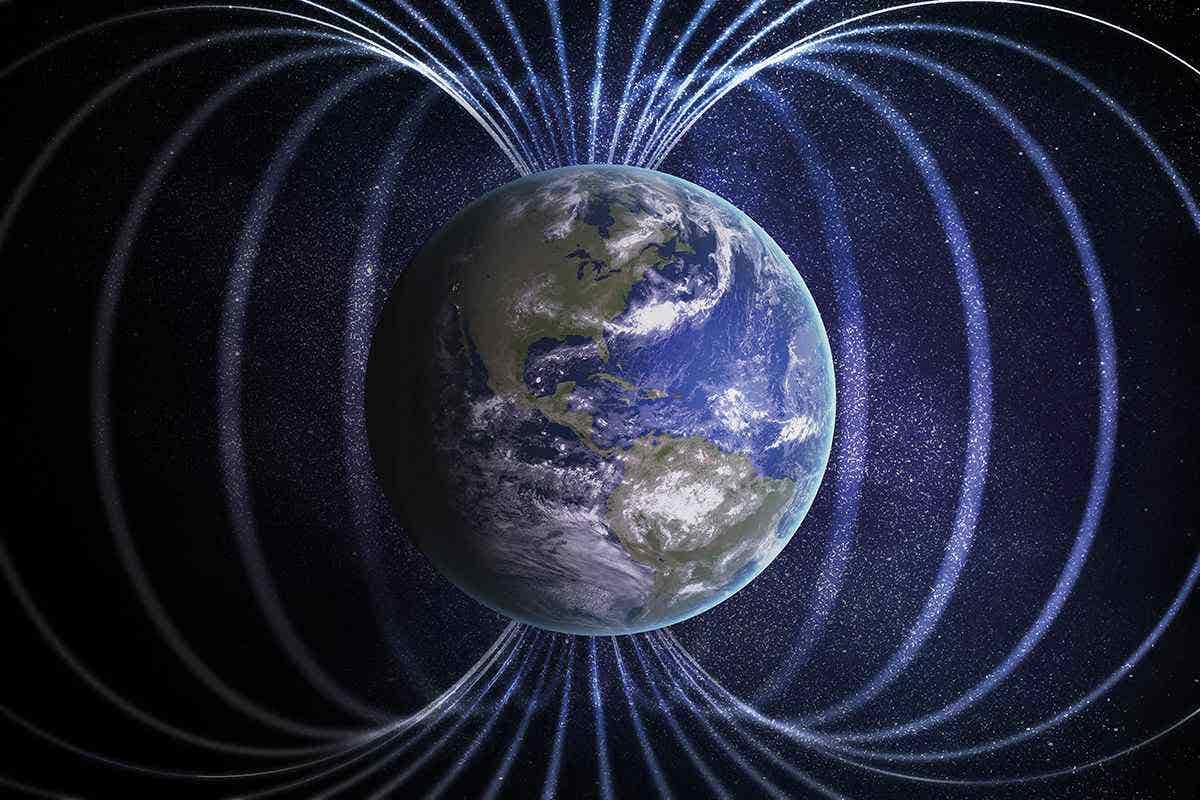
Why interstellar travel is impossible and aliens haven’t visited Earth
Physics may explain the silence of the universe, revealing why interstellar contact could be nearly impossible.

 Edited By: Joshua Shavit

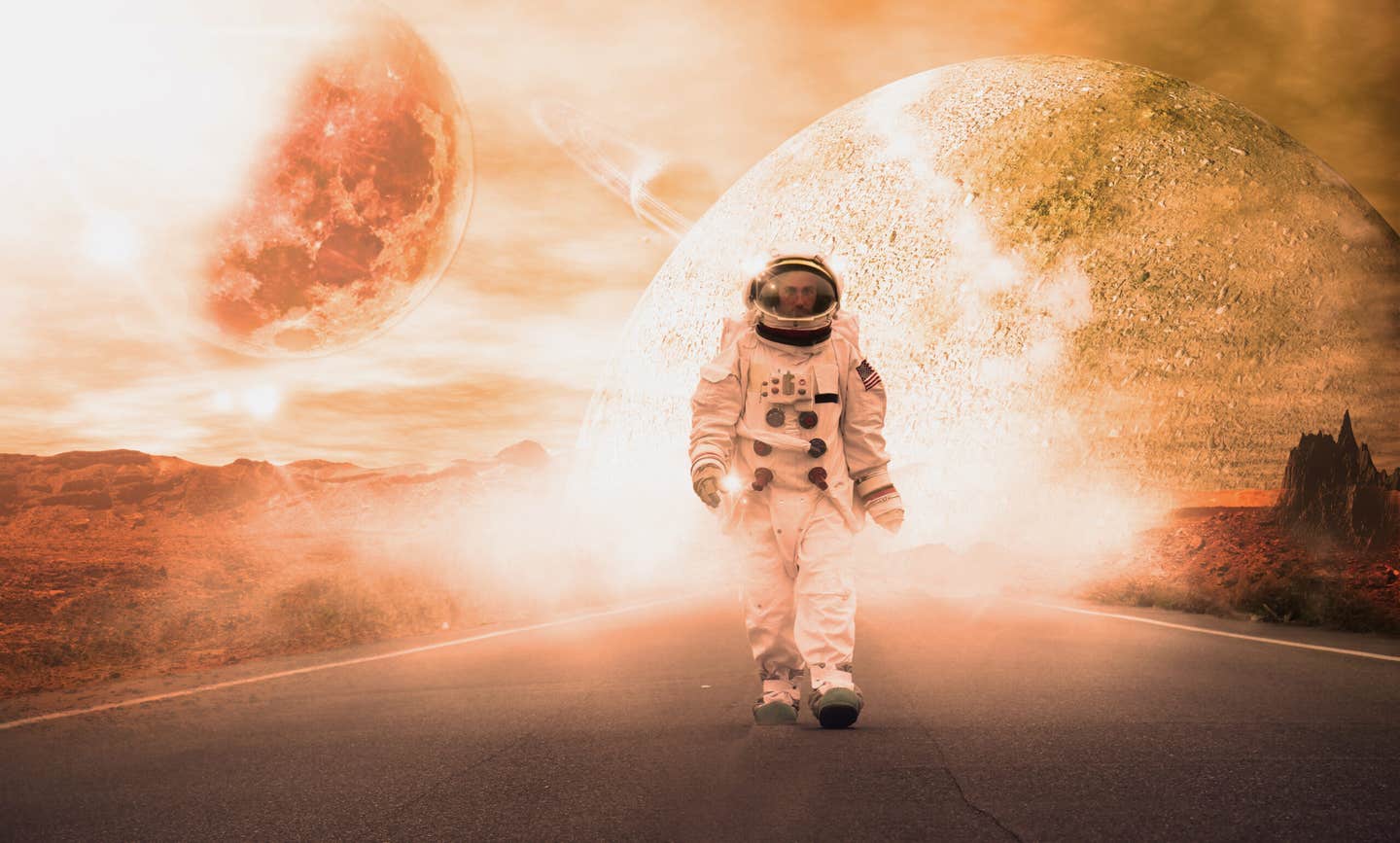
Five physical barriers may prevent civilizations from ever meeting, from light speed limits to cosmic timing gaps. (CREDIT: Shutterstock)
“There is a silence in the night sky that has bothered me for as long as I can remember.”
That observation, attributed to American physicist Richard Feynman, captures a tension many people feel when they look up. The sky appears crowded with stars. Intuition suggests someone else should be out there. However, intuition evolved for survival on Earth, not for interpreting cosmic scales. “When you take that human intuition and apply it to the scale of the universe, it doesn’t just fail,” he said. “It snaps.”
The deeper you look at physics, the more that silence starts to make sense.
Five separate constraints, distance, light speed, energy, biology, and time, combine into what Feynman described as “absolute walls that prevent civilizations from ever meeting.” These are not merely engineering challenges. They arise from the structure of reality itself.
A Universe Too Large to Cross
Start with scale.
Carl Sagan once noted, "The size and age of the Cosmos are beyond ordinary human understanding.”
Earth measures about 12,742 kilometers across, a size that feels enormous in human terms. The Sun sits roughly 150 million kilometers away, and light takes over eight minutes to reach us. That gap already strains comprehension.
The nearest star system pushes things further. Proxima Centauri lies 4.24 light years away. Translating that distance into human terms using speed, the Parker Solar Probe, the fastest human-made object, travels around 692,000 kilometers per hour. At that speed, reaching the nearest star would take about 6,600 years.
If you had left Earth at the exact moment the Great Pyramids were being finished, you would just now be arriving.
And that is only the closest neighbor.
The Milky Way spans about 100,000 light years. Crossing it with current technology would take hundreds of millions of years, longer than the evolutionary history of mammals. At that point, a traveling species could evolve into something entirely different before reaching its destination.
Distance alone reshapes expectations.
The Speed Limit Built Into Reality
Many people assume faster engines could solve the problem. Feynman rejected that idea outright.
“The speed of light is not an engineering limit,” he said. “It is a structural limit of reality. It is the speed of causality.”
Physicist Kip Thorne once wrote: “The speed of light is the ultimate speed limit built into the fabric of space and time.”
In everyday life, pushing harder produces more acceleration. Physics behaves differently near light speed. As velocity increases, energy input no longer translates efficiently into speed. Instead, it contributes to relativistic mass effects. The closer an object moves toward light speed, the more energy it requires for smaller gains in velocity.
To reach light speed with any mass would require infinite energy.
“I don’t mean all the energy in the Sun,” Feynman said. “I mean literally infinite.”
Even hypothetical advanced civilizations would face the same constraint. They still live in the same universe we do. They still obey Einstein.
The Tyranny of the Rocket Equation
Accepting a speed limit does not solve propulsion.
The rocket equation, first written by Konstantin Tsiolkovsky in 1903, introduces another brutal constraint. Moving a spacecraft requires fuel, but fuel itself has mass. That mass must also be accelerated, which demands more fuel, which adds more mass. The relationship grows exponentially.
Feynman called it “an exponential curse.”
Consider a human mission to the nearest star within 40 years. The spacecraft would need to accelerate to a significant fraction of light speed, then decelerate on arrival. That means carrying fuel for both phases during the entire journey.
Using current chemical rockets, the amount of fuel required to send a single human would exceed the mass of the observable universe.
Even advanced propulsion concepts struggle. Fusion systems would still produce ships dominated by fuel mass. Antimatter offers higher energy density, but producing meaningful quantities would require dedicating humanity’s entire energy output for millions of years.
“Interstellar travel is the definition of inefficiency,” Feynman said.
Theoretical physicist Freeman J. Dyson agreed saying, "Chemical fuels are hopeless for interstellar travel.”
An advanced civilization capable of harvesting stellar energy might still choose not to travel because the cost would outweigh the benefits.
Bodies Built for Earth, Not Space
Suppose a civilization ignores efficiency and launches anyway.
Biology introduces the next barrier.
The human body evolved under Earth’s gravity and magnetic shielding. Outside that environment, radiation exposure increases dramatically. Cosmic rays consist of high-energy particles capable of penetrating spacecraft hulls and damaging DNA.
They tear through your hull, through your body, and smash your DNA to pieces like a shotgun blast to a library.
Shielding could help, but shielding adds mass, which returns to the rocket equation problem.
Microgravity creates additional complications. Bone density declines. Muscles weaken. The cardiovascular system changes. Astronauts returning from months in orbit already experience lasting effects. Interstellar journeys lasting centuries would magnify those problems.
Cryogenic preservation remains unsolved. Freezing cells causes ice crystals that rupture membranes. Generation ships introduce social instability, genetic risks, and cultural drift. “Biology is the software of Earth,” Feynman said. “It does not run on the hardware of space.”
Theoretical physicist Freeman Dyson said, “Biology is more powerful than physics.” He meant that living systems impose constraints that engineering alone cannot easily overcome.
Machines face limits too. Radiation damages electronics. Micrometeoroids strike with enormous energy due to velocity. Over long timescales, entropy degrades systems.
Even robots have lifespans.
Time, Signals, and the Cosmic Timing Problem
The final barrier involves communication.
Humanity has emitted radio signals for roughly a century, creating a bubble about 100 light years wide. Compared with the Milky Way, that region is microscopic.
“We are shouting into a hurricane,” Feynman said.
Detection requires alignment in time, location, and frequency. Civilizations separated by hundreds of light years might miss each other entirely. If one society broadcasts before another develops radio technology, the signal passes unnoticed. If signals arrive after extinction, the opportunity is gone.
Civilizations also have limited lifespans. Humanity has been technological for about 200 years. Even lasting thousands more years represents a brief moment compared with the universe’s 13.8-billion-year history.
Feynman compared the situation to fireflies blinking on different days in a dark forest. They never see one another.
“The tragedy of the universe isn’t that it’s empty,” he mused. “It’s that the party guests are arriving at different times.”
Astronomer and SETI pioneer Jill Tarter once shared a similar analogy, “If you dip a glass into the ocean, you’re not going to come up with a fish. That doesn’t mean there are no fish in the ocean.”
The UFO Question Through a Physics Lens
Claims of unidentified flying objects often arise in discussions of alien visitation. Feynman applied physical reasoning to these observations.
Reports sometimes describe craft accelerating from rest to extreme speeds instantly. Such motion would generate enormous forces. Thousands of gravitational units would crush biological occupants and damage materials. Atmospheric travel at those speeds would also create intense plasma trails and sonic effects.
“You don’t see that in the videos,” he said. “You see a blurry gray blob.”
More conventional explanations, such as optical artifacts or misidentified objects, become more plausible when physical constraints are considered.
“Extraordinary claims require extraordinary evidence,” he noted. Blurry footage does not meet that standard.
Accepting Isolation, Finding Meaning
The conclusion may sound bleak. If distance, energy, biology, and timing all conspire against interstellar contact, civilizations might remain isolated indefinitely.
Yet Feynman framed that isolation differently.
The same physical rules that limit travel also allow stability. Light speed preserves causality. Stable atomic behavior permits chemistry. Stellar processes enable life to emerge.
“If the speed of light wasn’t a limit, causality would break,” he said. “The universe would be a chaotic mess where history couldn’t exist.”
The silence, then, is not merely absence. It reflects structure.
Humanity may never meet extraterrestrial visitors, but it shares the same physical laws and chemical origins with any life that might exist elsewhere. Carbon atoms in living organisms formed in ancient stars, linking all potential civilizations through cosmic history.
As Carl Sagan once said, “The nitrogen in our DNA, the calcium in our teeth, the iron in our blood… were made in the interiors of collapsing stars. We are made of star-stuff.”
“We are the universe waking up and looking at itself,” Feynman concluded.
The original story "Why interstellar travel is impossible and aliens haven't visited Earth" is published in The Brighter Side of News.
Related Stories
- Journey to the end of the universe—measured one step at a time
- Cutting-edge rocket engine could accelerate to 99% the speed of light
- The universe is not and could never be a simulation, study finds
Like these kind of feel good stories? Get The Brighter Side of News' newsletter.
Joseph Shavit
Writer, Editor-At-Large and Publisher
Joseph Shavit, based in Los Angeles, is a seasoned science journalist, editor and co-founder of The Brighter Side of News, where he transforms complex discoveries into clear, engaging stories for general readers. With vast experience at major media groups like Times Mirror and Tribune, he writes with both authority and curiosity. His writing focuses on space science, planetary science, quantum mechanics, geology. Known for linking breakthroughs to real-world markets, he highlights how research transitions into products and industries that shape daily life.