Yale researchers use zebrafish to identify autism drug candidates
A Yale study used zebrafish and 774 approved drugs to uncover gene-specific autism treatment candidates.

 Edited By: Joseph Shavit

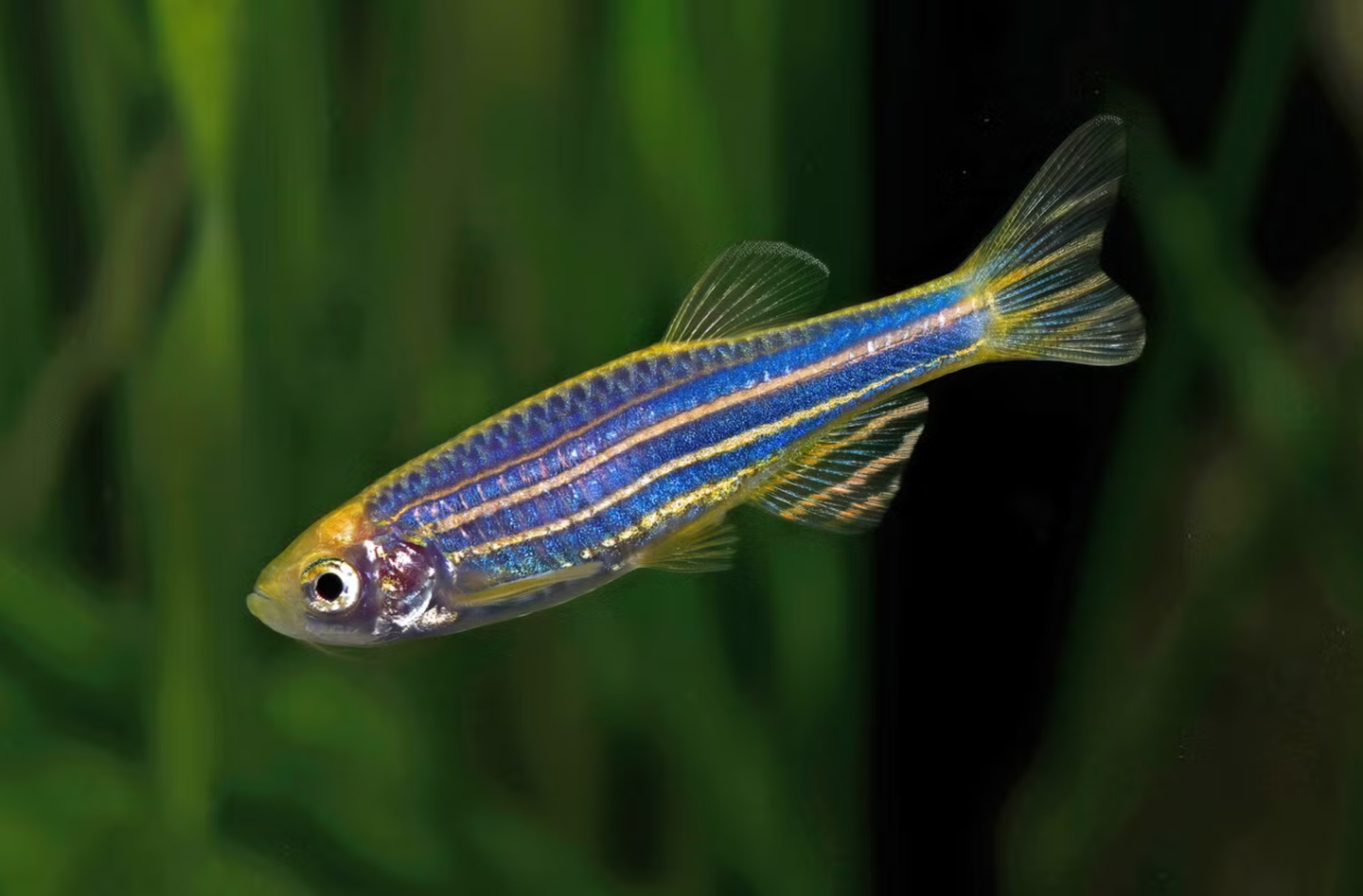
Yale researchers used zebrafish to identify autism drug candidates tied to specific risk genes. (CREDIT: Shutterstock)
A common lab fish is helping autism research take a more targeted turn
The fish are only a few days old, barely beyond the larval stage, and yet their movements can hint at something much larger. A flash of light. A change in sleep. A muted startle response. In tiny zebrafish, those basic behaviors can become a map, one that may point researchers toward drug candidates for specific forms of autism.
That is the idea behind a new Yale study that used zebrafish to sort through hundreds of already approved drugs and match them to genetic forms of autism spectrum disorder. Instead of treating autism as one condition with one likely treatment path, the researchers argue for a more precise strategy, one that groups autism-linked genes by shared biological and behavioral patterns.
“Because autism spectrum disorder is highly clinically and genetically heterogeneous, it is challenging to identify drug candidates and many new drugs under investigation are not effective in clinical trials,” said Ellen J. Hoffman, an associate professor at the Yale Child Study Center at Yale School of Medicine and the study’s senior author.
The work, published in Proceedings of the National Academy of Sciences, centers on more than 100 genes that scientists have already linked strongly to autism. Those genes shape key processes in the developing brain, including neuronal communication and the regulation of other genes. But turning those genetic findings into usable drug targets has been much harder.
A drug library built from fish behavior
Zebrafish have become a favored model in biomedical research for good reason. Their genes share important similarities with human genes, they are relatively easy to manipulate, and they produce many offspring at once. In larval form, they are also well suited for large drug screens.
The Yale team screened 774 FDA-approved drugs in wild-type larval zebrafish, meaning fish without the autism-linked mutations under study. The fish were exposed to the compounds, then tested with automated assays that tracked sleep-wake activity and visual startle responses, including reactions to lights turning on or off.
That produced more than 15,000 behavioral profiles. After removing 54 drugs that were toxic and 200 that had too little measurable effect, the researchers built a working database of 520 drugs with significant behavioral signatures.
The idea was straightforward, at least in concept. If a drug produced a behavioral pattern that looked like the reverse of the pattern seen in a fish carrying an autism-linked mutation, that drug might help counter the disrupted behavior associated with that gene.
It did not stop there.
The team compared those drug “fingerprints” with the behavioral fingerprints of zebrafish carrying mutations in nine large-effect autism genes. Earlier work had already shown that those genes could be grouped into three subgroups based on shared patterns in sleep and sensory processing. In the new study, the researchers used that framework to look for drugs that either matched or opposed each subgroup’s behavioral profile.
Different genes, different rescue candidates
That comparison pointed to several pathways that may matter for particular autism-linked genes. Among the strongest candidate mechanisms were estrogens, microtubules, mitochondria, and lipid metabolism.
The researchers then focused on two genes with especially robust zebrafish phenotypes: SCN1A/SCN2A-related mutations and DYRK1A-related mutations. In the fish models, those mutations disrupted ordinary arousal and sensory behaviors. Some fish were less active during the day. Some were unusually reactive to light. Others had weaker responses to lights turning off.
Targeted screening identified three standout drug candidates. Estropipate, an estrogen receptor agonist, emerged as a top suppressor for the scn1lab mutant phenotype. Paclitaxel, a microtubule inhibitor, ranked highest for dyrk1a mutants. Levocarnitine, a mitochondrial modulator and carnitine supplement, stood out in both.
That overlap made levocarnitine especially notable.
In scn1lab mutants, levocarnitine rescued 13 of 18 behavioral parameters that differed significantly from controls. In dyrk1a mutants, it rescued 11 of 15. The drug significantly improved hypersensitivity to lights-on stimuli in one mutant and daytime waking activity in the other.
The effect was not universal across every symptom or every drug. Some candidates worked more strongly in one gene model than another, which was part of the point. The findings reinforced the idea that drugs predicted to help one autism-linked subgroup might not help another, and could even mimic a disrupted pattern in a different subgroup.
A clue in the mitochondria
Levocarnitine drew even more attention when the team looked beyond behavior.
The researchers mapped whole-brain activity in the zebrafish and found that levocarnitine rescued baseline activity deficits in several brain regions. In scn1lab mutants, it restored activity to wild-type levels in 25 of 114 regions that showed significant baseline differences. In dyrk1a mutants, it rescued 15 of 95 such regions.
Many of those regions were associated with daytime waking activity, including areas in the diencephalon and rhombencephalon.
RNA sequencing added another layer. In larval brains from both mutant lines, levocarnitine reversed thousands of differentially expressed genes. Among the rescued pathways, fatty acid and lipid metabolism stood out. The researchers concluded that dysregulated fatty acid metabolism may be one of the drug’s main targets in both models.
That same signal appeared again in human cells.
The team tested levocarnitine in human pluripotent stem cell-derived glutamatergic neurons carrying SCN2A and DYRK1A mutations. In those cells, the drug significantly improved mean firing rate and spike number, suggesting that the rescue effect was not limited to fish. It did not, however, reverse oxidative phosphorylation phenotypes in every case, which narrows the claim. The study supports a conserved rescue of neuronal activity, but not every mitochondrial measure improved.
A precision approach, with limits
The study also leaves clear boundaries.
The work identifies drug candidates, not proven treatments. The main screening platform measured basic sleep and sensory processing behaviors in zebrafish larvae, not the full range of autism-related traits. The authors note that more studies are needed to test whether suppressing those basic behaviors would also improve other autism-associated symptoms.
There are also practical hurdles in translating results across species. The paper points to challenges in aligning drug dose, delivery method, and developmental stage between zebrafish, human cells, and mammals. Most of the behavioral rescue in fish also appeared to depend on acute exposure, since chronic exposure followed by washout rescued fewer features.
Still, the study offers something autism drug research often lacks: a systematic way to sort the field.
“Our study highlights the importance of stratifying or subgrouping autism risk genes to identify potential drug candidates using a precision medicine-based approach,” Hoffman said.
The team also created an open-source website with behavioral profiles for all 774 drugs screened, along with the larger pharmaco-behavioral database. That resource, the researchers say, could help other groups search for compounds relevant to different genes and disorders.
Practical implications of the research
This work suggests that future autism drug development may benefit from focusing on gene-specific or subgroup-specific biology instead of searching for one broad treatment strategy. It also points researchers toward pathways involving estrogen signaling, microtubules, mitochondria, and lipid metabolism.
Levocarnitine stands out as a candidate for further study in people carrying certain mutations, especially because its effects appeared in both zebrafish and human neurons.
The larger practical value may be the screening pipeline itself, which gives scientists a faster way to move from autism-linked genes to testable drug targets.
Research findings are available online in the journal Proceedings of the National Academy of Sciences.
The original story "Yale researchers use zebrafish to identify autism drug candidates" is published in The Brighter Side of News.
Related Stories
- Zebrafish reveal how environment influences social behavior in autism
- Zebrafish could help scientists fully restore human vision loss
- A 'third eye' helps fish navigate deep underwater
Like these kind of feel good stories? Get The Brighter Side of News' newsletter.
Hannah Shavit-Weiner
Medical & Health Writer
Hannah Shavit-Weiner is a Los Angeles–based medical and health journalist for The Brighter Side of News, an online publication focused on uplifting, transformative stories from around the globe. Passionate about spotlighting groundbreaking discoveries and innovations, Hannah covers a broad spectrum of topics—from medical breakthroughs and health information to animal science. With a talent for making complex science clear and compelling, she connects readers to the advancements shaping a brighter, more hopeful future.