15-year-old physicist sets his sights on creating ‘super-humans’
A Belgian teen earns a PhD at 15 and now turns to AI-driven medicine to study aging and seek longer human life.

 Edited By: Joseph Shavit

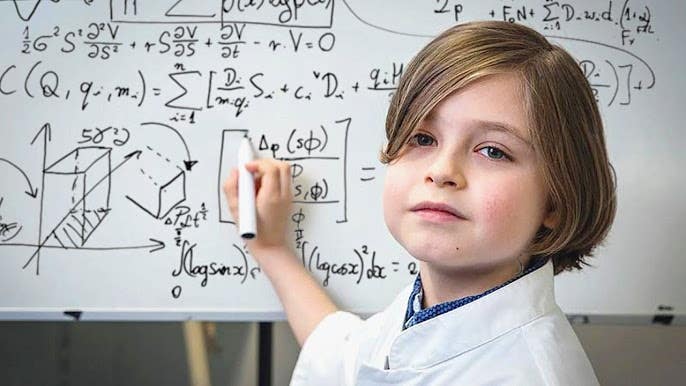
A Belgian teenager has earned a doctorate in quantum physics at 15 and now aims to tackle human aging using artificial intelligence. (CREDIT: Lydia Simons)
Life expectancy has climbed steadily over the past century, but few people talk seriously about eliminating death itself. Now, a teenager in Europe wants to try. At just 15, Laurent Simons of Belgium has earned a doctorate in quantum physics and already set his next target: extending the human lifespan beyond anything known today.
Earlier this week, Simons successfully defended his PhD dissertation at the University of Antwerp. The achievement places him among the youngest recorded recipients of a doctorate in scientific history. While that alone has drawn global attention, his ambition draws even more. You are not hearing a student speak about a future job in academia or industry, but a vision that reaches far beyond the classroom.
Shortly after completing his defense, Simons returned to Munich with his father. You learn that within days, he had already started preparing for another graduate program. This time, his focus is medical science, not theoretical physics. He plans to study artificial intelligence and its role in disease treatment in hopes of one day ending human aging.
A Childhood on Fast-Forward
Simons was born in Belgium and later moved to the Netherlands, where his parents noticed his unusual ability to understand complex material at a young age. By the time you were possibly learning multiplication, he was working through advanced science textbooks. Teachers quickly realized traditional schooling would not suit his pace.
At age 8, he completed high school in about one year. Most students graduate between 17 and 18. You might struggle to picture an elementary-aged child reviewing equations meant for adults, but that had already become normal for him.
In 2019, Simons enrolled in electrical engineering at Eindhoven University of Technology. He had not yet reached 10 years old. However, scheduling issues prevented him from finishing the degree on time, so he shifted fields entirely. He enrolled in a physics program at the University of Antwerp and graduated with top marks in just 18 months. A standard physics degree normally takes three years.
Only two years later, at age 12, Simons completed a master’s degree in quantum physics. He finished the coursework in one semester and spent the second half of the year working on research and an advanced internship.
During that internship, Simons traveled to Germany to study at the Max Planck Institute. There, you see the first glimpse of what would become his lifelong mission. He began exploring how physical science could intersect with medicine. His master’s research focused on strange connections between quantum systems and black holes. That work brought him close to modern questions about how energy, structure, and matter behave under extreme conditions.
Exploring Matter at Its Strangest
Simons’s PhD research focused on an unusual form of matter known as a Bose-Einstein condensate. This state occurs when atoms are cooled to temperatures near absolute zero. Under those conditions, individual atoms no longer act as independent objects. Instead, they behave as one combined system.
At the University of Antwerp, he studied how individual particles interact within these frozen environments. His dissertation examined how a foreign particle behaves when introduced to an ultracold system that flows without friction or develops organized layers.
Scientists use these systems to explore strange behaviors that cannot be tested easily elsewhere. The work has little to do with everyday objects but helps explain how matter forms, moves, and breaks down.
Antwerp said his research also addressed a phase of matter known as a supersolid. This material flows like a liquid yet holds structure like a crystal. Understanding this balance could one day help engineers develop stronger materials and advanced sensors.
Why he is now choosing medicine
Still, this work was never Simons’s final destination. Physics gave him a foundation. Medicine, he believes, will give him answers.
“I will start working toward my goal,” Simons told Flemish broadcaster VTM. “Creating super-humans.”
His comments may sound bold, yet his meaning is clear. You learn his interest is not fame, money, or patents. He wants to treat aging like a medical problem, not something natural or unavoidable.
He has said since age 11 that his ultimate goal is human immortality.
According to Simons, "I chose to study physics because my long-term goal is to understand how humans might one day overcome aging and death. Physics plays an important role in that search, even though there’s no clear roadmap yet for how immortality could actually be achieved. What draws me to the field is that it forces you to think from first principles and understand how the universe really works."
"My interest in immortality is also personal. My grandparents suffer from heart disease, and I don’t want other people to grow up having to lose their grandparents the same way. I want to understand disease at its deepest level and help build solutions that go beyond treating symptoms and actually change how long and how well people live", he continued.
"I think of immortality as an enormous puzzle. Right now, we have many individual pieces from biology, medicine, engineering, and physics, but they haven’t been put together yet. My goal is to help connect those pieces. I’m especially interested in artificial organs and the possibility of replacing failing parts of the body with engineered systems. I plan to study as much as I can, across many fields, in the hope that one day all of this knowledge will come together in a meaningful way."
Turning Toward the Human Body
Simons’s next challenge will take place in Munich, where he has enrolled in a second doctoral program in medical science. His focus will be on artificial intelligence and how it can guide treatment decisions and drug discovery.
AI now helps doctors analyze medical scans, detect cancer earlier, and predict how diseases progress. Simons wants to apply that power to the biology of aging itself. You see a future researcher who believes computers can help reveal why cells fail and how damage spreads through the body.
His IQ has been measured at 145 using major testing scales. That places him in the highly gifted range. Yet his family has often warned that intelligence is not the whole story. Commitment matters just as much.
His father has said discipline shapes success more than raw ability. Watching Simons move directly from physics into medicine suggests long-term planning rather than impulse.
Few people his age have mapped their future so sharply. Even fewer chase goals that span entire fields of science.
Related Stories
- Teen inventor built an app that detects early-stage heart disease with 96% accuracy
- 14-year-old prodigy invents a lifesaving new soap to combat skin cancer
- Eight-year-old prodigy becomes youngest chess player to beat grandmaster
Like these kind of feel good stories? Get The Brighter Side of News' newsletter.
Mac Oliveau
Writer
Mac Oliveau is a Los Angeles–based science and technology journalist for The Brighter Side of News, an online publication focused on uplifting, transformative stories from around the globe. Passionate about spotlighting groundbreaking discoveries and innovations, Mac covers a broad spectrum of topics including medical breakthroughs, health and green tech. With a talent for making complex science clear and compelling, they connect readers to the advancements shaping a brighter, more hopeful future.