25-year-long study discovers how blood cancers evolve and worsen
Genetic tracking reveals why some chronic blood cancers stay stable while others turn dangerous years later.

 Edited By: Joseph Shavit


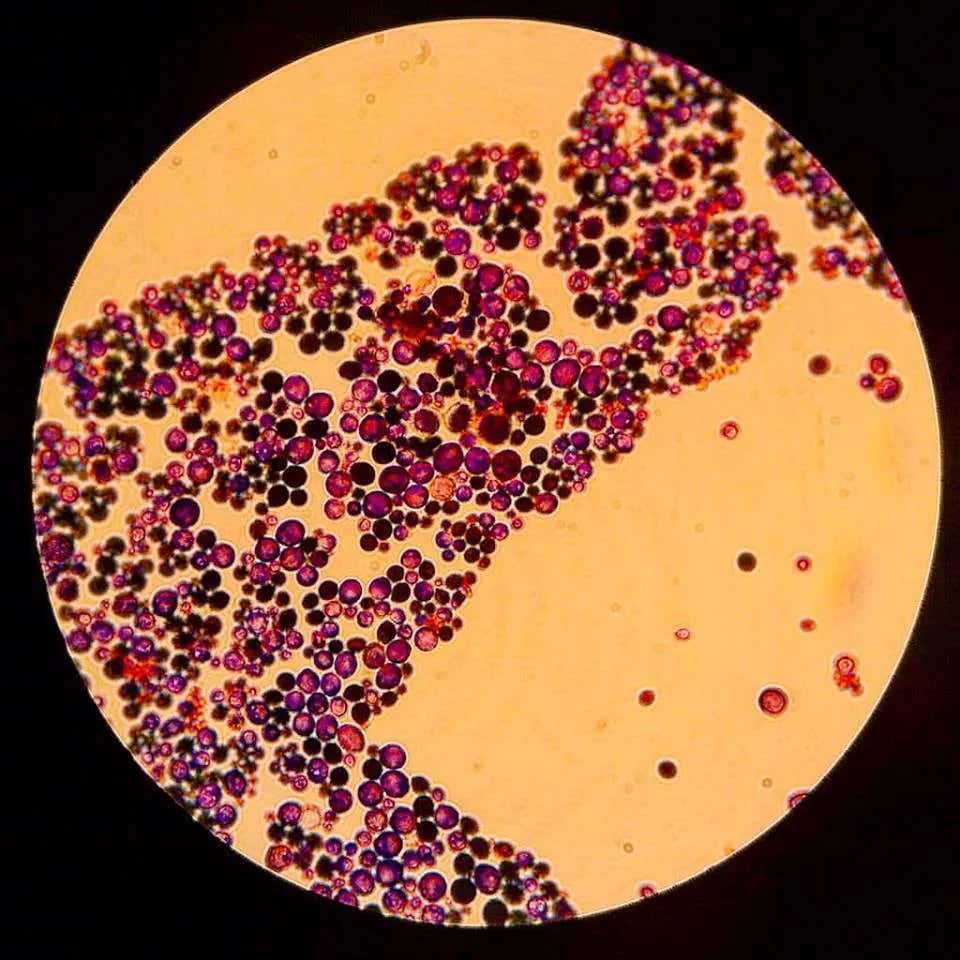
Long-term genome tracking shows how chronic blood cancers quietly evolve years before patients worsen. (CREDIT: Shutterstock)
Some blood cancers move with eerie patience.
A patient can feel well for years, their blood counts looking steady, their daily life mostly intact. Yet deep inside the bone marrow, tiny genetic shifts may already be setting the course for something much worse. New research suggests those shifts can appear long before doctors see clear clinical signs that a disease is speeding up.
That matters for people living with myeloproliferative neoplasms, or MPNs, a group of rare chronic blood cancers that begin in the bone marrow. These cancers cause the body to make blood cells in an uncontrolled way. In the UK, about 40,000 people live with these conditions, and roughly 4,000 new cases are diagnosed each year.
Blood cancers with long timelines
MPNs often unfold over decades. They are usually driven by mutations in genes such as JAK2, CALR or MPL. Though around 10 percent of patients do not carry those usual markers. Some remain stable and need only gentle treatment. Others go on to develop myelofibrosis, which scars the bone marrow. Or, they develop acute myeloid leukaemia, a more aggressive cancer with a poor outlook.
The challenge for doctors has been simple to describe and hard to solve: who is likely to worsen, and when?
To get at that question, researchers followed 30 patients with chronic blood cancers, mostly MPNs, over many years. They paired whole-genome sequencing with nearly 8,000 blood test results, treatment histories and clinical records. In total, they analysed more than 450 samples, with some patients tracked for as long as 25 years.
By reading the DNA of blood cells and building what were essentially family trees of those cells, the team reconstructed how cancer-related clones rose. They also saw how these clones changed and sometimes split into new branches over time.
“We followed patients with myeloproliferative neoplasms over many years and used genome sequencing and clinical history to trace how blood cell populations changed over time,” said Dr Daniel Leongamornlert, first author at the Wellcome Sanger Institute. “By reconstructing the ancestry of cells, we were able to see different evolutionary patterns between patients who had stable disease compared to others who progressed.”
A warning written years ahead
One of the clearest patterns in the study was the split between patients whose disease stayed quiet and those whose disease did not.
Patients who remained clinically stable tended to have genetically steady blood cell populations. Their clones held the line. No major new driver mutations appeared, and clone sizes changed little even across long stretches of follow-up.
Patients who later progressed looked different. In them, subclones carrying additional driver mutations appeared and expanded over time, often years before worsening became visible in routine care. Blood counts could still look normal. Symptoms could still seem unchanged. Still, the biology had already started to move.
The study found three broad routes to acute myeloid leukaemia. The first route found the disease abruptly accelerated after loss of both working copies of TP53, a gene tied to tumour suppression. In another, already complicated MPN clones kept accumulating additional mutations in genes linked to leukaemia. In a third route, leukaemia arose from a genetically separate clone. This meant it was not simply the old disease marching in a straight line toward a worse state.
Progression to myelofibrosis appeared less uniform. Some patients showed clear subclonal evolution before diagnosis. Others seemed to drift gradually into that state from already complex clones without a single obvious tipping point. Either way, the genomic warning signs often surfaced well before the clinic caught up.
That raises the possibility of monitoring patients not just by symptoms and blood counts, but by how their cancer clones are evolving.
Rethinking patients without the usual markers
The study also tackled a murkier group of patients, those diagnosed with essential thrombocythaemia but lacking mutations in JAK2, CALR and MPL. These are often called triple-negative cases.
At present, such patients may be diagnosed largely by what bone marrow cells look like under the microscope. That can lead to treatment, including chemotherapy, even when there is no clear genetic proof of an underlying blood cancer.
Researchers sequenced around 200 blood cell genomes from four individuals to trace the ancestry of their blood-forming cells. In the three triple-negative cases, the resulting family trees did not look like the ones usually seen in true MPNs. Instead, they resembled the clonal patterns expected in normal ageing.
There were no signs of the early-life clonal expansions or stepwise cancer-like sweeps that typically mark these blood cancers. In two individuals, inherited tendencies toward higher platelet counts may have helped explain the abnormal blood findings.
Taken together, the results suggest that at least some people currently placed in this category may not have a true blood cancer at all.
That finding carries obvious weight. A diagnosis shapes how a person sees their future. It also shapes what treatment they are offered, and what risks they are asked to accept.
Treatment leaves traces too
The work went further, looking not only at disease evolution but at the long-term genetic effects of treatment.
The team found evidence that hydroxycarbamide, a common long-term therapy used to control blood counts, leaves a distinct mutational signature in blood cells. That pattern appeared in both cancerous and normal blood lineages. This suggests the drug’s genomic footprint extends beyond tumour clones.
They also found substantial C>G mutagenesis linked to 5-azacitidine exposure in the patients studied, something the researchers said had not previously been reported in human samples. The clinical meaning of those treatment-related mutations is still unclear.
One patient with decades of therapy and repeated nonmelanoma skin cancers received especially detailed analysis. Although hydroxycarbamide left a detectable footprint in blood, the study did not find a clear matching signature in skin cancer tissue or normal skin from that individual. The researchers noted that strong ultraviolet damage may have obscured any smaller treatment-related effect. Moreover, findings in skin came from only one person.
Limits of the study
The study has limits. The patient group was relatively small, and some questions, especially around treatment mutagenicity and long-term prognosis, will need larger follow-up studies. Functional work is also needed to explain exactly how these mutation patterns arise and whether they behave differently in different tissues.
Still, the central message holds.
“These are patients we have cared for and followed in our clinic for over 15 years,” said Dr Jyoti Nangalia, senior author at the Wellcome Sanger Institute and Honorary Consultant Haematologist at Cambridge University Hospitals NHS Foundation Trust. “It can be incredibly difficult to predict how their cancers might change over time. By combining long-term clinical care with regular genomic analysis, we’ve been able to watch how the genetic code of their disease evolves in advance of clinical changes. The patterns we have found will help doctors develop better monitoring strategies, refine diagnosis and lead to better patient outcomes in the long run.”
For patients, that kind of lead time could matter a great deal.
“It’s been reassuring to be cared for over so many years by both the haematology and plastic surgery teams at Addenbrooke’s Hospital in Cambridge,” said Alan Everitt, 77, who was diagnosed with essential thrombocythaemia in 1992 and later developed myelofibrosis. “I have always felt well supported and I’m grateful for the care and feedback at every step. Living with a blood cancer for such a long time has come with many challenges, and I hope that taking part in this research will help make a difference for future patients whose cancer is likely to progress over time, as mine has.”
Practical implications of the research
The findings point toward a more precise way of caring for people with chronic blood cancers. Regular genomic testing could help identify patients whose disease biology is stable. It could also find those whose cancer is quietly becoming more dangerous, even before symptoms or blood counts shift.
It could also spare some patients without clear cancer-driving mutations from being treated as though they have a blood cancer when the evidence for one is weak.
In the longer run, that kind of monitoring may help doctors tailor follow-up, refine diagnoses and intervene earlier for patients whose disease is on an unstable path.
Research findings are available online in the journal Cancer Discovery.
The original story "25-year-long study discovers how blood cancers evolve and worsen" is published in The Brighter Side of News.
Related Stories
- Breath test for blood cancer shows promise in first-ever human study
- New discovery revolutionizes blood cancer treatment
- Revolutionary new drug successfully treats deadly blood cancer
Like these kind of feel good stories? Get The Brighter Side of News' newsletter.
Mac Oliveau
Writer
Mac Oliveau is a Los Angeles–based science and technology journalist for The Brighter Side of News, an online publication focused on uplifting, transformative stories from around the globe. Having published articles on MSN, and Yahoo News, Mac covers a broad spectrum of topics including medical breakthroughs, health and green tech. With a talent for making complex science clear and compelling, they connect readers to the advancements shaping a brighter, more hopeful future.