AI tool tracks facial aging, and helps doctors gauge cancer risk
Repeated face photos may help track biological aging and forecast cancer outcomes more accurately.

 Edited By: Joseph Shavit

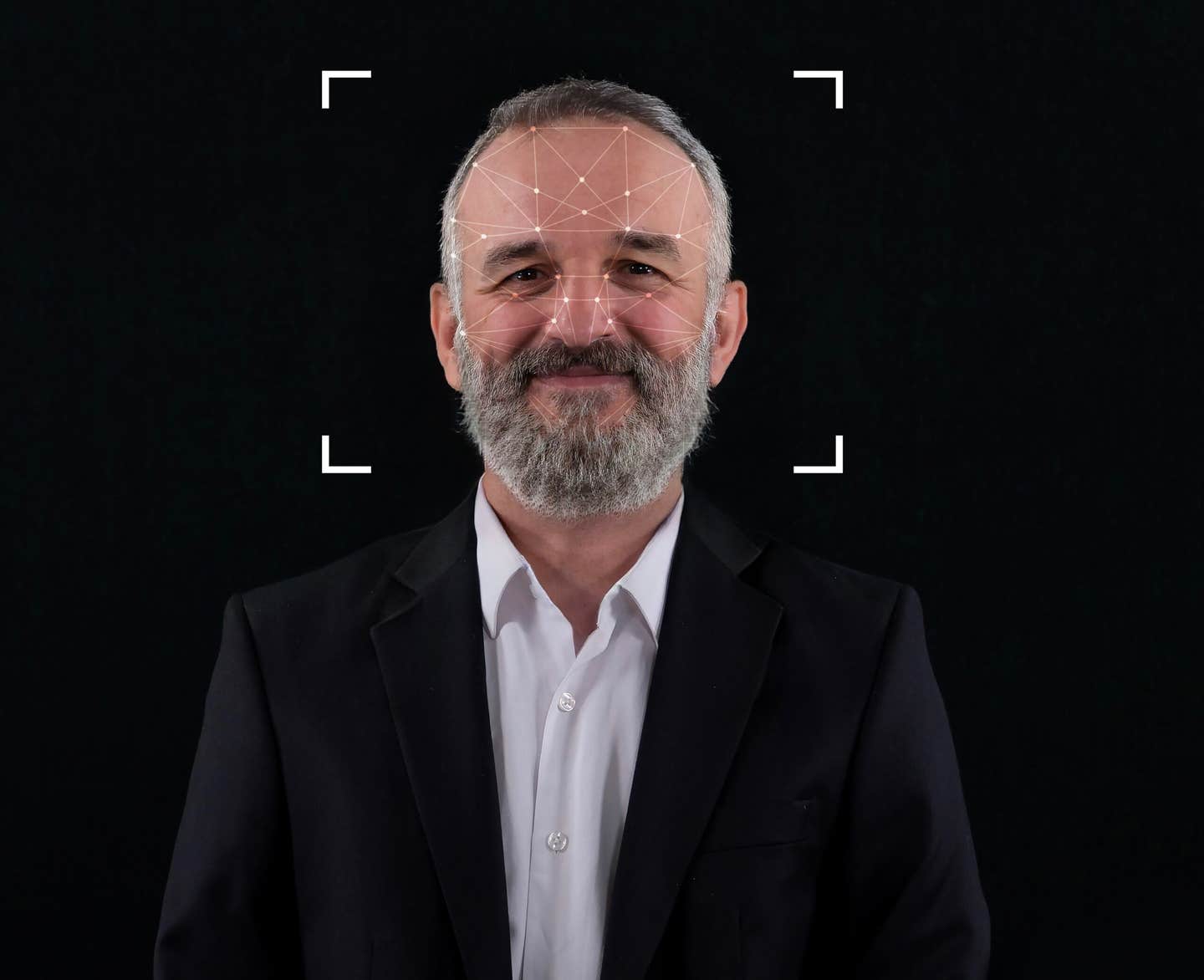
AI analysis of serial face photos linked faster facial aging in cancer patients to worse survival outcomes. (CREDIT: Wikimedia / CC BY-SA 4.0)
A camera used for patient ID does not usually look like a medical test.
Yet in a new cancer study, routine facial photos taken months or years apart appeared to capture something deeper: how quickly a person was biologically aging while going through treatment, and how that change tracked with survival.
Researchers at Mass General Brigham say this shifting measure, called Face Aging Rate, or FAR, may offer a new way to read a patient’s health over time without a blood draw, scan, or biopsy. Writing in Nature Communications, the team reports that cancer patients whose facial age rose faster than expected were more likely to die sooner than those whose facial aging stayed slower or steadier.
The work builds on earlier research behind FaceAge, an artificial intelligence tool that estimates biological age from a single face photo. Last year, the same group reported that cancer patients often appeared about five years older than their actual age, and that older FaceAge estimates tracked with poorer survival after treatment.
This time, the question was not how old someone looked in one image. It was how fast that apparent age changed.
When a face begins to act like a biomarker
The study examined serial facial photographs from 2,276 cancer patients older than 20 who underwent at least two courses of radiation therapy at Brigham and Women’s Hospital. Those photos were already part of the routine clinical workflow and were taken at the start of each radiation treatment course, between 2012 and 2023.
The researchers compared two images from each patient, one from an earlier treatment point and one from a later one, then calculated FAR by measuring the change in FaceAge and dividing it by the time between the photographs. A value above 1 suggested accelerated aging. A value below 1 pointed to slower aging.
They also tracked FaceAge Deviation, or FAD, a separate measure showing how much older or younger a person appeared in a single image compared with their chronological age.
Across the group, the median age at the first radiation therapy course was 63.4 years, with patients ranging from 20.1 to 97.0 years old. Women made up 50.5% of the cohort and men 49.5%. Most patients were White, at 85.1%, followed by Black patients at 5.1%, Asian patients at 4.9%, and patients reporting other races at 4.9%.
The median time between the two photos was 286 days. Median follow-up was 35.7 months.
What stood out most was the pace of change. Median FAR results suggested that patients’ facial aging outpaced their chronological aging by 40%.
Faster facial aging, shorter survival
The team split patients into three groups based on the interval between photos: short-term, from 10 to 365 days; mid-term, from 366 to 730 days; and long-term, from 731 to 1,460 days.
That timing mattered. FAR varied wildly over short intervals, where even small fluctuations could produce large shifts because the denominator was small. Over longer spans, the values narrowed and appeared more stable.
Even so, the survival signal held across all three groups.
Among patients in the short-term interval group, those with high FAR had a median survival of 4.1 months, compared with 6.5 months for those with lower FAR. In the mid-term group, median survival was 6.4 months for patients with faster facial aging versus 12.5 months for those with slower aging. In the long-term group, the gap widened further: 15.2 months versus 36.5 months.
The hazard ratios pointed the same way. In univariate analyses, high FAR was linked with higher mortality risk in all three time windows. In the long-term interval group, for example, FAR above 1 carried a hazard ratio of 1.60. After adjusting for time between photos, sex, race, and cancer diagnosis at the second radiation treatment, the association remained significant, with an adjusted hazard ratio of 1.65.
The pattern also held in patients with metastatic cancer at the second radiation treatment point, which was the largest risk subgroup in the study. The authors said the separation in survival curves was even more pronounced there.
Not every usual marker behaved the same way. Age itself did not show a significant association with survival in any of the time-interval groups. Race and diagnosis had mixed associations depending on the cohort, and male sex was linked with lower mortality risk only in the long-term interval group.
A moving measure may matter more than a snapshot
One of the study’s most interesting findings came from comparing FAR with the one-time FaceAge Deviation measure.
Patients with both high FAD and high FAR faced the worst survival outlook. But over time, FAR seemed to grow more informative than FAD alone. In the short-term interval group, both measures contributed to mortality risk. In longer-term intervals, the aging rate itself appeared to carry more of the prognostic weight.
That matters because it suggests the pace of visible biological change may say more than a single estimate of how old someone looks.
The team saw this shift in contour plots that mapped hazard ratios across combinations of FAD and FAR. In short-term intervals, both values mattered. In long-term intervals, the contour lines flattened, a sign that FAR had become the stronger signal.
An additional analysis using the later FAD value showed a similar trend, but the later one-time measure did not separate outcomes as clearly as FAR. Extended analyses, the authors wrote, showed FAR outperformed single-timepoint FAD across all time intervals, with its strongest performance in the long-term group.
“Deriving a Face Aging Rate from multiple, routine facial photographs allows for near real-time tracking of an individual’s health,” said co-senior and corresponding author Raymond Mak, a radiation oncologist at Mass General Brigham Cancer Institute and a faculty member in the system’s Artificial Intelligence in Medicine program. “Our study suggests that measuring FaceAge over time may refine personalized treatment planning, improve patient counseling, and help guide the frequency and intensity of follow-up in oncology.”
What the face may be picking up
The authors argue that faster facial aging may reflect broader biological strain, including cellular senescence, DNA damage, and reduced tissue repair, all processes linked to both aging and cancer progression.
That does not mean the face itself explains the disease. It means visible changes may be acting as a proxy for other health changes unfolding underneath.
The group frames FAR as a dynamic biomarker, one that may be especially useful because medicine often learns more from repeated measurements than from a single reading. The article points to similar patterns in other fields, from blood pressure variability in cardiovascular care to PSA velocity in prostate cancer and repeated biomarker tracking in Alzheimer’s disease.
There is a practical appeal here too. Unlike many biological age measures, FAR does not require lab analysis or specialty equipment beyond the clinical photography already used in some cancer settings.
That could make it easier to repeat.
The researchers note that many patients in their cohort had metastatic disease, 62.9% at the first radiation course and 78.7% at the second. In that context, a high FAR might help identify people who need less aggressive, less toxic palliative treatment rather than escalation. It may also help clinicians balance symptom relief, quality of life, and survival goals more carefully.
A second recent FaceAge study, published in The Lancet Digital Health, pushed the broader idea further. In more than 24,500 cancer patients over age 60 who received radiation therapy, FaceAge came out older than chronological age in 65% of patients. Those whose FaceAge estimate was at least 10 years older than their actual age had worse survival outcomes, while those within five years or less had better outcomes.
The limits are not small
The findings are promising, but the study comes with clear constraints.
The patient cohort was predominantly White, which the authors say may limit how well the results generalize to more diverse populations, especially because facial aging patterns can differ across racial groups. Most patients were also older adults, leaving open questions about whether the results would look the same in younger populations.
Photo quality, lighting, and facial expression could affect performance. The researchers also lacked detailed data on disease progression, treatment specifics, cachexia, and toxic effects, all of which could influence both appearance and survival. Those missing variables may have acted as confounders.
There is also the matter of timing. The photos were not taken at regular study intervals. They were captured at specific radiation therapy time points, meaning the short-, mid-, and long-term groups may reflect different clinical situations rather than a clean clock-based comparison.
And while the associations were significant, the models have not yet been tested in prospective clinical trials.
Then there are the ethical issues. The article notes privacy concerns, the possibility of bias in AI systems that analyze faces, and the need for transparent algorithms and strong data protection before wider clinical use.
“Tracking FaceAge over time from simple photos offers a non-invasive, cost-effective biomarker with potential to inform individuals of their health,” said co-author Hugo Aerts, director of the Artificial Intelligence in Medicine program at Mass General Brigham. “We hope with continued study we can learn how FaceAge may provide prognostic information for patients with other chronic diseases and for healthy individuals.”
Practical implications of the research
For now, FAR is not a stand-alone decision tool, and the study does not show that changing facial aging will change a patient’s outcome. What it does suggest is that repeated face-based age estimates may add another layer to cancer care, especially when doctors are trying to understand how a patient is holding up over time.
In oncology, that could mean better risk stratification, more tailored follow-up, and clearer conversations about treatment intensity. In the longer term, the researchers believe the same approach could be tested in chronic disease and even in healthier populations, where repeated, non-invasive checks might spot shifts in health before symptoms become obvious.
The team has also launched an institutional review board-approved web portal where members of the public can submit face photographs to receive a FaceAge assessment and contribute to research. Whether the technology becomes part of routine care will depend on something less flashy than the algorithm itself: careful validation, fair performance across populations, and proof that the information improves real clinical decisions.
Research findings are available online in the journal Nature Communications.
The original story "AI tool tracks facial aging, and helps doctors gauge cancer risk" is published in The Brighter Side of News.
Related Stories
- AI identifies people with sharply elevated risk of skin cancer within 5 years
- AI-powered electronic nose can 'smell' early signs of ovarian cancer in the blood
- Brain MRIs and AI predict brain age, cancer survival, and other diseases
Like these kind of feel good stories? Get The Brighter Side of News' newsletter.
Joshua Shavit
Writer and Editor
Joshua Shavit is a NorCal-based science and technology writer with a passion for exploring the breakthroughs shaping the future. As a co-founder of The Brighter Side of News, he focuses on positive and transformative advancements in technology, physics, engineering, robotics, and astronomy. Having published articles on AOL.com, MSN, Yahoo News, and Ground News, Joshua's work highlights the innovators behind the ideas, bringing readers closer to the people driving progress.