Are you truly multilingual? A new calculator has the answer
NYU researchers created a multilingualism calculator that scores language dominance using age learned and self-rated skill.

 Edited By: Joseph Shavit


A new NYU tool turns your language history into a multilingualism score and a dominance measure, aiming to standardize how multilingualism is described. (CREDIT: Bilingualism Language and Cognition)
A simple question can get awkward fast: Are you bilingual? Are you multilingual? More than half of the world speaks more than one language, yet science still struggles to define those labels in a consistent way. That gap can make it harder to compare studies, describe language backgrounds, and measure skill across several languages.
Researchers at New York University say they now have a clearer option. They built a calculator that turns your language history into two numbers: how multilingual you are and which language is dominant. The tool aims to replace vague labels with a score you can understand and use.
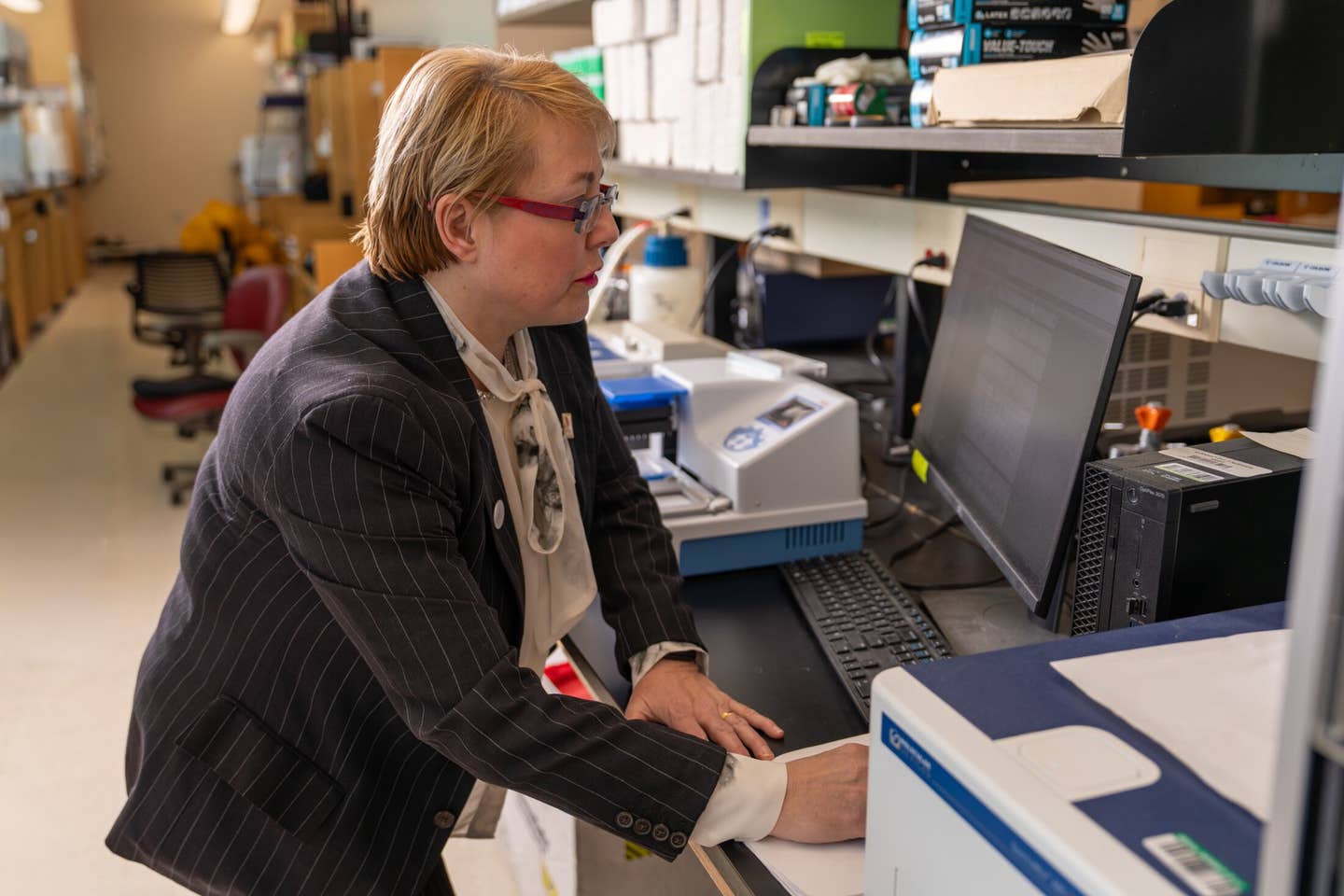
“Multilingualism is a very broad label,” said Esti Blanco-Elorrieta, an assistant professor of psychology and neural science at NYU and the paper’s senior author. “These new formulas provide a clear, evidence-based way to understand your language strengths and how multilingual you truly are, bringing scientific clarity to an everyday part of life for millions of people.”
Why a Definition Problem Matters
In everyday life, “bilingual” can mean many things. You might speak one language at home and another at school. You might read well but avoid writing. You might understand conversations yet freeze in formal settings. Those details matter, but they often get flattened into a single label.
For researchers, that fuzziness creates a real problem. If two studies define “bilingual” differently, their results can clash. Clinicians also face a challenge. A patient’s strongest language might not be obvious from a quick question. Teachers face it too. A student’s reading strength may not match speaking comfort.
The NYU team’s goal was to give you a consistent yardstick. Instead of guessing where you fit, the calculator estimates your multilingual range and your language dominance using the same rules each time.
A Calculator Built From Two Key Inputs
The tool works in nearly 50 languages, including American Sign Language, and you can also enter an unlisted language. The heart of it is a set of formulas created by Blanco-Elorrieta and Xuanyi Jessica Chen, an NYU doctoral student and the paper’s lead author.
You provide two kinds of information for each language you know. First, you enter your age of language acquisition for listening, reading, speaking, and writing. Second, you rate your own skill in those same four areas.
From there, the calculator produces a multilingualism score. It places you on a scale that runs from monolingual to “perfect polyglot.” It also produces a separate language-dominance result. That dominance measure comes from comparing your ability across languages and computing the difference between them.
“Rather than just labeling someone as ‘bilingual’ or ‘monolingual,’ this tool quantifies how multilingual one is,” Chen said.
Trusting Self-Ratings, With Guardrails
If you hesitate at “self-rated,” you are not alone. Many people worry they will overrate themselves, or underrate themselves. The researchers point to prior findings showing that self-rated proficiency can be an accurate and efficient proxy for actual proficiency.
They also added statistical controls meant to reduce self-rating bias. In other words, the formulas try to prevent a confident rater from automatically looking more skilled than an equally capable but cautious rater.
Age of learning also plays a key role. The researchers note that earlier learning predicts higher eventual skill. The calculator uses that idea to interpret your profile across listening, reading, speaking, and writing.
This matters in real life. You can be “good” in two languages, yet still have a dominant one. You might also be strong in one skill area but weaker in another. The tool is designed to capture those patterns instead of hiding them.
Testing the Tool in Two Real-World Groups
A calculator is only useful if it matches reality. The researchers tested their approach in two distinct populations. One group included healthy young bilinguals. The other included older bilinguals with language impairments.
They then compared the calculator’s results with those from existing methods that require far more detailed background data. Across both groups, the new formulas produced language-dominance results that were nearly identical to the more complicated measures.
That match suggests you can get a trustworthy estimate without filling out a long survey or completing a battery of tests. It also supports the idea that two inputs, age of acquisition and self-rated skill, can capture much of what researchers need.
Blanco-Elorrieta told The Brighter Side of News that the calculator could have uses beyond research. “This calculator offers a transparent, quantitative tool that researchers, clinicians, and educators can adopt to better characterize multilingual populations, ultimately improving research quality and real-world applications, from language education to clinical assessment,” she said.
Practical Implications of the Research
A consistent scoring system can make multilingual research easier to compare across labs and studies. It may reduce confusion caused by differing “bilingual” definitions.
In clinics, the dominance score could help identify which language best supports evaluation and care. That can matter for older adults with language impairment.
In schools, a structured profile may help educators understand uneven skill patterns. You might speak fluently but need reading support, or the reverse.
For individuals, the tool offers a clearer way to describe your language life. It can validate what you feel and reveal gaps you did not notice.
Research findings are available online in the journal Bilingualism Language and Cognition.
Related Stories
- Children’s brains learn language in ways AI can’t imitate, study finds
- Generative AI accelerates child language learning, study finds
- 21-language neural text-to-speech technology now works on smartphones
Like these kind of feel good stories? Get The Brighter Side of News' newsletter.
Melanie Livingstone
Writer
Melanie is a San Diego–based journalist for The Brighter Side of News, an online publication focused on uplifting, transformative stories from around the globe. Passionate about spotlighting groundbreaking discoveries and innovations, Melanie covers a broad spectrum of topics including biology, geology and historical achievements. With a talent for making complex science clear and compelling, she connects readers to the advancements shaping a brighter, more hopeful future.