Beetles across Japan took different evolutionary paths to solve the same feeding problem
Snail prey, geography and limited movement helped shape distinct beetle body forms across Japan.
 Toho University Writer: Akira Muto

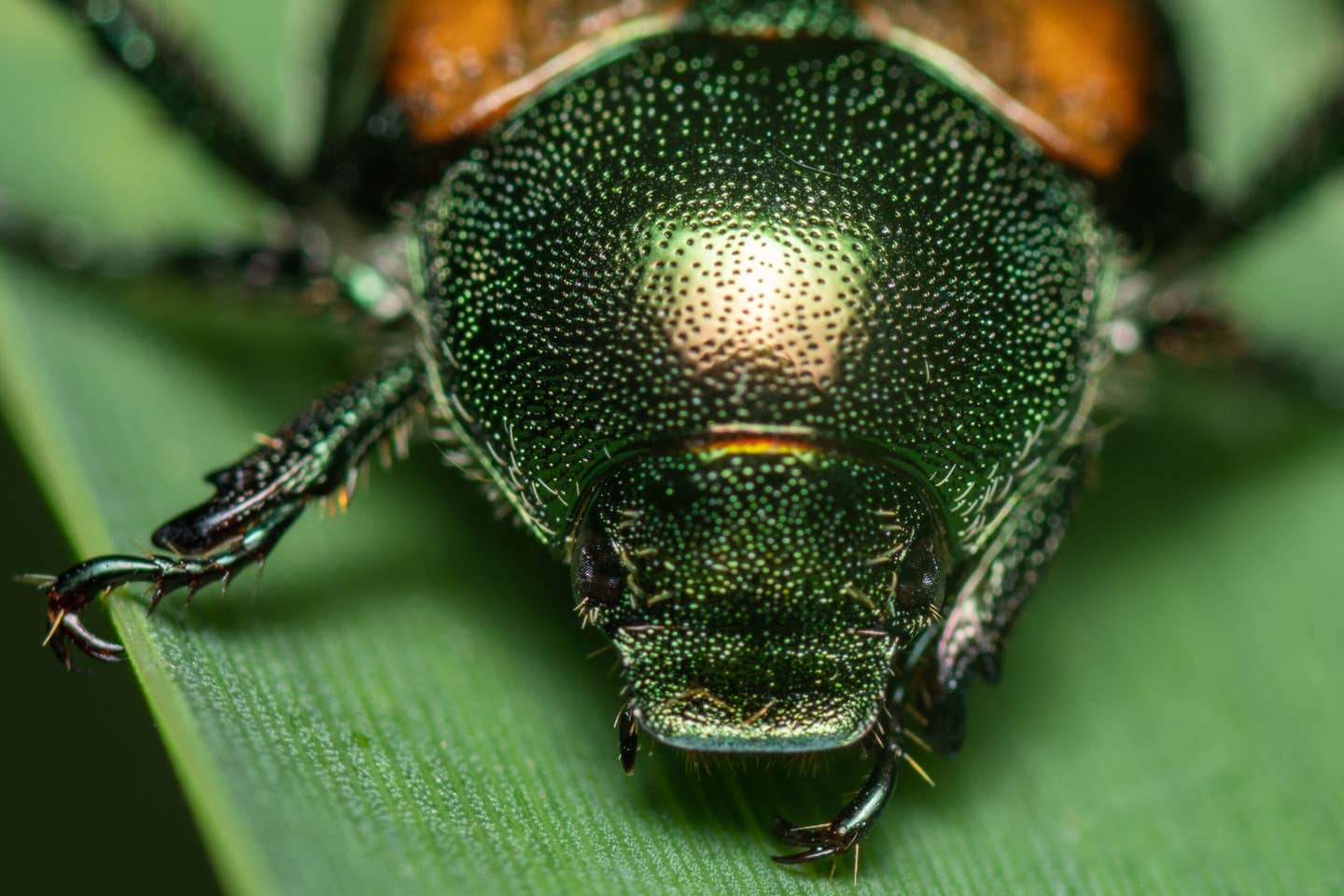
Snail prey, geography and limited movement helped shape distinct beetle body forms across Japan. (CREDIT: Shutterstock)
- A flightless snail-eating beetle in Japan has evolved different body shapes not only across islands, but also between regions of the same large island.
- Slender beetles are better suited to reaching into large snail shells, while stout beetles can crush smaller shells, linking body shape to local prey.
- The results suggest that geographic distance and environmental differences within large islands can promote adaptive divergence even without ocean barriers.
A beetle does not need an ocean between populations for evolution to send them in different directions. Across Japan, a flightless snail predator has developed distinct body forms even within the same large island.
Researchers studying Carabus blaptoides found evidence that geography and local prey helped drive adaptive divergence across the Japanese archipelago. The differences appeared not only between islands such as Hokkaido and Sado, but also between eastern and western regions of Honshu.
The work, led by Junji Konuma of Toho University with researchers from the National Museum of Nature and Science and Kyoto University.
The beetle offers an unusually clear system for studying geographic isolation. Its hindwings are reduced, so it cannot fly and must disperse by walking.
That limited mobility can restrict gene flow even across continuous land.
Two body shapes solve the same feeding problem differently
Carabus blaptoides feeds mainly on terrestrial snails and has diversified into eight subspecies.
Its body shape reflects a trade-off between two feeding strategies.
Slender beetles have long, narrow heads and thoraxes. That shape lets them push deeply into large snail shells to reach prey.
Stout beetles take the opposite approach.
Their heads are shorter and wider, with powerful mandibles better suited to crushing relatively small shells. The thicker head makes it harder to reach far inside a large shell.
Previous work linked those body forms to regional differences in snail size.
The contrast is especially pronounced between C. b. fortunei, which has a slender form, and the stout C. b. capito.
Their hybrids show intermediate body shapes and more general feeding behavior, but perform worse than the specialized parent forms.
First-generation hybrids and backcrosses can form. Second-generation hybrids cannot, mainly because first-generation hybrid males are sterile.
That combination points to both ecological and reproductive separation between some forms.
Genetics traces a long split across Japan
The team analyzed genetic data from 170 beetles collected at 70 sites across the species’ range.
For morphology, researchers used measurements from 50 populations, drawn from a larger dataset of 1,705 beetles from 68 locations.
They compared head and thorax dimensions to reconstruct body size and shape.
The genetic analysis placed the most recent common ancestor of the sampled populations at roughly 1.5 million years ago.
An early division separated eastern and western groups along Japan’s northeast-to-southwest axis.
The eastern group later divided again, with a common ancestor dating to about 740,000 years ago.
One branch was associated with northern Tohoku and later extended into Hokkaido. Another was centered more strongly in southern Tohoku.
The western group split into three major lineages associated with Kinki, Chugoku and Kyushu. Its common ancestor dated to about 690,000 years ago.
Western beetles became more slender
Body shape followed a strong geographic pattern.
Populations in western Honshu, Shikoku and Kyushu were generally more slender than those in eastern Honshu and Awashima.
Sado Island showed the strongest shift in the other direction, with especially stout beetles.
The reconstructed ancestral body form fell between the stout Sado animals and the particularly slender population on Shikoku.
Body size showed another pattern. Beetles tended to become smaller farther north, with the Hokkaido population smaller than populations farther south.
Researchers tested whether those differences matched models in which different geographic regions favored different body forms.
The strongest model for body shape combined both island effects and differences within the main Japanese landmass.
It favored slender beetles in western Japan and stouter forms on Sado and Hokkaido.
The estimated strength-of-selection parameter was 5.37, corresponding to an evolutionary half-life of about 129,000 years.
That half-life represents the estimated time needed for a population to evolve halfway toward its favored body form.
Local snails may help shape the beetles
Differences in prey provide a possible explanation for the pattern.
On Shikoku, where C. b. blaptoides is especially slender, the land snail Euhadra awaensis can exceed 60 millimeters in shell diameter.
On Sado and Hokkaido, where beetles are stouter, several Euhadra forms cited in the research are smaller, at roughly 26 to 33 millimeters.
Another snail genus, Satsuma, could help explain the east-west divide.
The genus contains 31 species and subspecies and is concentrated mainly in western Japan. Several large Satsuma species occur in places where the models favored slender beetles.
The researchers therefore identified Euhadra and Satsuma as plausible prey groups influencing beetle body shape.
Islands were not the only evolutionary boundaries
The results for body size were less certain than those for body shape.
Although the combined geographic model had the best statistical fit, some parameter estimates were extreme enough that the researchers cautioned against treating them as strong evidence of island adaptation.
A model emphasizing differences within the main landmass produced more interpretable estimates.
Under that model, smaller beetles occurred toward northeastern Japan and larger beetles toward the southwest.
The researchers suggested climatic differences, including shorter growing seasons at higher latitudes, as the most plausible explanation.
They also cautioned against ranking island isolation above within-island geography.
For body shape, the statistical difference between models emphasizing those two processes was small. More information from under-sampled islands such as Oki, Nakadori and Iki could help clarify their relative importance.
Practical implications of the research
The findings expand the idea of islands as evolutionary laboratories.
Ocean barriers clearly matter, but large islands can also contain enough distance and environmental variation to push populations toward different adaptive forms.
That effect may be especially important for animals with limited dispersal.
“Adaptive radiation has often been discussed in the context of populations isolated on oceanic islands,” Konuma said. “Our results suggest that on large continental islands, adaptive divergence may be promoted by geographic distance and environmental variation within the same landmass.”
For C. blaptoides, the combination of limited movement, regional prey differences and geographic separation appears to have produced multiple evolutionary paths across Japan.
The beetles show that divergence can begin well before an ocean fully separates one population from another.
Dig deeper into snail-feeding beetle evolution
These studies trace how prey size, feeding mechanics, genetics and hybrid performance helped scientists understand the extraordinary body-shape diversity of Carabus blaptoides.
Trade-Offs between Force and Fit: Extreme Morphologies Associated with Feeding Behavior in Carabid Beetles: Demonstrated experimentally that slender beetles excel at entering large snail shells while stout beetles specialize in crushing smaller shells, establishing the functional trade-off underlying their divergence. (The American Naturalist, 2007)
Factors determining the direction of ecological specialization in snail-feeding carabid beetles: Found that slender beetle populations tend to occur where Euhadra snails are larger and identified both prey size and geographic isolation as drivers of local adaptation. (Evolution, 2011)
Quantitative genetic analysis of subspecific differences in body shape in the snail-feeding carabid beetle Damaster blaptoides: Used crosses between stout and slender subspecies to show that a relatively small number of genetic factors can produce major differences in head and thorax shape. (Heredity, 2013)
A maladaptive intermediate form: a strong trade-off revealed by hybrids between two forms of a snail-feeding beetle: Showed that intermediate hybrids attempted both shell-crushing and shell-entry strategies but frequently performed poorly at each, providing evidence for disruptive ecological selection. (Ecology, 2013)
Odd-Paired is Involved in Morphological Divergence of Snail-Feeding Beetles: Identified the conserved transcription-factor gene odd-paired as an important genetic contributor to the slender-versus-stout body differences among C. blaptoides populations. (Molecular Biology and Evolution, 2024)
Research findings are available online in the journal Biological Journal of the Linnean Society.
The original story "Beetles across Japan took different evolutionary paths to solve the same feeding problem" is published in The Brighter Side of News.
Related Stories
- Harvard scientists tell a 'hot' story about beetles and plant sex
- The surprising connection between the dung beetle and satellite navigation systems
- Pink 'living rocks' reveal hidden ecosystem beneath Japan’s coast
Like these kind of feel good stories? Get The Brighter Side of News' newsletter.
Rebecca Shavit
Writer
Based in Los Angeles, Rebecca Shavit is a dedicated science and technology journalist who writes for The Brighter Side of News, an online publication committed to highlighting positive and transformative stories from around the world. Having published articles on MSN, AOL News, and Yahoo News, Rebecca's reporting spans a wide range of topics, from cutting-edge medical breakthroughs to historical discoveries and innovations. With a keen ability to translate complex concepts into engaging and accessible stories, she makes science and innovation relatable to a broad audience.