Chile’s megadrought is dealing a severe and long-lasting blow to their glacier ecosystems
By 2100, Chile’s shrinking Andes glaciers may supply only half today’s summer meltwater during a new megadrought, scientists warn.

 Edited By: Joseph Shavit

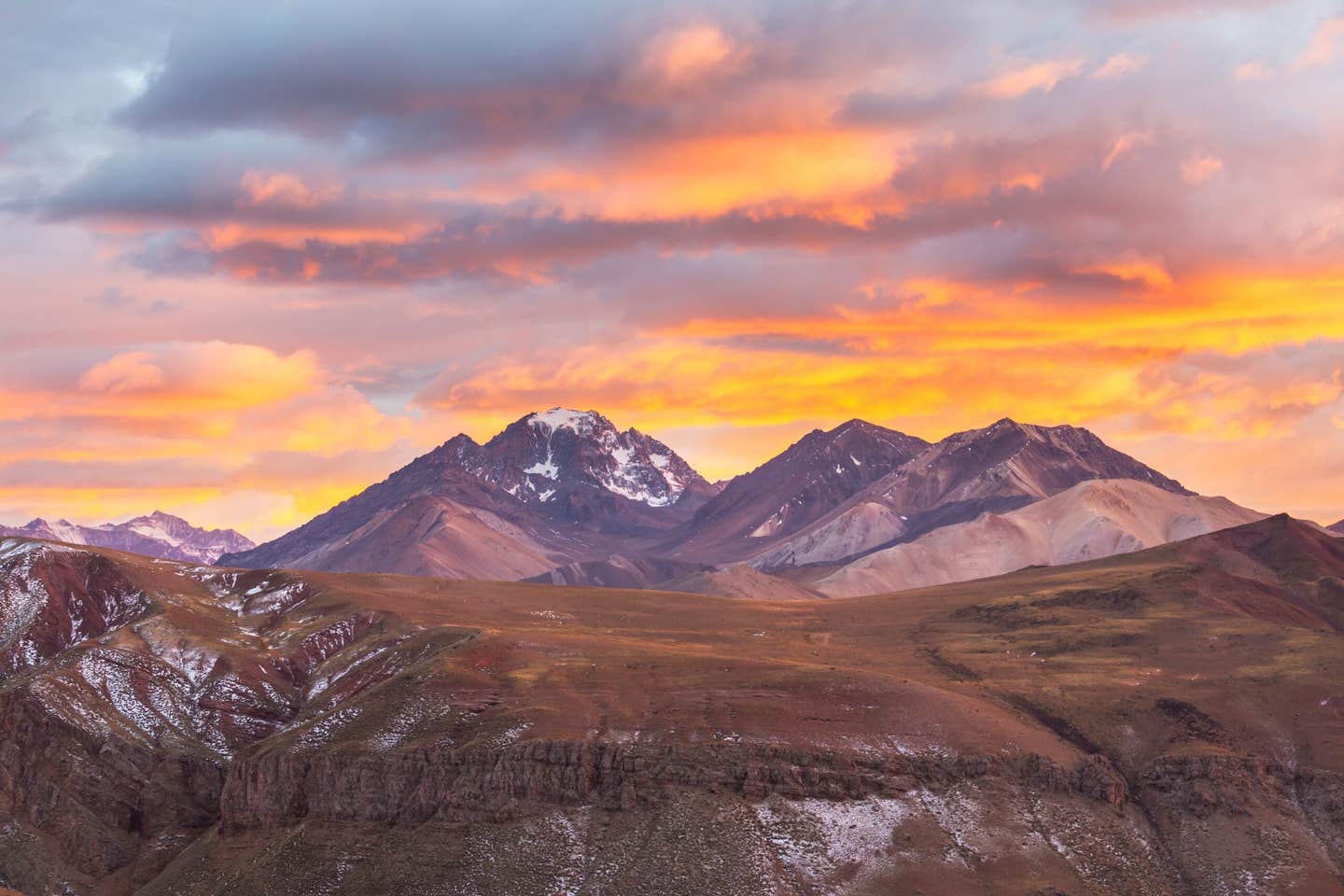
A new modeling study of the Southern Andes shows that if a megadrought like Chile’s current one strikes again near the end of this century, the region’s largest glaciers will be too depleted to provide the meltwater buffer that has kept rivers flowing so far, raising urgent questions about water security and climate policy. (CREDIT: Shutterstock)
The high mountains of central Chile look solid and eternal, but their ice is in trouble. For fifteen years, the country has endured a stubborn megadrought, and glaciers have quietly carried much of the burden. They have melted faster to keep rivers flowing and taps running. A new study warns that by the end of this century, that backup system may break when you most need it.
An international team led by researchers in Austria, Switzerland and Chile set out a stark question: what if a drought as long and severe as today’s megadrought hits again near 2100? Their answer is blunt. The glaciers of the Southern Andes will be too worn down to cushion such a shock.
Chile’s Long Thirst
Chileans are used to periods of dryness. In the past, droughts came every five or six years and lasted one or two years. People could wait for rain to return. This time, relief never came.
“Climate scientists only realized in 2015 that the unending drought in Chile was really a big thing,” says Francesca Pellicciotti, a professor at the Institute of Science and Technology Austria. Earlier climate models gave such a long drought almost no chance of happening. Yet it did, and it is still going.
Central Chile depends on snow and ice for water security. The Atacama Desert already dominates the north. As rain and snowfall dropped, glaciers in the Southern Andes stepped in as emergency reservoirs. They released extra meltwater, at the cost of their own mass. That silent support has helped cities, farms and ecosystems stay alive during this dry spell.
Modeling a Future “Chile 2.0”
Pellicciotti joined Chilean Earth scientists Álvaro Ayala and Eduardo Muñoz-Castro, now at the Swiss Federal Institute for Forest, Snow and Landscape Research. Together with other colleagues, they built a bold numerical experiment.
They focused on the 100 largest glaciers in the Southern Andes of central Chile and Argentina. These ice bodies act as “water towers” for the region. The team first simulated conditions ten years before the current megadrought, then the ten drought years themselves. They tracked how much snow and rain fell, how much ice the glaciers lost, and how much meltwater ran off during summer.
“We ensured we had a clear idea about the fate of glaciers, how much they lose mass, and what happens to the water,” Ayala explains.
Then they pushed the model forward to the end of the century. In these future years, the glaciers shrink far below their present size. Under those reduced conditions, the researchers imposed a second drought similar to today’s Chilean megadrought.
The result is sobering. What remains of the 100 largest glaciers would deliver only about half of today’s summer meltwater. That drop would hit right when rivers already run low and demand peaks. For smaller glaciers, which the team did not include, the outlook is worse. “The smaller glaciers will likely have disappeared by then, and a future ‘Chile 2.0’ megadrought will very likely be a severe blow for their ecosystems,” says Ayala.
If you rely on meltwater for drinking, farming or power, those numbers should make you uneasy.
Megadroughts and Failing Water Towers
Are such extreme scenarios realistic when models failed to predict the current crisis? Pellicciotti argues that many global climate models underestimate extremes. They capture the steady warming trend, but not the full force of rare, long dry spells.
A common pattern already appears. As the planet warms, glaciers lose mass year by year. On top of that slow decline, intense droughts strike as separate events that push systems over the edge. Short droughts are part of the historical record. Multi year megadroughts, like Chile’s, remain unusual. Yet they may be a sign of what is coming.
“In projections that consider very severe scenarios, we can indeed see megadroughts,” Pellicciotti notes. Under milder scenarios, model rainfall looks closer to today’s patterns. “So, there must be something else that we don’t see in the models,” she adds.
Pellicciotti recently helped reanalyze global data collected over forty years. That work confirmed that multi year extreme droughts are becoming more frequent, more severe and more widespread. Scientists still debate how to define a megadrought. For now, they often use its impact on vegetation as a marker. They also still work to understand what triggers such long dry periods in the first place.
Even with open questions, many researchers now warn that megadroughts may become a “new normal.” That means you cannot treat Chile’s crisis as a one time oddity. It may be a preview.
Lessons From Chile and Europe
In Chile, one word now dominates water talk: desertification. Ayala sees the dry zone creeping south. “We see this pattern slowly extending from the north toward the south. So, the deserts in the north likely show us today what central Chile might look like in the future,” he says.
Europe faces its own mirror. “Similarly, in Europe, one can look at the Mediterranean mountains to understand the future of the Alps,” Ayala adds. A sequence of recent droughts has already shocked those who claimed Europe has not seen a megadrought since the Middle Ages.
Despite these warnings, funding agencies have sometimes resisted research on megadroughts outside a few famous cases. Pellicciotti recalls reviews that dismissed the idea of studying such events in Europe because there was no recent example. Then a chain of severe dry years hit several European regions in quick succession.
The team argues that policy must catch up with these signals. Chile has started to assign clear priorities for water use. Europe still needs closer cooperation between scientists and water managers to test scenarios for competing demands and allocation rules. Crucially, those planning exercises must include the possibility of megadrought. That means starting from a system that is already short of water, not an average year.
Thinking of their home country, Ayala and Muñoz-Castro urge action. “We must be well prepared for what will come next, as we won’t be able to rely on all the factors that ‘worked’ until now during the current megadrought,” Ayala says. “We must be flexible enough with our water management plans to handle future situations without counting on the glacier’s contribution.”
Practical Implications of the Research
This study sends a clear message. Glaciers that now protect you during long droughts are shrinking, and their backup role has a deadline. If similar megadroughts strike late in the century, glacier melt will no longer cover the rainfall shortfall. That change will reshape life from mountain valleys to coastal cities.
For water managers, the findings highlight the need to redesign storage and allocation plans now. Future systems must work under chronic shortages, not just short dry spells. That may involve new reservoirs, tighter rules on groundwater, and strong incentives for efficient irrigation.
For policymakers, the work strengthens the case for global climate action. Cutting greenhouse gas emissions can slow glacier loss and reduce the chance of the most extreme futures. Even then, you will likely live with more frequent and intense droughts, so national adaptation plans must treat water security as a central goal.
For scientists, the study underlines the urgency of improving climate models so they capture extreme events more accurately. That includes better understanding of megadrought triggers and closer links between glacier modeling and water resource planning.
For communities, especially those in dry mountain regions, the research is a warning and an opportunity. It suggests that past habits, such as assuming snow and ice will always refill rivers, no longer hold. At the same time, it offers a path. You can plan for flexible, fair and climate ready water systems before the next “Chile 2.0” arrives.
Research findings are available online in the journal Communications Earth & Environment.
Related Stories
- Hektoria glacier’s record breaking collapse signals a much bigger Antarctic threat
- Glaciers are keeping themselves from melting — but not for long
- Rising temperatures and widespread pollution are making glaciers melt at record rates, study finds
Like these kind of feel good stories? Get The Brighter Side of News' newsletter.
Joshua Shavit
Writer and Editor
Joshua Shavit is a NorCal-based science and technology writer with a passion for exploring the breakthroughs shaping the future. As a co-founder of The Brighter Side of News, he focuses on positive and transformative advancements in technology, physics, engineering, robotics, and astronomy. Joshua's work highlights the innovators behind the ideas, bringing readers closer to the people driving progress.