How citizen cooperation kept Ukraine’s government services working
A Linköping University study finds citizen-authority collaboration and trust helped Ukraine keep services running during war.

 Edited By: Joseph Shavit

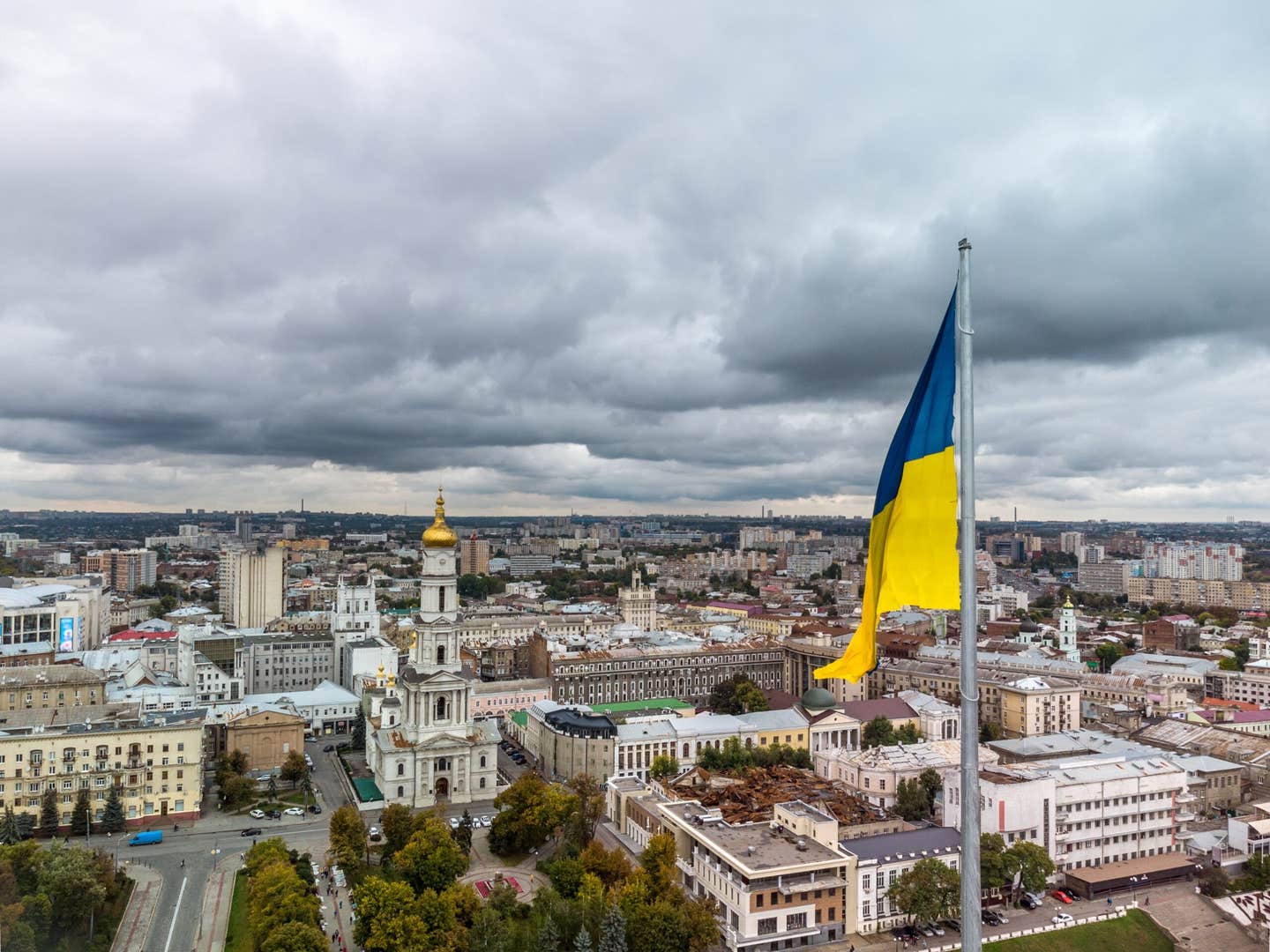
New research in Dnipropetrovsk shows how citizens, officials, and digital tools co-created services that held up under wartime strain. (CREDIT: Shutterstock)
Ukraine’s war has forced daily life into hard choices since February 2022. Yet schools, permits, social support, and many government services have kept moving. A new study from Linköping University argues that this continuity did not happen by accident. It grew from a deeper shift; citizens and public authorities began working together in ways that used to be rare.
The researchers say that when crisis hits, a functioning society depends on more than orders from the top. It depends on people acting, coordinating, and trusting each other enough to share responsibility. That lesson may matter far beyond Ukraine if another country faces war or a major shock.
When Crisis Turns Everyone Into a Decision-Maker
“Everyone, right down to the family and the individual, makes crucial decisions in times of deep crisis. It’s important that all actors are mobilised, pull together and cooperate,” says Mariana Gustafsson, docent in political science at the Department of Management and Engineering at Linköping University.
That quote frames what the research tries to capture. The study focuses on the Dnipropetrovsk region during 2023 and 2024. It draws on survey responses from 239 public officials and 882 Ukrainian citizens. The team also conducted ten in-depth interviews with public officials and active members of civil society.
Together, the material paints a picture of public services changing shape under pressure. Instead of waiting for help, many people began helping design it. Instead of acting alone, authorities leaned on local networks to spot problems early.
From Sporadic Contact to Shared Work
Before the full-scale war, the study suggests, collaboration between authorities and civil society existed but often appeared uneven. Under bombardment, displacement, and uncertainty, that pattern shifted. Cooperation became extensive, stretching across levels of society.
The study describes how civil society groups, using local networks, could notice new needs quickly. Those needs could involve veterans, people who fled their homes, or families trying to rebuild routines. Citizens and organizations then worked with authorities and international organizations to build relief efforts around those needs.
This approach reshaped the role of the public. You are not positioned as a passive recipient of services. You become a co-creator. That change can make solutions feel more believable, and more grounded in what communities actually face.
The researchers point to concrete outcomes. One example involves the quick creation of digital services to support war veterans and displaced people. The point is not only speed. It is also fit. When people closest to the problem help design a response, the service can match real life.
Digital Services as a Shared Backbone
The study highlights a central tool for keeping services connected: the digital platform Diia. Ukraine had used Diia as a central location for government services for the past few years. During the war, that foundation became even more valuable.
The researchers describe how some functions first developed in civil society could connect to Diia quickly. That integration made it easier to scale services during crisis, rather than building separate systems from scratch. More than half of all Ukrainians now have the app on their phone, the study notes.
The research does not treat technology as a miracle cure. It treats it as an enabling structure. When government systems already have a digital hub, you can attach new functions faster. When citizens already use the tool, adoption comes easier.
Diia also fits the study’s larger theme. Cooperation does not stay abstract. It shows up in practical steps, such as linking new services into an existing platform that people already trust enough to use.
Trust as the Hidden Infrastructure
Under the surface, the researchers say, collaboration rests on trust. Trust here means a belief that individuals, organizations, and public authorities do what they say they will do. Without that belief, cooperation can stall. People may hesitate to share information or rely on official channels.
The study notes that this trust was not always evident in Ukraine. It has grown slowly since the Orange Revolution in the mid-00s. The war, the researchers argue, pushed the issue to a breaking point. Cooperation expanded quickly. At the same time, serious problems with corruption remain.
The study frames trust as something built through action, not slogans. Authorities can build trust by staying flexible and actively including civil society. Citizens can build trust by becoming more active and engaged, even when fatigue sets in.
Gustafsson warns that this is not only a Ukrainian challenge. Many developed democracies have seen lower civic engagement over time. If participation weakens before a crisis, rebuilding it during a crisis becomes harder.
“Don’t forget that trust is a commodity. This is something that public authorities, civil society and all of us have to work on continuously. We have seen many warning signs that civil society must become more dynamic and active,” Gustafsson says.
That warning carries a practical message. If you want a society to function in shock, you have to prepare for that reality early. Trust does not appear overnight.
What the Study Could Not Capture
The researchers also flag limits. War made it difficult to achieve fully representative survey data. The survey also covered only one region of Ukraine, which means the findings may not describe every area equally.
The Linköping University researchers conducted the work with colleagues from Dnipro University of Technology in Ukraine. Funding came from the Swedish Research Council and the Swedish Institute.
Even with limits, the study offers a grounded look at how public services can bend without breaking. It shows how collaboration and trust can act as a kind of civic infrastructure, especially when physical infrastructure faces constant threat.
Practical Implications of the Research
The study suggests that governments should treat civil society as a partner before crisis arrives. When authorities know local groups and communicate often, cooperation can expand faster during shock. This can help services adapt to new needs, including support for displaced people and veterans, without long delays.
The findings also point to digital readiness as a resilience strategy. A widely used platform like Diia can serve as a stable backbone for adding new services quickly, especially when travel, offices, or staffing become unpredictable. For future research, the study highlights the value of examining trust as a practical resource, not a vague attitude. Researchers can test how trust grows through inclusion, flexibility, and shared work, and how corruption risks can weaken that progress.
For people, the work offers a hopeful lesson. When citizens move from receiving services to shaping them, responses can become faster and more credible. In future wars or large disasters, that shift could help societies protect basic functions, reduce suffering, and shorten recovery time.
Research findings are available online in the journal Government Information Quarterly.
The original story "How citizen cooperation kept Ukraine’s government services working" is published in The Brighter Side of News.
Related Stories
- Global and environmental economy could be impacted by Russian invasion of Ukraine
- Russia patents a modular spacecraft designed to create artificial gravity
- Seoul will be the first city government to join the metaverse
Like these kind of feel good stories? Get The Brighter Side of News' newsletter.
Rebecca Shavit
Writer
Based in Los Angeles, Rebecca Shavit is a dedicated science and technology journalist who writes for The Brighter Side of News, an online publication committed to highlighting positive and transformative stories from around the world. Her reporting spans a wide range of topics, from cutting-edge medical breakthroughs to historical discoveries and innovations. With a keen ability to translate complex concepts into engaging and accessible stories, she makes science and innovation relatable to a broad audience.