Human sperm RNA changes with age, study finds
Researchers report that sperm RNA changes with age in both mice and humans, offering new insight into paternal aging and reproductive health.

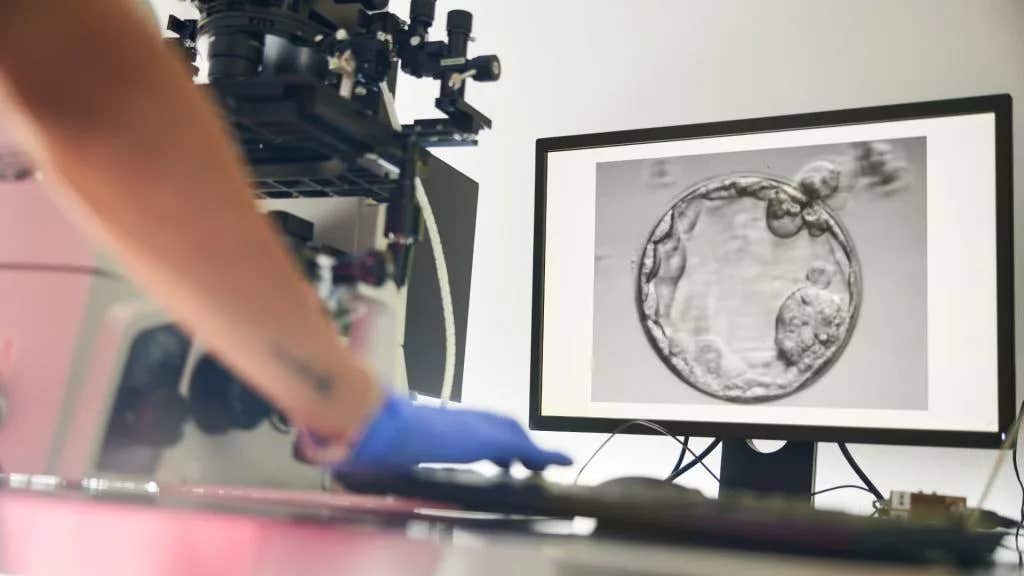
New research shows sperm RNA changes with age in mice and humans, revealing a molecular clock tied to fertility and offspring health. (CREDIT: Shutterstock)
According to research from a team at the University of Utah Health and the University of Nevada, Reno School of Medicine, while fatherhood at an older age is becoming increasingly normalized due to more men becoming fathers later in their lives, past studies have revealed that there are negative risks associated with increasing father age for their children. The studies link higher rates of stillbirth, higher rates of obesity, and other health-related issues to older fatherhood, yet the cause of these increased risks has not been fully understood until now.
The article published in The EMBO Journal identifies the key component associated with aging sperm: the RNA associated with it. Through this study, researchers were able to find that there are significant changes in the RNA associated with sperm as males advance through life. They obtained the data from both mice and humans, and the age-related patterns of the RNA in both species are the same, which indicates that the RNA associated with sperm is preserved across species, thus indicating a “clock” for sperm growth that is based on age.
Unlike Previous Research
"Many of the studies on aging sperm have focused on the damage that is done to the DNA of the sperm that develops with increasing age, but it is known that the DNA of men who father children at an advanced age tends to be broken, damaged, or fragmented more often than that of younger men, Qi Chen, MD, PhD, associate professor of urology and human genetics at U of U Health and one of the senior authors of the research, told The Brighter Side of News.
It is important to know that, in addition to DNA, sperm also contains RNA, which consists of a vast array of molecules that help to regulate the gene activity of the embryo after it is fertilized. The results of Chen’s previous research indicated that the environment, including diet, of the father impacts the RNA composition of his sperm, which may have consequences for the health of his children.
Many of the types of RNA are difficult to detect when using conventional sequencing techniques. To help circumvent this limitation, Chen and his research team created the novel PANDORA-seq, an upgraded sequencing method that allows them to detect RNA types that may have been missed by older methods, and specifically small non-coding RNAs that do not code for proteins but still play a role in gene regulation.
When the research team used the PANDORA-seq technique on sperm from male mice, they identified an unexpected finding: there was a dramatic and rapid shift in the composition of the RNA profiles of mouse sperm, coinciding with the ages of approximately 50 and 70 weeks. The researchers termed this sudden change an aging “cliff.” In contrast, with traditional sequencing techniques, this change did not undergo a significant degree of detection.
Sudden Change vs. Gradual Increasing Change
The researchers conducted a five-time-point aging study of male mice ranging from young to very old mice using the PANDORA-seq method. The data showed that two major classes of small RNAs, tRNA-derived and rRNA-derived, were significantly altered between the younger and older age groups of the mice.
Along with the large “cliff” of change, the researchers also identified a more gradual, continuous trend of change. It was observed that the longer fragments of RNA were becoming more prevalent in the sperm of the older males, while the number of short fragments was decreasing. This change occurred slowly over time and was evident in both mice and humans.
“This discovery may seem counterintuitive,” said Chen, “because for the past couple of decades, we have been aware that as sperm age, the integrity of their DNA degrades and that it is typically fragmented and broken. Therefore, logically, one might expect that the RNA would have a similar pattern. Instead, we’ve determined that, in fact, as we age, the length of specific sperm RNA actually will increase as well.”
Why Is the Head of the Sperm So Important?
The significant piece of this finding was that when the researchers looked at just the sperm head, the sperm head contains the genetic portion and the majority of the RNA that is transferred to the oocyte during fertilization. The long tail contains additional RNA, which can obscure the true patterning.
“This rsRNA length change was a unique pattern that was only found in the sperm head, and the presence of the additional RNA in the tail masked this signal in the total sperm profile,” said Tong Zhou, PhD, associate professor of physiology and cell biology at the University of Nevada, Reno School of Medicine and one of the senior authors. “The only way to discover this was by sequencing RNA from the sperm head sample.”
With the sperm head samples, the researchers could see the length change patterns for ribosomal RNA-derived fragments because ribosomal RNA is a central component of the cell’s machinery that makes proteins. The reason for the rsRNA length change is still being investigated; however, researchers speculate it is due to age-related changes in the enzymes involved in modifying RNA or stress-induced increases in RNA levels in the cells.
Translating Findings From Mice to Humans
The research team has also confirmed similar patterns of sperm RNA in human sperm samples. This was made possible through the close collaborative relationship between the University of Utah Health’s research laboratory and the University of Utah Health’s Clinical Andrology Laboratory. “This is an exciting opportunity to validate our findings from mouse models to humans,” said Kenneth Aston, PhD, director of the Andrology and IVF Lab at the University of Utah and co-senior author of the study. “The resources we have available at our sperm bank at Utah allowed us to do this cross-species validation.”
Samples from human donors were obtained from two different groups: one group consisting of men who donated sperm years apart due to aging, and another group consisting of many different aged donors at one point in time. In both groups, older donors exhibited longer RNA (ribonucleic acid) lengths, and younger donors exhibited shorter RNA lengths. This pattern matches what was seen in the mice study.
“This finding could be a significant advancement for clinical applications in the field of andrology,” said James M. Hotaling, MD, chief innovation officer of the University of Utah Health and author of the study. “With the help of PANDORA-seq technology, this discovery could lay the foundation for developing future diagnostic tests that will provide reproductive health information and better pregnancy outcomes.”
Evaluating Biological Effects
To determine if the RNA changes observed have an effect on biological function, the researchers produced synthetic RNA mixtures that mimic the RNA profiles of young and aged sperm. The researchers then applied those mixtures to mouse embryonic stem cells, which are similar to the very first cells of the developing embryo.
Twenty-four hours after exposure to the “aged RNA mixtures,” the developing embryonic stem cells showed significantly different patterns of gene expression. A substantial number of these changes were related to metabolic processes and neurodegenerative diseases, including Parkinson’s disease and Alzheimer’s disease. Though these experiments do not prove sperm RNA is linked to the causes of neurodegenerative diseases in progeny, the results indicate age-dependent differences in RNA profiles exert a significant influence on gene behavior during early development.
Potential Clinical Significance
The findings suggest that sperm RNA may be a new marker for reproductive aging due to its potential for assessing sperm quality beyond traditional measures of sperm count or DNA damage. Future RNA assays could improve the accuracy of evaluating sperm quality and assist individuals with family planning decisions.
The findings also provide an important foundation for further research into the potential biological connection between advancing paternal age and reproductive risk factors for offspring. If similar effects are confirmed to occur in human embryos, they may help illuminate why children born to older fathers have increased likelihoods of developing certain medical conditions.
In future studies, the investigators will investigate the potential enzymes responsible for the observed age-related RNA changes. “Once we identify the enzymes responsible for these changes, we will be able to develop treatments to potentially improve the quality of sperm from aging men,” said Chen. This type of advancement could significantly limit age-related health risks and maximize positive health outcomes for future generations.
Research findings are available online in The EMBO Journal.
Related Stories
- Groundbreaking male birth control pill stops sperm in their tracks
- Scientists are close to creating human sperm cells in a test tube
- New, non-hormonal female contraceptive stops sperm in its tracks
Like these kind of feel good stories? Get The Brighter Side of News' newsletter.

Mac Oliveau
Writer
Mac Oliveau is a Los Angeles–based science and technology journalist for The Brighter Side of News, an online publication focused on uplifting, transformative stories from around the globe. Passionate about spotlighting groundbreaking discoveries and innovations, Mac covers a broad spectrum of topics including medical breakthroughs, health and green tech. With a talent for making complex science clear and compelling, they connect readers to the advancements shaping a brighter, more hopeful future.