Microplastics in your brain? Scientists warn of links to Alzheimer’s and Parkinson’s
New research warns microplastics may harm the brain and raise Alzheimer’s and Parkinson’s risks. Scientists urge action now.

 Edited By: Joseph Shavit

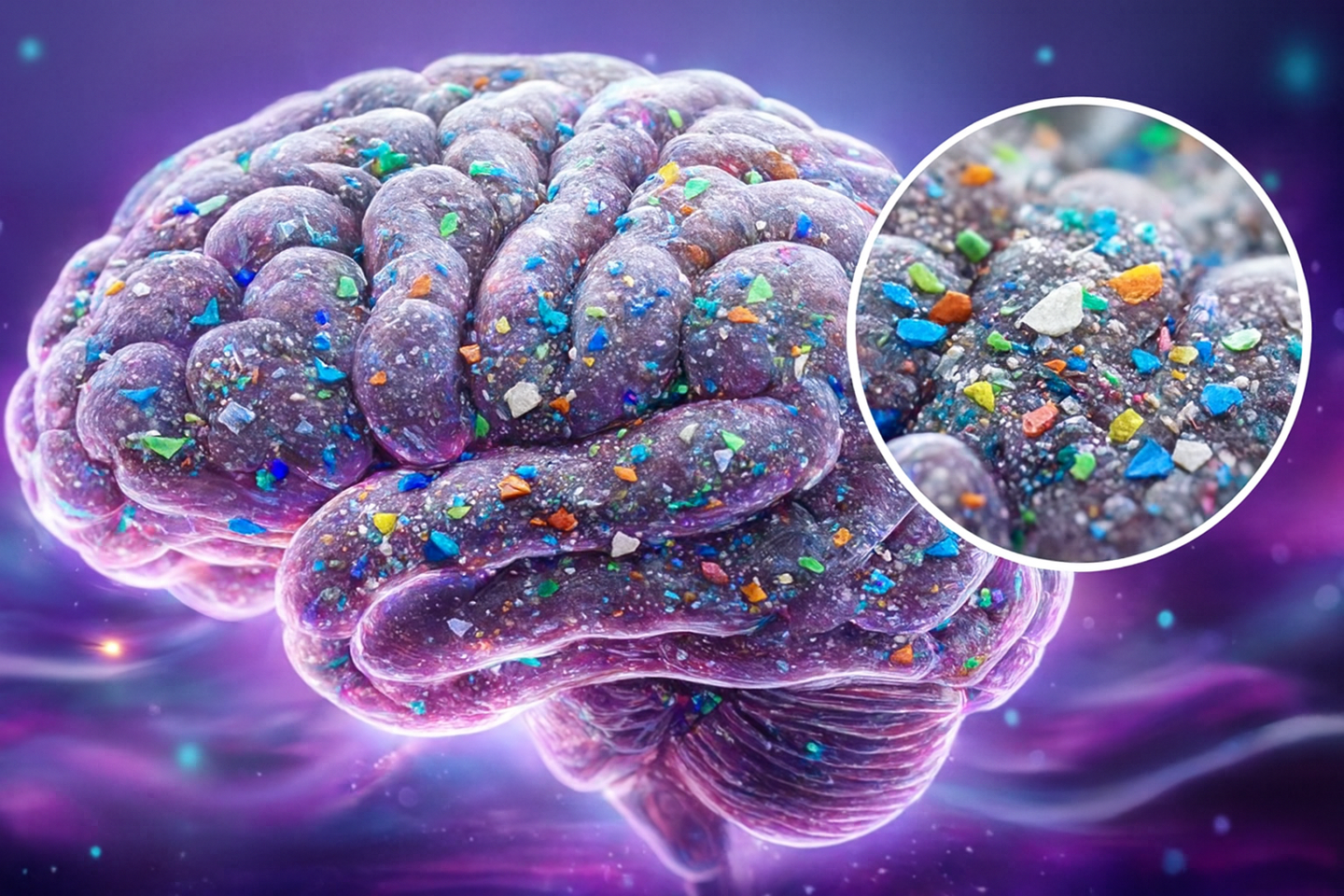
Microplastics are now found in the human brain. New research reveals how they may worsen Alzheimer’s and Parkinson’s, raising public health alarms. (CREDIT: AI-generated image / The Brighter Side of News)
In 2004, science crossed a quiet line. Researchers confirmed that tiny scraps of plastic were not just drifting in oceans but entering living bodies. Two decades later, that discovery feels less like a warning and more like a verdict about daily life.
Plastic traces now turn up in food, drinking water, breast milk and even in the air you breathe. They have been found in Arctic ice, on Mount Everest and in the deepest ocean trench. The problem is not distant. It sits on dinner plates, floats through homes and moves through blood.
Some estimates suggest an adult could swallow up to 121,000 microscopic plastic particles each year. The body pushes most of them out. A small part, however, stays behind. Scientists worry these shards may lodge in organs for years, maybe for life.
From mountaintops to meals
Mount Everest offers a stark sign of how far the problem has spread. When scientists tested snow and stream water on the world’s tallest peak, they found plastic at every height. The most polluted samples came from near the summit, nearly 29,000 feet high. Most of the pieces were polyester threads, likely scraped off by jackets and ropes. Even the cleanest places now carry human fingerprints.
At home, exposure is more personal. Plastic enters through seafood, salt, bottled drinks and food wrapped in plastic. Fibers drift off carpets and clothes. Tiny flecks break off cutting boards. Dust carries more.
Associate Professor Kamal Dua, a pharmaceutical scientist at the University of Technology Sydney, said adults may be taking in close to 250 grams of microplastics every year, which is about enough to cover a dinner plate.
“We ingest microplastics from a wide range of sources including contaminated seafood, salt, processed foods, tea bags, plastic chopping boards, drinks in plastic bottles and food grown in contaminated soil, as well as plastic fibres from carpets, dust and synthetic clothing,” he said.
Common materials include polyethylene, polypropylene, polystyrene and PET, or polyethylene terephthalate. They do not easily break down, which is what once made them famous and now makes them feared.
A threat beyond the stomach
For years, concern focused on pollution in the oceans and pollution in the gut. Now the center of attention has moved to the brain.
Research has found that microplastics can cross the blood-brain barrier, the shield that normally blocks harmful intruders from delicate tissue. In experiments, some particles weakened this barrier within hours. Once it grows porous, immune cells and toxins can slip inside.
“Microplastics actually weaken the blood-brain barrier, making it leaky,” Dua said. “Once that happens, immune cells and inflammatory molecules are activated, which then causes even more damage to the barrier’s cells.”
Routes into the brain may be more than one. A recent study of donated human tissue found plastic particles in the smell centers of the brain, known as the olfactory bulbs. That hints at a direct path from nose to mind.
The risk is not just location but reaction. The body treats plastic as an invader. In response, immune cells in the brain attack. This sparks inflammation and a burst of damaging molecules known as reactive oxygen species.
Microplastics both raise levels of these unstable compounds and weaken the systems meant to control them. That double hit, called oxidative stress, injures cells and wears down natural defenses.
Plastics also interfere with mitochondria, the tiny engines that fuel each cell. When energy supply drops, brain cells struggle to survive.
“Microplastics also interfere with the way mitochondria produce energy, reducing the supply of ATP,” Dua said. “This energy shortfall weakens neuron activity and can ultimately damage brain cells.”
Alzheimer’s and Parkinson’s
More than 57 million people worldwide live with dementia, and those numbers are rising as populations age. Alzheimer’s disease is marked by clumps of amyloid protein between cells and twisted strands of tau inside them. Parkinson’s disease is tied to the loss of dopamine-producing neurons and buildup of a protein called alpha-synuclein.
The review published in Molecular and Cellular Biochemistry links microplastics to both.
Plastic particles appear to encourage proteins to stick together in harmful knots. In lab tests, even low levels raised amyloid activity and made these proteins more likely to clump.
In Parkinson’s models, certain plastics bound tightly to alpha-synuclein and sped its toxic transformation. Animals exposed to nanoplastics developed brain injuries that looked like the disease.
Inflammation adds to the danger. Microplastics activate support cells that release chemicals meant to protect but end up damaging. Over time, this constant irritation can eat away at brain health.
Another route may start in the gut. The stomach and the brain speak through nerves and blood. When plastic damages the lining of the intestines, unwanted material can leak into the bloodstream. That stirs inflammation and changes signals sent along the vagus nerve, a major link between gut and brain.
Researchers believe Parkinson’s may begin in the gut of some patients. Changes in gut bacteria caused by plastic could make that process easier.
What the science still cannot answer
Most evidence so far comes from lab work and animal studies. Human data remain limited. Scientists also note that many experiments focus on polystyrene, while people are exposed to several other types.
Dose is another puzzle. Lab animals receive high levels in short bursts. Humans experience lower levels over many years. The slow burn could matter more than sudden floods.
Still, the pattern alarms scientists enough to act.
First author Alexander Chi Wang Siu, a Master of Pharmacy student at UTS working with Professor Murali Dhanasekaran at Auburn University, is part of a team exploring how microplastics affect living cells. Their international group includes Dr Keshav Raj Paudel and Distinguished Professor Brian Oliver from UTS, who also study how plastic inhalation harms the lungs.
The researchers stress that no study has proven plastic directly causes Alzheimer’s or Parkinson’s. Yet the evidence suggests it could worsen or speed damage already in motion.
Research findings are available online in the journal Molecular and Cellular Biology.
Related Stories
- Microplastics are filling the deep ocean faster than scientists feared
- First-confirmed images of microplastics in the brain — possible link to dementia
- High school student develops inexpensive way to remove microplastics from drinking water
Like these kind of feel good stories? Get The Brighter Side of News' newsletter.
Joshua Shavit
Writer and Editor
Joshua Shavit is a NorCal-based science and technology writer with a passion for exploring the breakthroughs shaping the future. As a co-founder of The Brighter Side of News, he focuses on positive and transformative advancements in technology, physics, engineering, robotics, and astronomy. Joshua's work highlights the innovators behind the ideas, bringing readers closer to the people driving progress.