MIT study suggests astrocytes play key role in brain memory storage
MIT researchers reveal astrocytes may boost brain memory capacity, reshaping how scientists understand learning and cognition.

 Edited By: Joseph Shavit

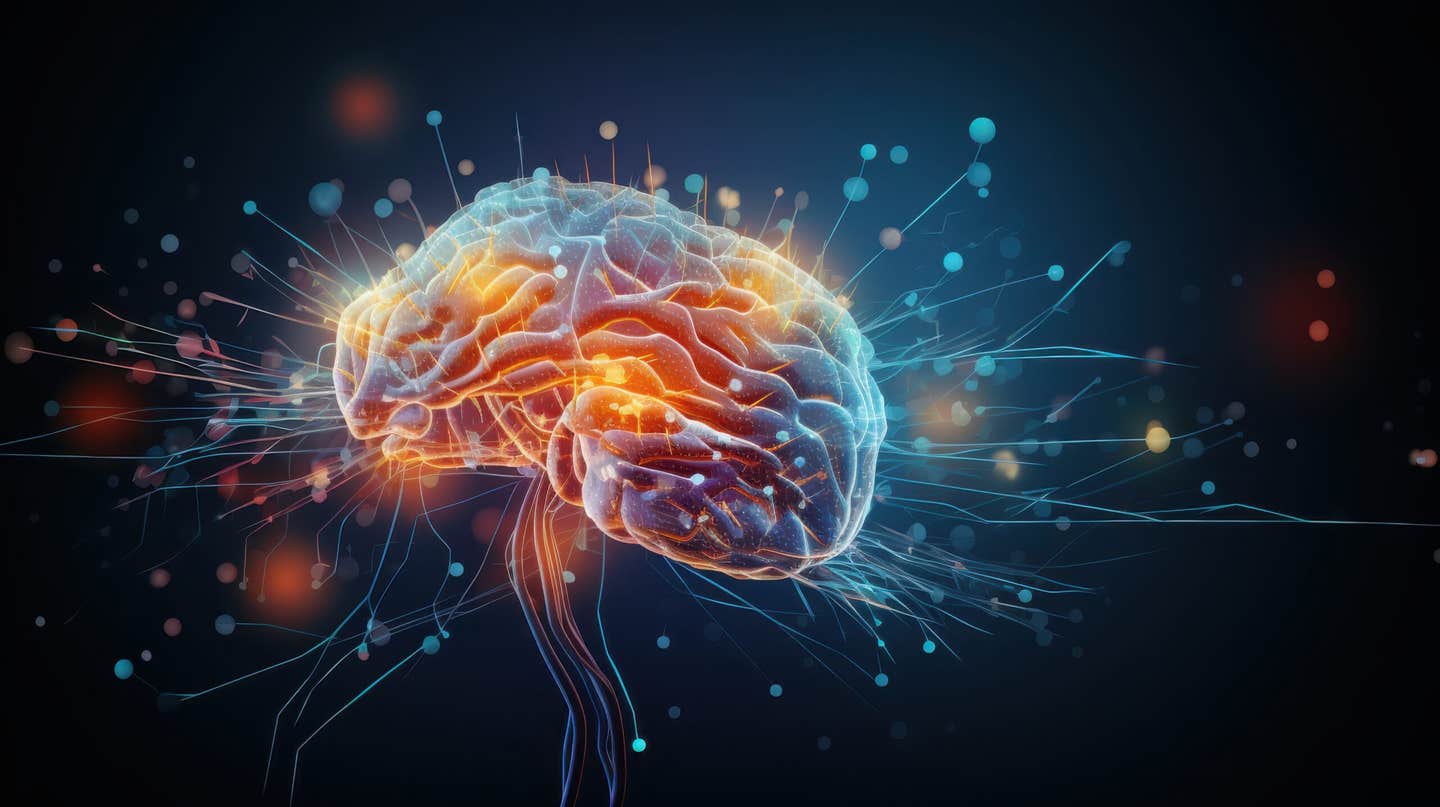
A new MIT study suggests astrocytes, once seen as support cells, may play a central role in memory storage and brain capacity. (CREDIT: Shutterstock)
The human brain holds a staggering number of connections, yet scientists have long struggled to explain how it stores so much information. A new study from MIT researchers suggests the answer may lie in cells once dismissed as simple support.
For decades, neurons have taken center stage in memory research. These cells send electrical signals that allow the brain to process thoughts and store experiences. But neurons are only part of the story. The brain also contains billions of astrocytes, star-shaped cells that quietly surround and interact with neural networks.
Now, a team led by researchers at MIT proposes that astrocytes may play a direct and powerful role in memory storage. Their findings offer a new way to think about how memories form and persist.
“Originally, astrocytes were believed to just clean up around neurons, but there’s no particular reason that evolution did not realize that, because each astrocyte can contact hundreds of thousands of synapses, they could also be used for computation,” said Jean-Jacques Slotine, an MIT professor of mechanical engineering and brain and cognitive sciences.
A Hidden Player in Memory
The brain contains about 86 billion neurons, each firing signals that help store memories and guide behavior. Alongside them are astrocytes, which outnumber neurons in many regions. These cells extend long, thin branches that can reach vast numbers of neural connections.
For years, scientists viewed astrocytes as caretakers. They clear debris, supply nutrients, and help regulate blood flow. But recent experiments suggest they do much more.
Studies have shown that when connections between astrocytes and neurons break down, memory formation suffers. That finding hints at a deeper role, one that goes beyond maintenance.
“There’s a closed circle between neuron signaling and astrocyte-to-neuron signaling,” said lead author Leo Kozachkov. “The thing that is unknown is precisely what kind of computations the astrocytes can do with the information that they’re sensing from neurons.”
The Limits of Neurons Alone
Traditional theories of memory focus on how neurons connect in pairs at synapses. These connections strengthen or weaken over time, forming the basis of learning. However, models based only on neuron-to-neuron links struggle to explain the brain’s vast storage capacity.
One well-known framework, called a Hopfield network, can store patterns of information. But its capacity is limited. Even improved versions, known as dense associative memory systems, require interactions among many neurons at once.
That presents a biological puzzle. Synapses typically connect only two neurons. So how could the brain achieve these complex, multi-neuron interactions?
The MIT team believes astrocytes may provide the missing link.
“If you have a network of neurons, which couple in pairs, there’s only a very small amount of information that you can encode in those networks,” said senior author Dmitry Krotov of the MIT-IBM Watson AI Lab. “In order to build dense associative memories, you need to couple more than two neurons.”
Astrocytes, with their ability to connect to thousands of synapses, offer a possible solution.
The Tripartite Synapse
At the heart of the new theory is a structure known as the tripartite synapse. This includes not just two neurons, but also an astrocyte process that wraps around their connection.
Each astrocyte sends out countless extensions, called processes. These can surround individual synapses, forming a three-part communication unit. Within this unit, astrocytes can detect signals from neurons and respond in turn.
Unlike neurons, astrocytes do not fire electrical impulses. Instead, they communicate using calcium signals. When neurons become active, astrocytes sense this activity and adjust their internal calcium levels.
Those changes can trigger the release of chemical messengers, called gliotransmitters, back into the synapse. This creates a feedback loop, where neurons and astrocytes influence each other in real time.
A New Model of Memory Storage
The researchers developed a mathematical model to describe how these interactions could support memory. Their model builds on earlier neural network theories but adds astrocytes as active participants.
In this system, astrocytes act as bridges between multiple synapses. They allow information to flow across many neural connections at once. This creates higher-order interactions that traditional models cannot achieve.
The key idea is that memory may be encoded not only in synapses, but also in patterns of calcium activity within astrocytes. These patterns can evolve over time and influence how neurons respond.
“By careful coordination of these two things, the spatial temporal pattern of calcium in the cell and then the signaling back to the neurons, you can get exactly the dynamics you need for this massively increased memory capacity,” Kozachkov said.
This approach dramatically increases how much information the system can store. The researchers found that their model can hold far more patterns than traditional neuron-only networks.
A System That Scales With Size
One of the most striking findings is how memory capacity grows. In many earlier models, storage increases at a steady rate as networks expand. In the new model, capacity grows more rapidly with size.
Each astrocyte process can act as a small computational unit. Because one astrocyte can connect to vast numbers of synapses, the system becomes highly efficient. It can store large amounts of information without requiring excessive energy.
Maurizio De Pitta, a physiology professor at the Krembil Research Institute who was not involved in the study, highlighted the implications. He noted that each unit could store as many memory patterns as there are neurons in the network. In theory, this allows for extremely high storage potential.
This idea aligns with what is known about the brain. Despite limited space and energy, the human brain stores a lifetime of experiences with remarkable efficiency.
Testing the Theory
The researchers acknowledge that their model remains a hypothesis. To test it, scientists would need to manipulate astrocyte activity directly and observe how memory changes.
One possible approach is to alter calcium signaling within astrocytes. If disrupting these signals affects memory, it would support the idea that astrocytes play a direct role in storage.
“We hope that one of the consequences of this work could be that experimentalists would consider this idea seriously and perform some experiments testing this hypothesis,” Krotov said.
Such experiments could reshape how scientists understand memory at a biological level.
Implications Beyond Neuroscience
The findings may also influence artificial intelligence. Early AI systems drew inspiration from the brain, but modern approaches have moved away from biological models.
Slotine believes this research could bring neuroscience back into the conversation. “While neuroscience initially inspired key ideas in AI, the last 50 years of neuroscience research have had little influence on the field,” he said.
By incorporating astrocyte-like structures, AI systems could potentially achieve greater efficiency and storage capacity. The model even suggests connections to advanced machine learning techniques, including attention mechanisms used in large language models.
Practical Implications of the Research
This research could change how scientists approach both brain disorders and artificial intelligence. If astrocytes truly help store memories, new therapies could target these cells to treat conditions such as Alzheimer’s disease or memory loss. Instead of focusing only on neurons, treatments might aim to restore healthy communication between neurons and astrocytes.
For researchers, the study opens new experimental directions. Scientists can now explore how calcium signaling patterns influence learning and recall. This could lead to a deeper understanding of how memories form, fade, or become disrupted.
In technology, the model may inspire new computing systems that mimic the brain more closely. By using networks that allow many connections at once, engineers could design machines that store and process information more efficiently.
Overall, the findings suggest that the brain’s capacity may come from a partnership, not just neurons working alone, but a complex collaboration with astrocytes that has been overlooked for decades.
Research findings are available online in the journal Proceedings of the National Academy of Sciences.
The original story "MIT study suggests astrocytes play key role in brain memory storage" is published in The Brighter Side of News.
Related Stories
- New brain-inspired device sharply reduces AI hardware energy use
- Breakthrough research reveals how male and female brains develop differently
- Scientists are creating a much broader picture of the aging brain
Like these kind of feel good stories? Get The Brighter Side of News' newsletter.
Mac Oliveau
Writer
Mac Oliveau is a Los Angeles–based science and technology journalist for The Brighter Side of News, an online publication focused on uplifting, transformative stories from around the globe. Passionate about spotlighting groundbreaking discoveries and innovations, Mac covers a broad spectrum of topics including medical breakthroughs, health and green tech. With a talent for making complex science clear and compelling, they connect readers to the advancements shaping a brighter, more hopeful future.