NASA is looking for four volunteers willing to spend a year inside a simulated Mars mission
NASA wants four volunteers to live in isolation for a year, simulating travel to the Moon and Mars from Houston.

 Edited By: Joshua Shavit

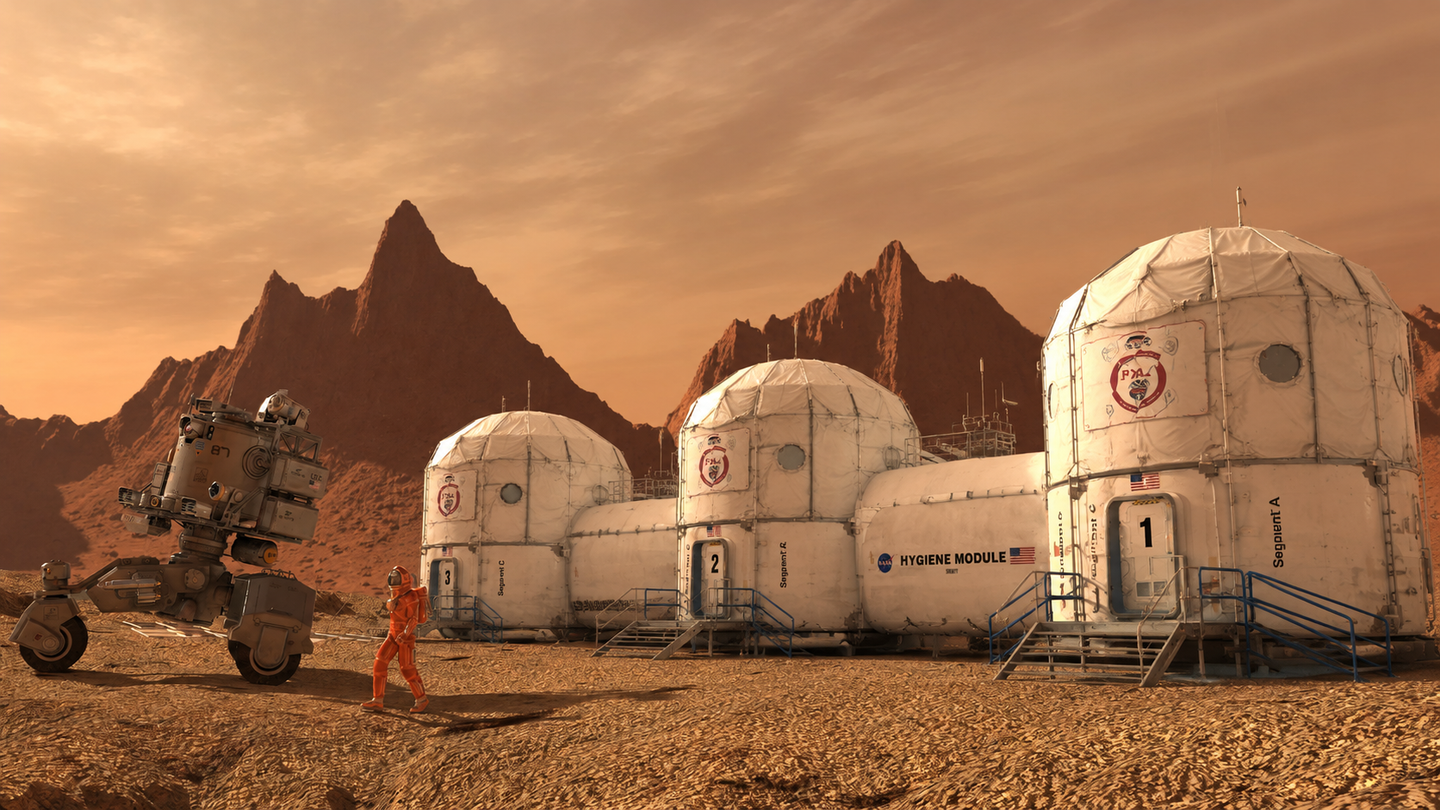
A year inside a sealed habitat can sound like science fiction, but NASA is treating it as preparation. (CREDIT: Wikimedia / CC BY-SA 4.0)
Not everyone who wants to go to Mars needs to leave Earth to help get humanity there.
NASA is recruiting volunteers to spend a full year sealed inside a pair of connected habitats at Johnson Space Center in Houston, living out a simulated trip to the Moon or Mars without the rocket. The agency wants four people willing to eat, sleep, work, and conduct fake spacewalks in isolation for twelve months, beginning no earlier than August 2027, all in the name of understanding what extended deep-space travel does to the human body and mind.
The mission, called the Moon and Mars Exploration Analog, is the first ground-based simulation to combine two phases of an actual interplanetary mission into one continuous campaign. Previous analog programs tackled transit and surface operations separately. This one runs them back to back.
Two Habitats, One Very Long Year
The first phase puts crew members inside a modified version of the HERA habitat, a two-story structure that NASA has used for years to study how small groups function in confined quarters. Here it serves as a simulated transit vehicle, standing in for the spacecraft that would carry astronauts away from Earth. The space includes a workspace, sleeping quarters, a living area, and a hygiene module, all the necessities, arranged to mirror what a real deep-space vehicle might offer.
Once the transit phase ends, the crew transitions into the surface habitat, a one-story, 3D-printed structure currently in use by NASA's second CHAPEA mission. This facility is considerably more domestic in feel: private crew quarters, a communal workspace, a recreation room, a food preparation area, a medical room, a crop cultivation area, and a sandbox where crew members can conduct simulated surface walks. There are also two bathrooms, which, given the circumstances, probably matter more than the mission planners put in the brochure.
A rover module is also available for simulating drives to exploration sites beyond the main habitat. It includes two driver seats, two beds, a small samples airlock, and a toilet that does not flush.
What NASA Is Actually Trying to Learn
The research goals are practical and pointed. Crew members will help NASA test hardware, protocols, and systems designed to keep astronauts healthy and operationally effective during missions that could last years. The data feeds directly into the agency's Human Research Program, which focuses on the medical and psychological risks of long-duration spaceflight.
The stakes are not abstract. Any crewed mission to Mars would involve roughly six to nine months of transit each way, followed by a surface stay of potentially a year and a half, all with communication delays that make real-time support from Earth impossible. Knowing how a crew degrades, adapts, or holds together under those constraints, before betting lives on the answer, is exactly what missions like this one are designed to find out.
Results may also shape plans for a sustained human presence on the Moon, feeding into NASA's ongoing Artemis program and the broader Moon Base concept the agency has been developing.
The Qualifications Are Astronaut-Adjacent
NASA is not looking for just anyone willing to disappear for a year. The requirements are detailed and, in several respects, mirror what actual astronaut candidates face.
Applicants must be U.S. citizens or permanent residents, between 30 and 55 years old, no taller than 74 inches, and fluent in English. A bachelor's degree in engineering, biological science, physical science, or mathematics is required. An advanced degree is preferred and can substitute for work experience, with a master's counting as one year and a doctorate as three. Military experience may count as well.
Beyond the academic credentials, candidates must have no dietary restrictions, no history of sleepwalking, and no reliance on sleeping aids. They must pass both a NASA physical and a psychological assessment, and they need to be willing to participate in a multiday selection activity before any final decision is made.
The full commitment runs about fourteen months: twelve inside the habitats plus two months of pre- and post-mission training and data collection. Research volunteers will be reimbursed. NASA civil servants and contractors are advised to check with their human resources offices about leave policies before applying.
Practical Implications of the Research
The analog mission generates knowledge that no simulation software or short-duration study can fully replicate. A year of continuous confinement produces real fatigue, real interpersonal friction, and real lapses in judgment, and measuring those in a controlled environment on Earth is far cheaper and safer than discovering them en route to Mars.
The data collected will inform how NASA designs life support systems, schedules crew work cycles, structures communication protocols for high-latency environments, and manages crew mental health across mission durations that dwarf anything attempted in the history of human spaceflight. Crop cultivation research inside the surface habitat could also advance NASA's understanding of food production for long missions, where resupply from Earth is not an option.
For anyone who has looked at a Mars mission timeline and wondered what the human cost might be, this program is how NASA finds out before anyone has to find out the hard way.
Applications are open on a rolling basis. Questions can be directed to jsc-analog-application@mail.nasa.gov.
The original story "NASA is looking for four volunteers willing to spend a year inside a simulated Mars mission" is published in The Brighter Side of News.
Related Stories
- Toxic Martian dust could threaten astronaut health on future Mars missions
- Oxygen on Mars: Breakthrough technology turns carbon emissions into oxygen
- New analysis finds signs of life on Mars actually came from Earth
Like these kind of feel good stories? Get The Brighter Side of News' newsletter.