New experimental molecules encourage cells to work harder and burn more calories
New research reveals how subtle chemical changes can create safer mitochondrial uncouplers that raise metabolism without harming cells.

 Edited By: Joshua Shavit

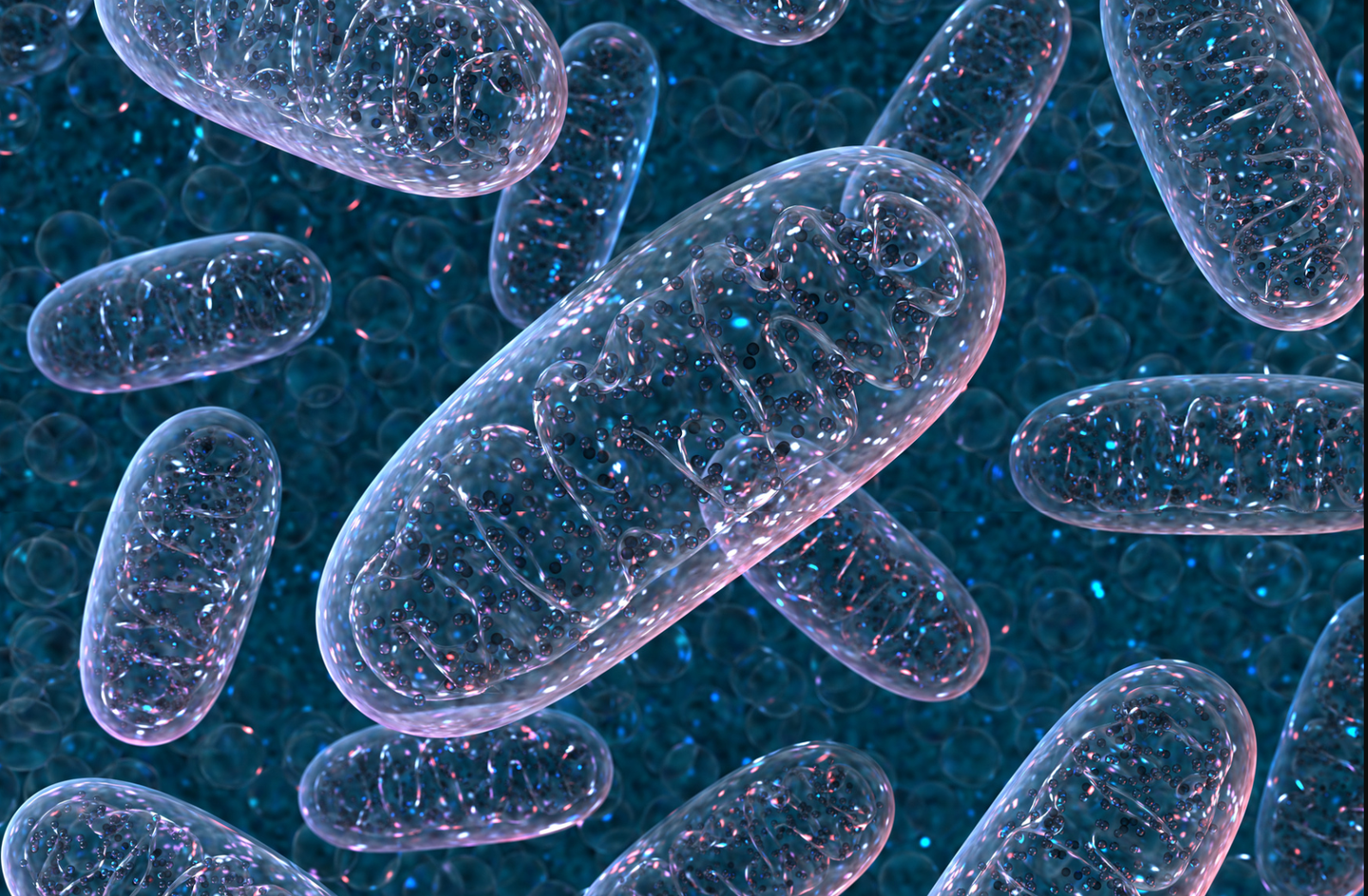
Researchers design safer mitochondrial uncouplers that boost metabolism without lowering cellular energy levels. (CREDIT: Wikimedia / CC BY-SA 4.0)
Inside your cells, mitochondria keep you alive by turning food into usable energy. Researchers from the University of Technology Sydney and Memorial University of Newfoundland are now exploring how to gently adjust this process to improve metabolic health without dangerous side effects.
The new study was led by Associate Professor Tristan Rawling at the University of Technology Sydney, working with collaborators in Canada. Their findings were published in Chemical Science, the Royal Society of Chemistry’s flagship journal, where the work was highlighted as a “pick of the week.” The research focuses on mitochondrial uncouplers, a class of molecules that make cells burn fuel less efficiently.
“Mitochondria are often called the powerhouses of the cell. They turn the food you eat into chemical energy, called ATP or adenosine triphosphate,” Rawling said. “Mitochondrial uncouplers disrupt this process, triggering cells to consume more fats to meet their energy needs.”
To understand why this matters, you first need to look at how mitochondria normally work. Nutrients are broken down into high-energy molecules that deliver electrons into a chain of proteins inside the mitochondrial membrane. As electrons move along this chain, protons are pumped across the membrane, creating both a chemical difference and an electrical voltage. Together, these forces drive protons back through an enzyme called ATP synthase, which produces ATP.
When that system runs smoothly, energy from food becomes energy your cells can use. When it does not, problems begin.
Why uncoupling can be both powerful and dangerous
Uncoupling occurs when protons leak back across the mitochondrial membrane without passing through ATP synthase. Energy is released as heat instead of ATP, and cells respond by burning more fuel. This effect has been known for nearly a century.
“It’s been described as a bit like a hydroelectric dam,” Rawling said. “Normally, water from the dam flows through turbines to generate electricity. Uncouplers act like a leak in the dam, letting some of that energy bypass the turbines, so it is lost as heat, rather than producing useful power.”
The most famous uncoupler is 2,4-dinitrophenol, or DNP. It was used briefly in the 1930s as a weight-loss drug after workers exposed to it lost weight rapidly. The outcome was tragic.
“During World War I, munitions workers in France lost weight, had high temperatures and some died,” Rawling said. “Scientists discovered this was caused by a chemical used at the factory, called 2,4-Dinitrophenol or DNP.”
DNP worked, but the line between weight loss and death was dangerously thin. It was banned, and for decades uncouplers were considered too risky to touch.
More recently, interest returned. Researchers began asking whether it might be possible to uncouple mitochondria only slightly. That approach could raise metabolism and reduce stress inside cells without causing overheating or energy collapse.
Designing a gentler way to leak energy
The new study builds on earlier work from the same group. Previously, the team developed arylurea-based molecules that act as strong uncouplers. In cancer cells, those compounds collapsed ATP production and triggered cell death.
This time, the researchers designed closely related molecules called arylamide-substituted fatty acids. The chemical changes were subtle. The backbone remained similar, but the placement of atoms on the aromatic ring was adjusted. Some compounds carried substituents in a 3,5 pattern, while others used a 3,4 pattern.
These small differences turned out to matter a great deal.
To test the effects, the team exposed human breast cancer cells to the new compounds. Some versions sharply reduced cell survival and ATP levels, behaving like classic uncouplers such as DNP. Others increased mitochondrial activity without harming cells or lowering ATP.
Measurements of oxygen use showed that all of the compounds made mitochondria work harder. However, only certain versions caused strong drops in membrane potential and ATP. Others reached a clear plateau, even as doses increased.
That plateau was the key result. The mild compounds partially lowered mitochondrial efficiency but refused to push cells into danger.
Full uncouplers versus mild uncouplers
"When our researcher team measured ATP directly, the contrast became clear. The stronger compounds reduced ATP over several hours. The milder compounds left ATP levels unchanged. Tests for cell damage confirmed that these effects were not caused by cell death," Rawling explained to The Brighter Side of News.
"We then moved to simplified membrane systems to see how quickly each compound transported protons. All of the molecules could move protons, but the full uncouplers did so faster. The mild uncouplers moved protons more slowly and formed weaker molecular pairs inside membranes," he continued.
Computational modeling supported the lab results. The stronger uncouplers aligned in ways that stabilized proton transport. The milder ones did not. By slowing the transport step, the molecules limited their own impact.
This explains why dose no longer dictated danger. The chemistry itself enforced restraint.
A step toward safer metabolic therapies
The findings point to a new design rule. Mild mitochondrial uncoupling can be built into a molecule by controlling how easily it shuttles protons across membranes. That approach differs from older strategies that relied on careful dosing alone.
Obesity remains a global health challenge, linked to diabetes, cancer and heart disease. Many current treatments require injections and can cause side effects. A safe oral drug that gently boosts metabolism could change how weight and metabolic disease are treated.
Another potential benefit lies beyond weight loss. Mild uncoupling can reduce oxidative stress inside cells. That effect may protect tissues over time and could be relevant for aging and neurodegenerative conditions.
The work is still early, and the compounds tested are experimental. Even so, the study offers a clear framework for future drug design. It shows that mitochondria can be nudged rather than forced, and that chemistry can make that nudge safer.
Research findings are available online in the journal Chemical Science.
Related Stories
- Scientists recharge and repair human cells using donated mitochondria
- Scientists edit mitochondrial DNA to reverse genetic diseases which often have no cure
- Mitochondria may be the key to curing diabetes, study finds
Like these kind of feel good stories? Get The Brighter Side of News' newsletter.
Joseph Shavit
Writer, Editor-At-Large and Publisher
Joseph Shavit, based in Los Angeles, is a seasoned science journalist, editor and co-founder of The Brighter Side of News, where he transforms complex discoveries into clear, engaging stories for general readers. With vast experience at major media groups like Times Mirror and Tribune, he writes with both authority and curiosity. His writing focuses on space science, planetary science, quantum mechanics, geology. Known for linking breakthroughs to real-world markets, he highlights how research transitions into products and industries that shape daily life.