New injectable clotting gel can make infant surgery less dangerous
New injectable microgel reduced bleeding in an infant-like animal model by 50% to 60%.

 Edited By: Joseph Shavit

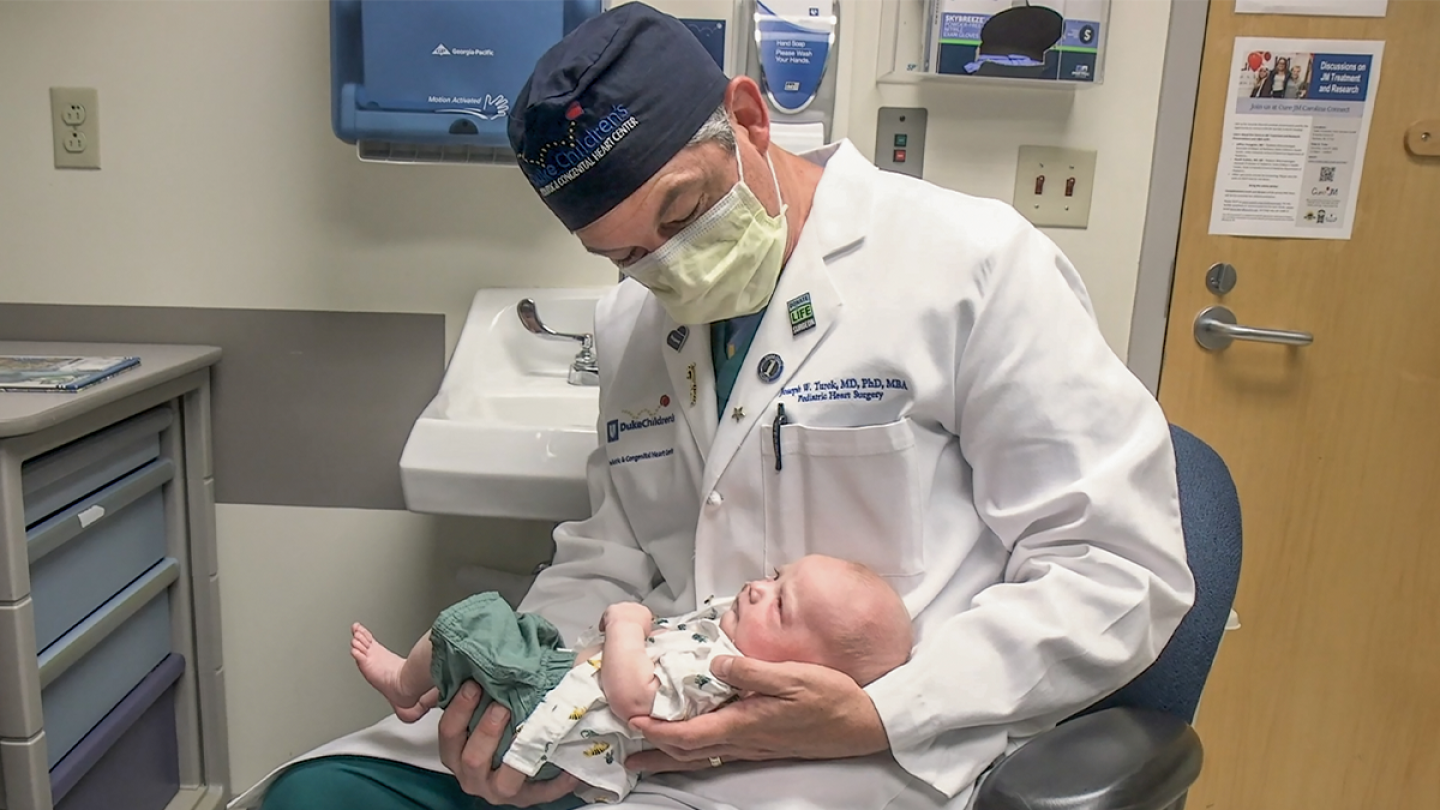
New microgel cuts bleeding in infant-like clotting model and may reduce reliance on adult blood transfusions. (CREDIT: Duke University School of Medicine)
When a newborn requires surgery, the question of how to manage bleeding becomes more complicated than it is for adults or older children. Infant blood clots differently. The fibrin network that forms when blood coagulates in newborns is looser and more porous than in adults. It also breaks down faster, and relies on different molecular interactions to form at all.
This biological immaturity creates a dangerous mismatch when infants receive blood products from adult donors. This is the standard approach when surgical blood loss must be replaced.
Adult fibrinogen, a key clotting protein, can make infant clots stiffer and more resistant to natural breakdown than they should be. As a result, this raises the risk of thrombosis, where clots form in unintended locations like the lungs. Infants undergoing surgery face roughly four times higher post-surgical mortality than older patients. The limitations of current blood product options also contribute to that disparity.
Researchers at North Carolina State University and the University of North Carolina at Chapel Hill have now developed an injectable synthetic material designed to work with infant clotting biology rather than against it. In laboratory tests and an animal model, the engineered particles reduced bleeding by 50 to 60 percent. They also showed no signs of triggering dangerous clotting in the wrong places.
Why Infant Clotting Requires a Different Solution
The molecular difference comes down to how fibrin, the main structural protein of blood clots, assembles.
When injury occurs, thrombin cleaves small fragments called fibrinopeptides from a precursor protein called fibrinogen. This exposes molecular hooks called knobs that slot into corresponding holes on adjacent fibrinogen molecules.
This interlocking process builds the fibrin mesh that forms a clot. In adults, knob A interactions drive early assembly; knob B interactions contribute later. In neonates, however, this hierarchy is reversed. Research by Ashley Brown's lab had previously shown that neonatal fibrin polymerization depends far more heavily on knob B interactions than adult clotting does.
That finding pointed toward a design strategy. If infant clotting depends specifically on B-knob to hole-b molecular connections, a material engineered around that interaction should work particularly well in neonatal blood. In addition, it would be less likely to over-activate adult-type clotting pathways that could cause thrombotic complications.
"Fibrin is the main clotting protein in human blood," said Brown, the Lampe Distinguished Professor of Biomedical Engineering and co-corresponding author on the study. "There is a short amino acid sequence called a 'B peptide' that links together fibrin molecules to create blood clots where they are needed – and these B peptides play a particularly important role in hemostasis for infants."
How the Particles Are Made and What They Do
The material the team developed is called B-knob triggered microgels, or BK-TriGs. The particles are made from a synthetic polymer and are designed to absorb water and become soft, deformable hydrogels. That squishiness matters. Previous work from the same group had established that highly deformable particles mimic the mechanical behavior of platelets. Platelets compress and help consolidate clots by physically pulling the fibrin network inward during what is called clot retraction.
Each particle is studded with copies of a short peptide sequence that mimics fibrin's knob B, the molecular hook that is especially important in infant coagulation. When injected into blood, the particles can engage the hole-b sites on fibrinogen and fibrin molecules before the body's own thrombin gets around to releasing knob B naturally.
Furthermore, the researchers hypothesize that this early engagement promotes conformational changes in fibrin. These changes encourage better lateral packing of fibrin fibers and build a denser, more mechanically stable clot network.
What the Experiments Found
The team tested BK-TriGs against two comparison materials: AK-ULCs, which carry a different peptide targeting knob A sites, and non-binding control particles that carry an inactive peptide. Testing in plasma separated from blood showed that BK-TriGs were more effective at increasing clot density, slowing clot breakdown, and stiffening the clot in infant plasma.
Conversely, in adult plasma, the picture reversed. The A-knob targeting particles outperformed BK-TriGs, which is consistent with the biological difference in how adult and infant clots form.
Under microfluidic conditions simulating blood flow, BK-TriGs substantially promoted clot growth in neonatal plasma. This reduced the rate at which clots degraded by about 75 percent compared to controls. Meanwhile, electron microscopy confirmed that the particles embedded themselves within the fibrin network. This produced a more branched and interconnected architecture.
For the in vivo portion, the researchers used a mouse model in which animals cannot produce fibrinogen and were instead given neonatal fibrinogen before the experiment. This approach approximates neonatal clotting conditions. Animals then received an injection of BK-TriGs or comparison materials before a standardized liver laceration.
At the optimal dose of 15 milligrams per kilogram, BK-TriG-treated animals lost approximately half as much blood as animals treated with saline. They also showed substantially more fibrin deposited at the wound site on tissue analysis.
No Excess Fibrin Accumulation
Importantly, the particles did not cause excess fibrin accumulation in healthy tissue or peripheral organs. In fact, fibrin deposits in the lungs were lower in BK-TriG-treated animals than in the saline group. This finding suggests no propensity for off-target clotting.
"We found that the BK-TriGs outperformed any of the other options we tested at reducing blood loss," Brown said. "Specifically, the BK-TriGs reduced blood loss by 50-60% compared to the control group."
One notable finding was that both too little and too much of the material produced suboptimal results. At double the optimal dose, blood loss actually increased back to control levels. This biphasic dose-response appeared in both laboratory and animal experiments.
It is consistent with the hypothesis that at high concentrations, the synthetic knob B peptides compete with the body's natural fibrin interactions and interfere with clot formation rather than supporting it. Therefore, finding and staying within the effective dose range will be a key consideration in any future development.
Limitations and the Road Ahead
The researchers are direct about where the work stands. The animal model uses adult mice given neonatal fibrinogen rather than actual neonatal animals, which are difficult to work with experimentally at this scale. While cord blood-derived fibrinogen shares important properties with true neonatal plasma, differences may exist that the current experiments could not capture. The study also did not directly compare BK-TriGs against existing hemostatic agents that are currently used clinically.
"The results we're reporting here are exciting, but we are still far removed from clinical use," Brown said. "We need to make sure there are no unforeseen risks associated with blood clotting."
The next steps the team has identified include head-to-head comparisons with currently available hemostatic treatments and validation using actual neonatal plasma and larger animal models. These experiments will be conducted before any path toward clinical testing could be established.
Practical Implications of the Research
If the safety and efficacy profile holds through further testing, BK-TriGs could address a genuine unmet need. Reducing the volume of adult blood transfusions needed during infant surgery would lower thrombosis risk. It could also reduce immunological complications from blood product exposure. In addition, it could potentially be deployed in settings where blood products are difficult to store or obtain.
The material is made from synthetic components including a simple peptide sequence rather than antibodies or biological clotting factors. The researchers note this makes manufacturing relatively straightforward and inexpensive compared to blood products.
For premature infants and other neonates who face serious bleeding complications from conditions affecting the gastrointestinal tract or brain, a targeted hemostatic agent that works with infant physiology rather than imposing adult clotting patterns could represent a meaningful advance in care.
Research findings are available online in the journal Science Advances.
The original story "New injectable clotting gel can make infant surgery less dangerous" is published in The Brighter Side of News.
Related Stories
- Living hydrogel grown by fungi could revolutionize wound healing
- Lifechanging hydrogel provides substantial relief for lower back pain
- New peptide-based hydrogels revolutionize skin and organ tissue repair
Like these kind of feel good stories? Get The Brighter Side of News' newsletter.
Mac Oliveau
Writer
Mac Oliveau is a Los Angeles–based science and technology journalist for The Brighter Side of News, an online publication focused on uplifting, transformative stories from around the globe. Passionate about spotlighting groundbreaking discoveries and innovations, Mac covers a broad spectrum of topics including medical breakthroughs, health and green tech. With a talent for making complex science clear and compelling, they connect readers to the advancements shaping a brighter, more hopeful future.