Rare meteorite points to a long-lost planet from our early solar system
A rare meteorite from the Sahara suggests a vanished early world may have been as large as the moon or bigger.
 Edited By: Joshua Shavit


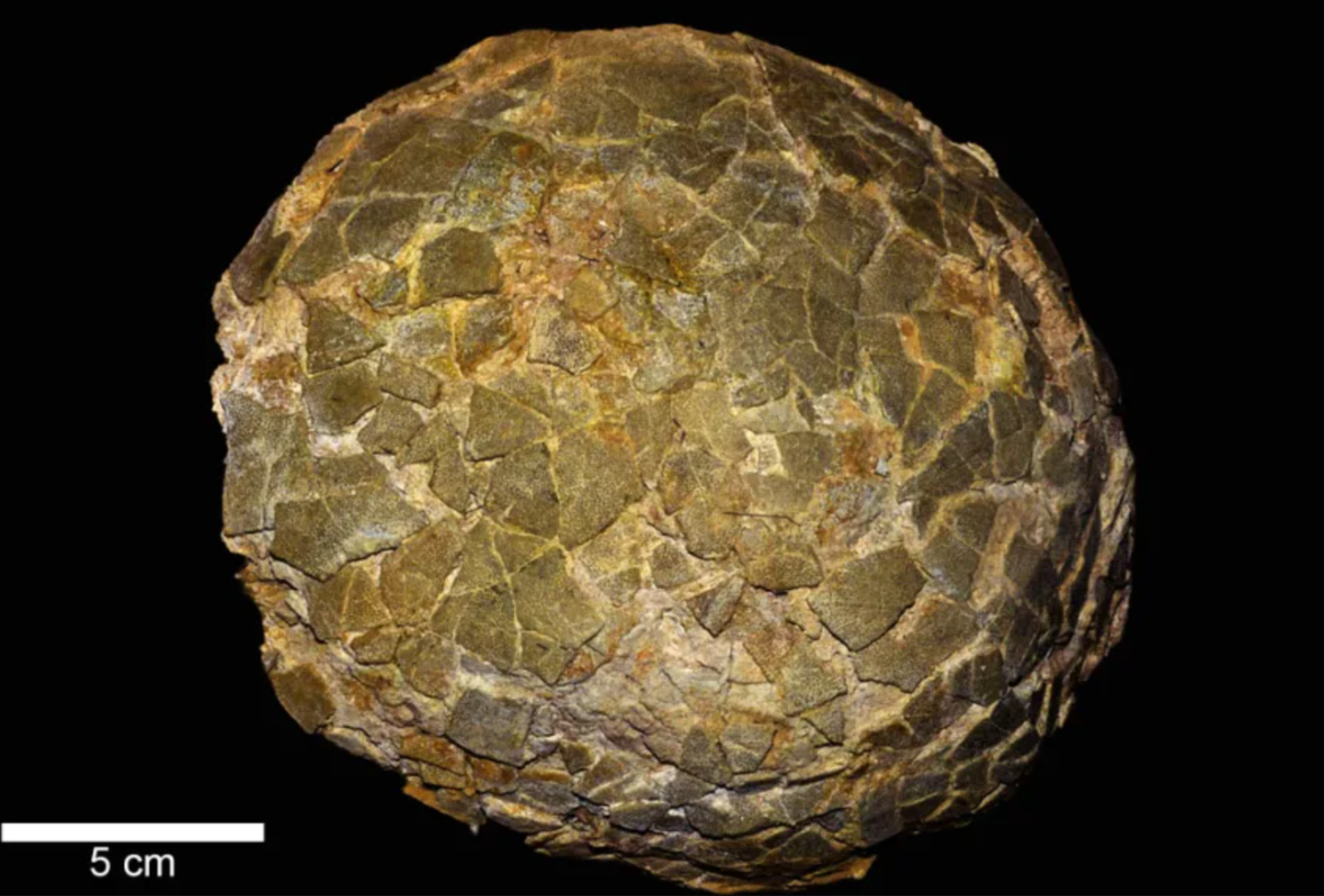
Sahara angrite meteorite offers direct evidence that a lost early protoplanet was far larger than once believed. (CREDIT: Wikimedia / CC BY-SA 4.0)
A meteorite found in the Sahara is forcing scientists to rethink what kinds of worlds once circled the young sun.
The rock, called Northwest Africa 12774, belongs to a rare class of meteorites known as angrites, some of the oldest volcanic materials ever recovered. For years, their odd chemistry led many researchers to picture their source as a small asteroid. But the new evidence points somewhere much larger. It seems to be a lost protoplanet that may once have rivaled the moon and perhaps even approached Mars in size.
In the journal Earth and Planetary Science Letters, researchers report what they describe as the first direct evidence. The angrite parent body was not a modest asteroid at all, but a planetary embryo that formed very early and later disappeared.
“It’s incredible to think there was once a world this large,” said Aaron Bell, an assistant research professor in the Department of Earth Science at CU Boulder. “We only know it existed because a few fragments of it happened to land on Earth. These meteorites preserved evidence of a completely different pathway through which early planets developed.”
Angrites are exceptionally scarce. Out of more than 80,000 meteorites found on Earth, only 68 are angrites. They also stand apart chemically. Compared with Earth, Mars and other rocky worlds, angrites are strikingly poor in silica, a major ingredient in most terrestrial planets.
That unusual composition helped support an older idea that angrites came from a small body, perhaps no more than 100 to 200 kilometers in radius. A world that size could melt early, separate into layers and later send fragments toward Earth. This process could happen without requiring a large missing planet.
A pressure signal locked inside crystal chemistry
Bell and his colleagues took a closer look at one feature inside NWA 12774: crystals of clinopyroxene, a mineral common in Earth’s crust and mantle. In this meteorite, those crystals contained unusually large amounts of aluminum, especially in a component called calcium Tschermak’s. This is a composition that tends to form under high pressure.
That mattered because pressure acts like a depth gauge. If a mineral records enough of it, researchers can work backward and estimate how large the parent world must have been to create those conditions.
The team developed a new geobarometer tailored to angrites, which are too chemically unusual for standard clinopyroxene pressure tools. After testing the method against experimental data, they applied it to NWA 12774. They calculated crystallization pressures ranging from 14.8 to 18.3 kilobars, with an average of 17.56 kilobars.
For scale, that is far beyond the pressure at the bottom of the Mariana Trench, which is roughly 1 kilobar.
A body with the size of a typical asteroid could not produce that kind of internal pressure. Using estimates for core size and density, the researchers concluded that the angrite parent body must have reached at least about 1,000 kilometers in radius. That is the minimum.
Too deep for an asteroid, perhaps too shallow for a small world
Other clues pushed the estimate upward.
The clinopyroxene crystals in NWA 12774 still preserve sharp edges, subtle zoning and textures consistent with near-equilibrium growth at low undercooling. Those details are important because they would likely have been erased if the crystals had formed deep underground. They may also have been erased if the crystals then spent too long rising through hot magma before eruption.
The rock’s broader texture also suggests a complicated history. It contains olivine crystals that appear to have formed earlier. These then became entrained in a more evolved melt. The researchers argue that the clinopyroxene likely crystallized later from that carrier liquid. After that, the magma was rapidly transported to the surface and quenched. The result resembles mixed crystal cargo seen in some basaltic systems on Earth.
If that interpretation is right, the magma may have been stored at relatively modest depths before erupting. In a body only about 1,800 kilometers in radius, roughly moon-sized, the needed pressure would place crystallization around 275 kilometers down. In a larger body closer to Mars in size, the equivalent depth would be nearer 135 kilometers.
The researchers say the larger scenarios fit better with the preserved crystal textures. Magma rising from shallower depths would have a better chance of keeping those features intact.
“There are many meteorites sitting in drawers that haven’t been thoroughly studied, so there were likely more of these protoplanets we don’t know about,” Bell said.
A different recipe for making worlds
The study reaches beyond one meteorite. It also suggests that some of the first planetary bodies in the inner solar system formed from raw materials unlike those that built Earth and Mars.
To explain angrites, earlier work had proposed that their parent body accreted a mixture rich in high-temperature nebular condensates, including melilite-rich material. In the new paper, the authors argue that this chemistry helps explain why angritic magmas behave so differently from more familiar planetary melts.
That makes the missing world more than just another shattered object. It may represent a separate branch of planetary development, one that produced a geochemically unusual body with its own internal magma systems and long-lived volcanic history.
“The materials that formed the angrite parent body are fundamentally different from the ingredients of Earth and Mars. It points to a distinct and separate evolutionary path in planetary formation in the early history of our solar system,” Bell said.
How that world disappeared remains uncertain. The researchers note that it may have been catastrophically disrupted early on, with pieces later incorporated into other terrestrial planets, including Earth. They also raise another possibility: some angritic material may have been excavated from deep reservoirs during violent impact events and launched into space as relatively unshocked fragments.
Either way, NWA 12774 appears to be a survivor from a chapter of solar system history that mostly vanished.
Practical implications of the research
The new work changes what meteorites can reveal about the earliest planets. Instead of treating angrites as leftovers from a small asteroid, scientists may now need to view them as fragments of a large protoplanet that formed, differentiated and was later destroyed. That opens a new window into the first generation of rocky worlds.
It also suggests that the inner solar system may once have contained more large, chemically unusual bodies than the surviving planets alone would imply.
If other meteorites preserve similar pressure records, researchers could use them to map a much more diverse early planetary population. This could help test how often large embryos formed from non-Earth-like ingredients before collisions erased them.
Research findings are available online in the journal Earth and Planetary Science Letters.
The original story "Rare meteorite points to a long-lost planet from our early solar system" is published in The Brighter Side of News.
Related Stories
- Rocky planets smaller than Earth may be too small to stay habitable
- From gas giants to rocky worlds: Why planets in our solar system differ
- A giant undiscovered planet could be hiding in our solar system
Like these kind of feel good stories? Get The Brighter Side of News' newsletter.
Joshua Shavit
Writer and Editor
Joshua Shavit is a NorCal-based science and technology writer with a passion for exploring the breakthroughs shaping the future. As a co-founder of The Brighter Side of News, he focuses on positive and transformative advancements in technology, physics, engineering, robotics, and astronomy. Having published articles on AOL.com, MSN, Yahoo News, and Ground News, Joshua's work highlights the innovators behind the ideas, bringing readers closer to the people driving progress.