Super recognizers see faces by looking smarter not harder, study finds
Study shows super recognizers use smarter eye movements, focusing on high value facial features to outclass others at recognizing faces.

 Edited By: Joseph Shavit

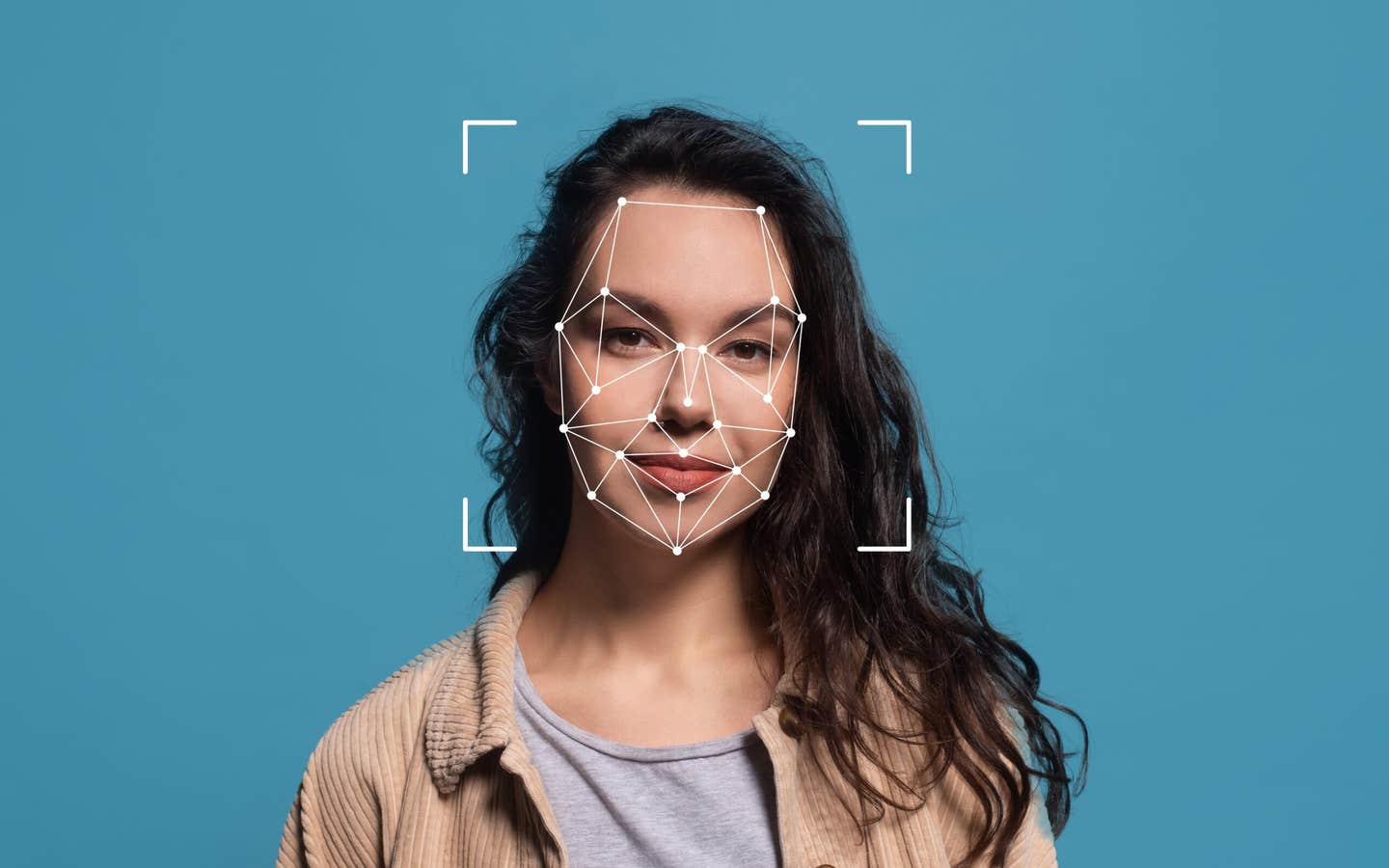
New research from UNSW Sydney reveals that super recognisers do not see more of a face. Instead, their eyes automatically target the most informative features, giving them a powerful edge in recognising people that most of us can only marvel at. (CREDIT: Shutterstock)
A stranger’s face flickers past you on a crowded street, and something in you clicks. Years later, you could still pick that same face out of a grainy photo. For a small group of people known as super recognizers, that kind of moment is normal daily life, not a rare stroke of luck.
New research from cognitive scientists at UNSW Sydney suggests their edge does not come from seeing more of a face. It comes from seeing the right parts of a face, at the right time, in a way your eyes may never do automatically.
What Makes a Super Recognizer Different
Super recognizers have extraordinary face memory. They can match faces across years, angles and lighting that leave most people guessing. For a long time, scientists did not know why.
According to the new study, the secret lies in how they sample visual information. Their eyes do not just roam more, they roam better.
“Super-recognizers don’t just look harder, they look smarter. They choose the most useful parts of a face to take in,” says Dr James Dunn, lead author of the research published in Proceedings of the Royal Society B: Biological Sciences.
“They’re not actually seeing more, instead, their eyes naturally look at the parts of a face that carry the best clues for telling one person from another.”
In other words, the advantage starts before the brain begins heavy processing. It starts with where the eyes land.
Turning Eye Movements Into Testable Data
To find out what super recognizers do differently, the team used precise eye tracking. They asked 37 super recognizers and 68 people with average face skills to look at photos on a computer screen. The software recorded exactly where each person looked and for how long.
Those gaze patterns were then turned into visual “windows.” The researchers reconstructed what each participant effectively saw by masking out everything their eyes never fixated on.
Next, they did something unusual. They fed those human viewing patterns into nine different neural networks already trained to recognize faces. Each network got a version of the image that matched either a super recognizer’s gaze or an average viewer’s gaze.
“AI has become highly adept at face recognition. Our goal was to exploit this to understand which human eye patterns were the most informative,” Dr Dunn says.
The artificial networks then faced the same task as the humans. They had to decide whether two faces belonged to the same person.
Smarter Sampling, Not More Sampling
When the team compared results, a clear pattern appeared. Even when the amount of visual information was matched, AI that saw what super recognizers had looked at performed better. Networks fed with gaze data from average observers made more mistakes.
“Our previous research shows super-recognizers make more fixations and explore faces more broadly,” Dr Dunn explains. “Even when you control for the fact that they’ve looked at more parts of the face, it turns out what they are looking at is also more valuable for identifying people.”
That means their advantage is twofold. They look wider across the face, and they also pick out regions that carry richer identity clues. Their eyes naturally tune into features that best separate one person from another.
The result feels a little like visual caricature. Super recognizers seem to home in on what makes a face distinct, not on every minor detail.
Why Most People Cannot Simply Learn the Trick
If you have ever wished you remembered faces better, you might hope this skill can be taught. The study suggests that is unlikely, at least in any simple way.
“So can people with average face recognition abilities learn from super recognizers to never forget a face? Sadly no,” Dr Dunn says. There is more happening deep in the visual system than just choosing where to look.
“Their skill isn’t something you can learn like a trick,” he adds. “It’s an automatic, dynamic way of picking up what makes each face unique.
“It’s like caricature – the idea that when you exaggerate the distinctive features of a face, it actually becomes easier to recognize. Super-recognizers seem to do that visually – they’re tuning in to the features that are most diagnostic about a person’s face.”
So while you can learn better habits, the full super recognizer ability likely reflects built in differences in perception and brain processing.
Humans and Machines Looking At Faces
The study also highlights how differently humans and machines approach faces. When facial recognition systems run in real world settings, such as airport eGates, the software checks every pixel at once. It does not “look around” a face the way people do.
“In very controlled situations like eGates at the airport, where you’ve got stable lighting, fixed distances and high-quality images matched to standardized photos, AI will exceed what any human can do,” Dr Dunn says.
“Right now, when the conditions are less ideal, humans can still have an advantage, especially with people we know well, because we bring context and familiarity to the task. But that gap is narrowing as AI evolves.”
The UNSW work shows that even before the brain or a computer starts heavy computation, the choice of where to sample information really matters. Super recognizers show the most efficient version of that sampling in people.
Rethinking Face Expertise
For you, this research offers a more hopeful view of visual expertise. It shows that face recognition skill is not just about what happens later in the brain. It begins with how your eyes explore a face. That first step shapes what your brain can learn and remember.
“It shows face recognition skill isn’t just about what happens in the brain later, it starts with how we look. The way we explore a face shapes what we learn about it,” Dr Dunn says.
If you struggle with faces, that can feel frustrating or even isolating. This study reminds you that those differences are real and rooted in how your visual system is wired. At the same time, it gives scientists a clearer roadmap for studying and supporting those differences.
Super recognizers, in that sense, are not just party tricks at a police lineup or a crowded bar. They are living examples of what human vision can do when it samples the world with extraordinary precision.
Practical Implications of the Research
This work helps explain why some people excel at recognising faces while others find it hard, even in everyday life. It shows that the edge begins with eye movements and the choice of high value features, not only with memory after the fact.
For future research, this suggests new training and assessment tools. Eye tracking could help identify people with exceptional abilities for roles in security, policing or missing person work. It could also highlight those who struggle with faces, guiding better support in education and clinical care.
The methods may also inspire better face recognition technology. By mimicking how super recognizers sample key regions, engineers could design algorithms that focus on the most informative parts of a face in poor lighting or messy footage. That could improve performance while reducing the need for ideal conditions.
More broadly, the study deepens your understanding of visual expertise. It suggests that many advanced skills, from reading faces to reading scenes, may depend on smarter sampling of information rather than raw processing power. That perspective could shape how scientists think about expertise across many kinds of perception.
Research findings are available online in the journal Proceedings of the Royal Society B Biological Sciences.
Related Stories
- Facial recognition technology taken to the next level in virtual reality
- Deepfake videos can fake a heartbeat, making detection harder
- Artificial intelligence is learning to understand people in surprising new ways
Like these kind of feel good stories? Get The Brighter Side of News' newsletter.
Rebecca Shavit
Writer
Based in Los Angeles, Rebecca Shavit is a dedicated science and technology journalist who writes for The Brighter Side of News, an online publication committed to highlighting positive and transformative stories from around the world. Her reporting spans a wide range of topics, from cutting-edge medical breakthroughs to historical discoveries and innovations. With a keen ability to translate complex concepts into engaging and accessible stories, she makes science and innovation relatable to a broad audience.