The hidden forest lizard that forced scientists to rethink reptile classification
A long-debated lizard in Taiwan is finally confirmed as its own species after decades of confusion.

 Edited By: Joseph Shavit

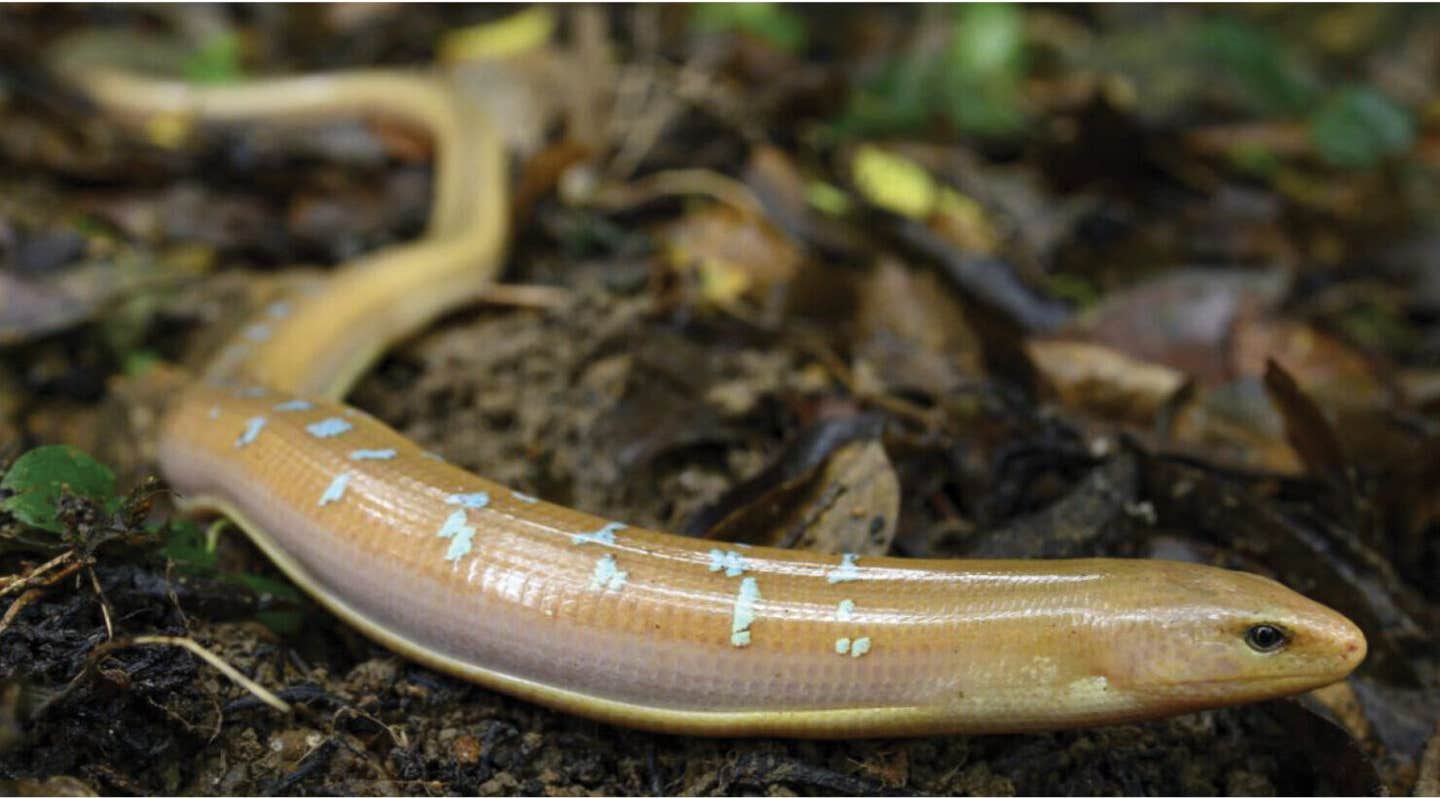
Dopasia formosensis in natural habitat. Photographed by Y-JL. (CREDIT: ZooKeys)
A slender reptile slips beneath damp leaf litter in Taiwan’s mountain forests, rarely seen and often mistaken for a snake. For more than a century, scientists have argued over what, exactly, it is.
That question has now been settled, at least for the moment. A study in the journal ZooKeys concludes that Taiwan’s elusive legless lizard represents its own distinct species, Dopasia formosensis, rather than a variant of a more widespread mainland species.
The work, led by Si-Min Lin at National Taiwan Normal University, also restores a name that had effectively disappeared after its original reference specimen was lost during World War II.
A Taxonomic Puzzle That Wouldn’t Settle
Confusion around these lizards dates back to 1909, when the first specimen from Taiwan was collected near what is now Yangmingshan. Early researchers debated whether the animal belonged to an existing species, Dopasia harti, or represented something new.
By 1930, a second species name, formosensis, had been proposed based on subtle physical differences. Over time, the debate hardened into two camps. Some scientists treated Taiwan’s lizards as a single species with variable traits. Others argued the differences pointed to separate lineages.
Color added to the confusion. Individuals with bright blue markings were often labeled one species, while plain brown ones were labeled another.
The problem lingered for decades. Even as genetic tools improved, disagreement persisted, with some studies merging the species and others splitting them again.
Rebuilding a Species Without Its Original Specimen
One obstacle stood out. The original “type specimen” used to define Dopasia formosensis had vanished.
Without that reference point, researchers lacked a firm anchor for naming and comparing specimens. To address this, Lin’s team designated a new specimen, known as a neotype, from Mingchi in northern Taiwan. This specimen now serves as the official reference for the species.
The researchers combined detailed physical measurements with genetic data drawn from preserved specimens and tissue samples collected through the Taiwan Roadkill Observation Network. Because the lizard is protected and rarely encountered, no new animals were collected for the study.
The genetic results were clear. All Taiwanese samples clustered together in a distinct lineage, separate from related populations in mainland China and Hainan Island. The level of genetic divergence fell within the range commonly used to distinguish separate lizard species.
When Color Misleads
The study also resolves the long-standing mystery of the lizard’s blue markings.
Rather than indicating separate species, the markings reflect sexual differences. Adult males often develop striking bluish bands across their backs, while females and juveniles tend to remain plain brown or bronze.
That distinction had misled earlier researchers, who relied heavily on visible traits. Other physical features, such as scale counts, proved unreliable as well, partly because preservation methods can distort the animals’ bodies.
Instead, the researchers point to a combination of genetic evidence and consistent anatomical traits, including head scale structure and body proportions, as stronger indicators of species identity.
Life Beneath the Forest Floor
Much about Dopasia formosensis remains difficult to study. The animals spend most of their time hidden in moist soil, leaf litter, and humus layers within mid-elevation forests, typically between 500 and 2,000 meters above sea level.
They are easy to mistake for snakes, but closer inspection reveals key differences. These lizards have small external ear openings and movable eyelids, allowing them to blink, features snakes lack. A fold along each side of the body helps the skin expand during breathing or egg development.
Encounters in the wild are rare. Many observations come from roadkill data, which suggest peak activity from April to June, likely during the breeding season.
Males can become aggressive during this period. They engage in ritualized displays before escalating into biting and rolling combat. Tail loss is common, and about 60 percent of individuals show signs of having shed their tails in past encounters.
Signs of a More Complex Reptile
Despite their secretive nature, these lizards show behaviors not always associated with reptiles.
Females lay small clutches of three to six eggs and have been observed guarding them. They coil around their eggs and remain in place even when disturbed. In some cases, females stayed with their clutches across multiple observations, suggesting prolonged parental care.
This kind of behavior hints at a more complex social and reproductive life than previously assumed.
Diet remains poorly understood, though captive observations suggest a strong preference for earthworms and relatively low feeding frequency.
A Name That Matters
The researchers argue that clarifying the species’ identity is not just an academic exercise. Taiwan represents the only known range of Dopasia formosensis, making accurate classification essential for conservation.
The species is already protected under Taiwanese law, but unclear taxonomy can complicate efforts to assess population status or design conservation strategies.
By publishing detailed genetic and morphological data, the team hopes to provide a stable framework for future studies across East Asia, where related species remain under active investigation.
Research findings are available online in the journal ZooKeys.
The original story "The hidden forest lizard that forced scientists to rethink reptile classification" is published in The Brighter Side of News.
Related Stories
- Mosasaur tooth fossil reveals giant sea reptiles lived in freshwater rivers
- Rare prehistoric 'Sword Dragon' reptile unearthed in the UK
- Scientists rethink animal consciousness: Reptiles, fish, and insects may be sentient
Like these kind of feel good stories? Get The Brighter Side of News' newsletter.
Hannah Shavit-Weiner
Medical & Health Writer
Hannah Shavit-Weiner is a Los Angeles–based medical and health journalist for The Brighter Side of News, an online publication focused on uplifting, transformative stories from around the globe. Passionate about spotlighting groundbreaking discoveries and innovations, Hannah covers a broad spectrum of topics—from medical breakthroughs and health information to animal science. With a talent for making complex science clear and compelling, she connects readers to the advancements shaping a brighter, more hopeful future.