Two blazing stars once raced past the Sun and reshaped our solar system
Study shows two hot stars passed close to the Sun, ionizing local gas clouds and shaping Earth’s cosmic environment.

 Edited By: Joshua Shavit

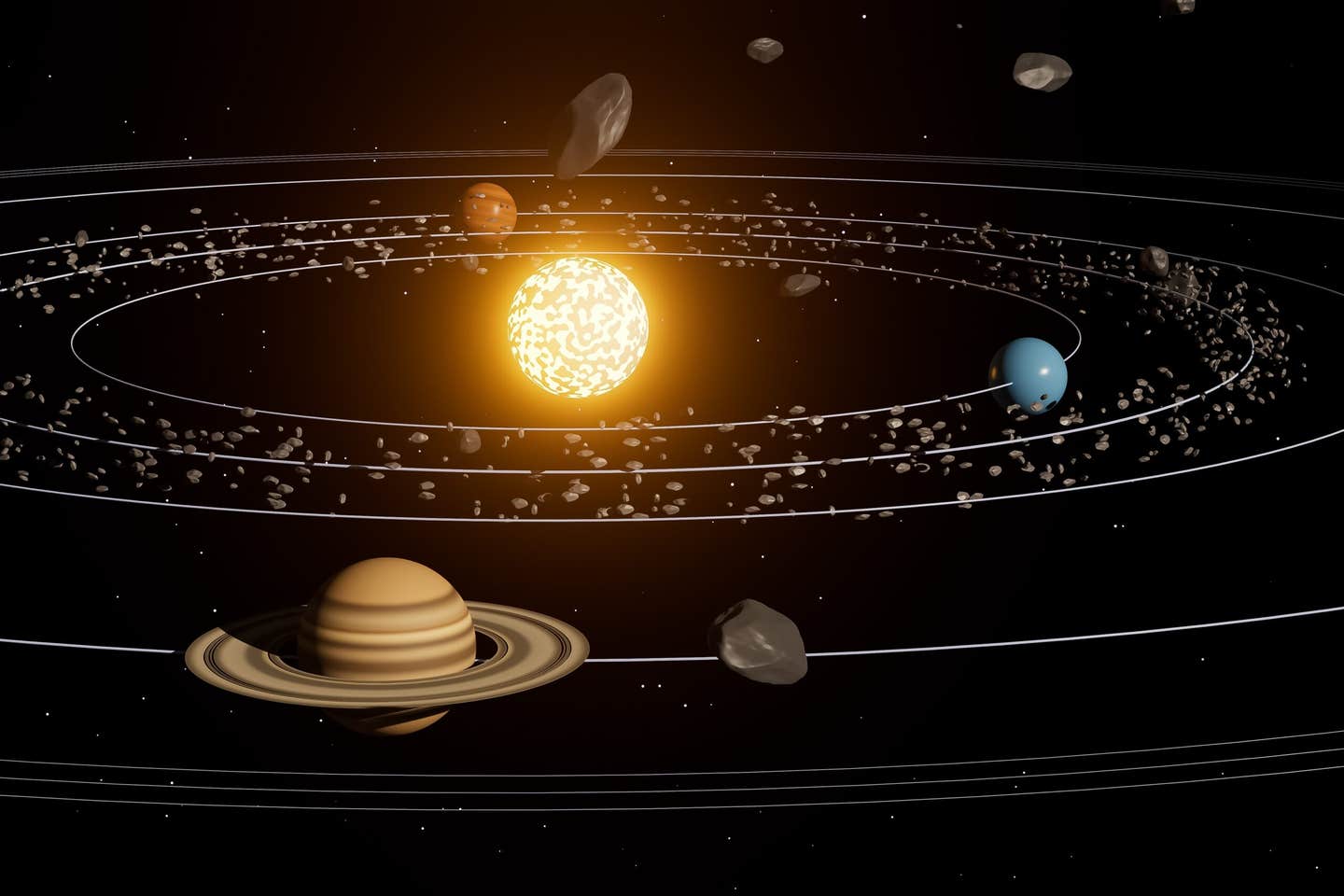
New research finds that two massive, hot stars swept past the Sun about 4.4 million years ago, blasting nearby gas clouds with radiation and leaving a lasting imprint on the space surrounding your solar system. (CREDIT: Shutterstock)
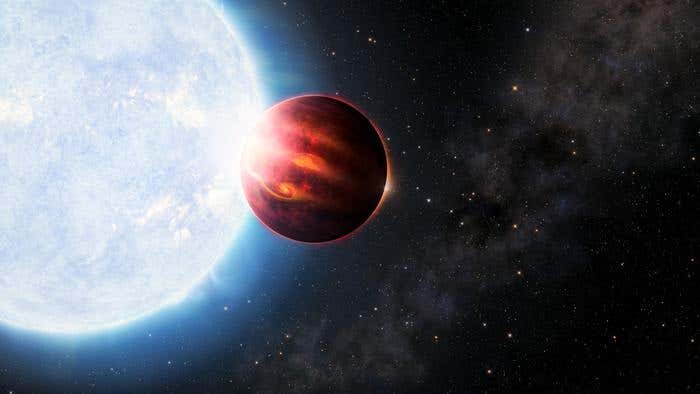
Long before humans walked the Earth, your solar system had a brush with two blazing blue stars that passed surprisingly close by. Nearly 4.4 million years ago, they swept past at a distance of only about 30 to 35 light-years, close in cosmic terms, and quietly stamped their signatures into the gas and dust that surround the Sun today.
That is the picture emerging from new work led by Michael Shull, an astrophysicist at the University of Colorado Boulder. The study pieces together how those wandering stars helped shape the “neighborhood” your planet lives in now.
A Cloudy Shell Around the Solar System
Your solar system does not drift through empty space. It sits inside a set of wispy structures known as the local interstellar clouds. These clouds are mostly hydrogen and helium gas with tiny traces of dust. Together, they stretch roughly 30 light-years from end to end, or about 175 trillion miles.
Beyond those clouds lies a much larger region called the local hot bubble. It is a kind of cosmic cavity where gas and dust are comparatively scarce and very hot. Astronomers believe this bubble came from 10 to 20 supernova explosions that blew out and heated nearby gas, like air pumped into a bubble in a glass of milk.
Shull thinks this arrangement is more than a curiosity. “The fact that the sun is inside this set of clouds that can shield us from that ionizing radiation may be an important piece of what makes Earth habitable today,” he said. Over millions of years, your planet’s environment has been shaped by where the Sun travels and what surrounds it.
A Strange Signal in the Local Clouds
"For decades, astronomers have seen something odd in those nearby clouds. Measurements, including data from the Hubble Space Telescope, showed that roughly 20 percent of the hydrogen atoms and about 40 percent of the helium atoms there are ionized. That means they have lost one or more electrons and carry a positive charge," Shull shared with The Brighter Side of News.
"The helium levels were especially puzzling. It takes more energy to strip electrons from helium than from hydrogen, so we expected less helium to be ionized, not more. Something in our local region of the galaxy had bathed these clouds in significant amounts of intense ultraviolet and X-ray light," he continued.
Shull and his colleagues decided to treat this as a cosmic detective story. They asked a simple question: what nearby objects have enough energy to ionize that much hydrogen and helium, and when did they pass close enough to matter?
Rewinding a Moving Cosmic Puzzle
Solving that puzzle meant running time backward. Nothing in your part of the galaxy stands still. The Sun is currently plowing through local gas at about 58,000 miles per hour. Stars drift along their own paths. Clouds of gas and dust slide and twist.
“It’s kind of a jigsaw puzzle where all the different pieces are moving,” Shull said. “The sun is moving. Stars are racing away from us. The clouds are drifting away.”
Using models of stellar motions and cloud positions, the team reconstructed how this region looked millions of years ago. When they rewound the motions far enough, two stars popped out as prime suspects: Epsilon Canis Majoris and Beta Canis Majoris, now part of the constellation Canis Major, the “Great Dog.”
Two Blazing Visitors
Today, Epsilon and Beta Canis Majoris sit more than 400 light-years from Earth. They are B-type stars, more than 13 times as massive as the Sun and far hotter. Epsilon’s surface temperature is around 38,000 degrees Fahrenheit. Beta’s surface reaches roughly 45,000 degrees. In comparison, your Sun’s surface, at about 10,000 degrees Fahrenheit, looks almost mild.
The team’s calculations show that about 4.4 million years ago, these stars swept past your solar system at just 30 to 35 light-years. At that distance, their light would have been hard to miss. “If you think back 4.4 million years, these two stars would have been anywhere from four to six times brighter than Sirius is today, far and away the brightest stars in the sky,” Shull said.
Their light did more than brighten the view. Their intense ultraviolet radiation slammed into the local interstellar clouds and stripped electrons off hydrogen and helium atoms. That burst of energy left behind the ionization pattern astronomers still see today, like a faint scent after someone has left a room.
More Than Two Stars At Work
The study shows that the two B-type stars were only part of the story. Shull and his colleagues estimate that at least six sources contributed to the ionization of the nearby clouds. Along with Epsilon and Beta Canis Majoris, three small, very hot white dwarf stars likely added their own ultraviolet light.
The hot gas filling the local hot bubble also played a major role. Those ancient supernova blasts heated the gas so much that it continues to shine in ultraviolet and X-ray light. That background glow still “bakes” the surrounding clouds and keeps some atoms ionized.
Taken together, the radiation from the two passing giants, the white dwarfs, and the hot bubble matches the observed levels of ionized hydrogen and helium. The team concluded that Epsilon and Beta Canis Majoris probably contributed just as much ionizing power as the hot gas in the bubble itself.
A Changing Neighborhood With a Long Memory
This ionization will not last forever. Over millions of years, the positively charged atoms in the local clouds will slowly recapture stray electrons and return to a neutral state. The cosmic fingerprints of those passing stars will fade.
The stars themselves are racing toward their own dramatic endings. B-type stars burn their fuel quickly. Shull estimates that Epsilon and Beta Canis Majoris will exhaust their cores and explode as supernovae in the next few million years.
They will be too far away to harm life on Earth, but they would put on a show. “A supernova blowing up that close will light up the sky,” Shull said. “It’ll be very, very bright but far enough away that it won’t be lethal.”
Practical Implications of the Research
This work does more than explain a strange signal in nearby gas. It helps you understand how the broader galactic environment can shape conditions on Earth.
The study suggests that the local interstellar clouds may act as a shield, softening some of the harsh radiation from hot stars and supernova-heated gas. That shielding could have influenced how life evolved by moderating exposure to ionizing radiation over millions of years.
By tracing how stars, clouds, and bubbles interact, scientists gain a clearer picture of what makes a region of the galaxy more or less friendly to life. The methods used here can also be applied to other stellar neighborhoods, helping researchers judge how often close stellar flybys may alter local radiation levels around other planetary systems. In the long run, that knowledge may guide the search for habitable worlds beyond your own.
Research findings are available online in The Astrophysical Journal.
Related Stories
- Astronomers find hidden channels of hot gas connecting our solar system to distant stars
- Orion, Pleiades, and Hyades are snapshots of the same star cluster across 800 million years
- Astronomers reveal how passing stars and exploding giants shaped our early solar system
Like these kind of feel good stories? Get The Brighter Side of News' newsletter.
Joseph Shavit
Writer, Editor-At-Large and Publisher
Joseph Shavit, based in Los Angeles, is a seasoned science journalist, editor and co-founder of The Brighter Side of News, where he transforms complex discoveries into clear, engaging stories for general readers. With vast experience at major media groups like Times Mirror and Tribune, he writes with both authority and curiosity. His writing focuses on space science, planetary science, quantum mechanics, geology. Known for linking breakthroughs to real-world markets, he highlights how research transitions into products and industries that shape daily life.