Two unknown human ancestors still live in our DNA
Modern genomes preserve traces of ancient relatives that mixed with human ancestors in Africa and Eurasia.
 UC Berkeley Writer: Robert Sanders

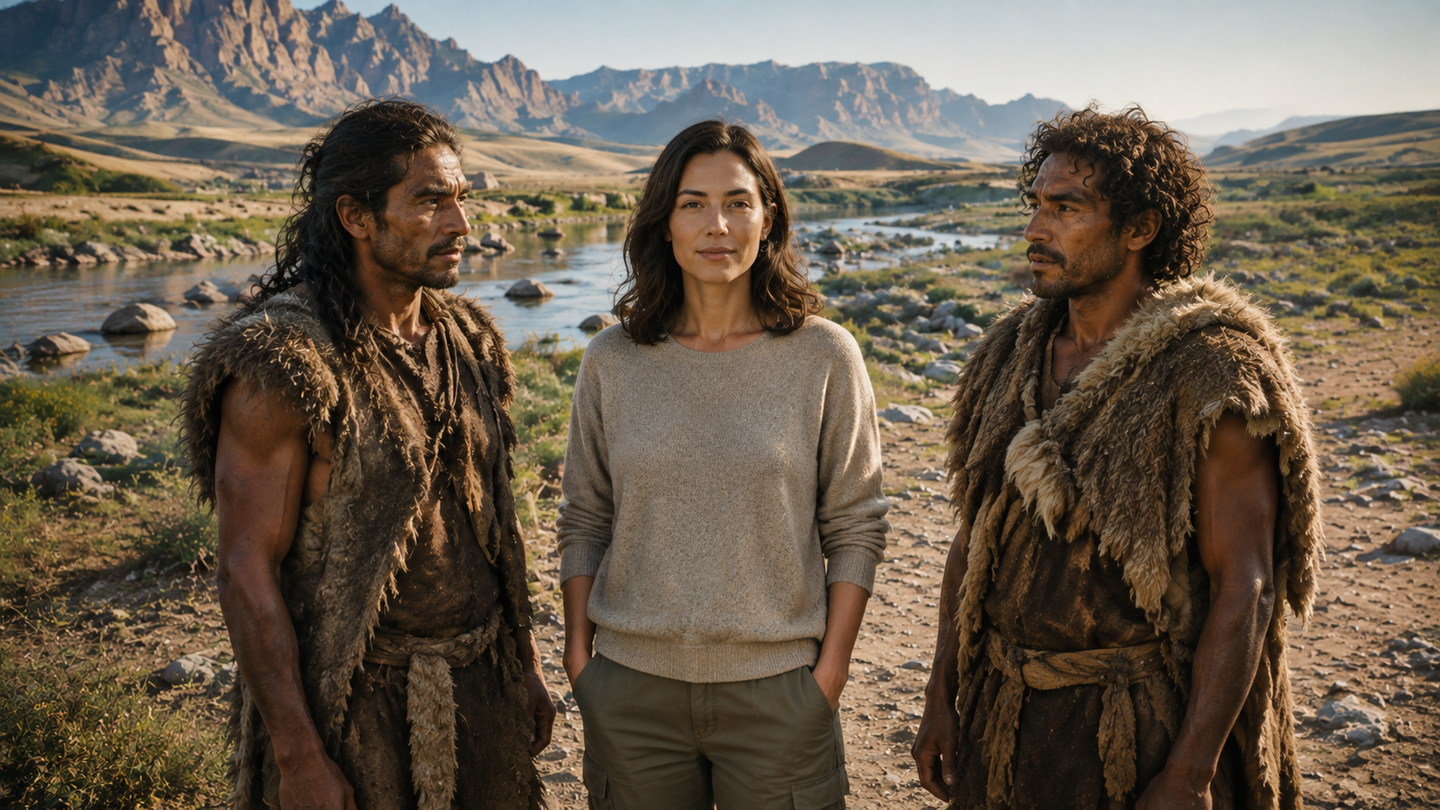
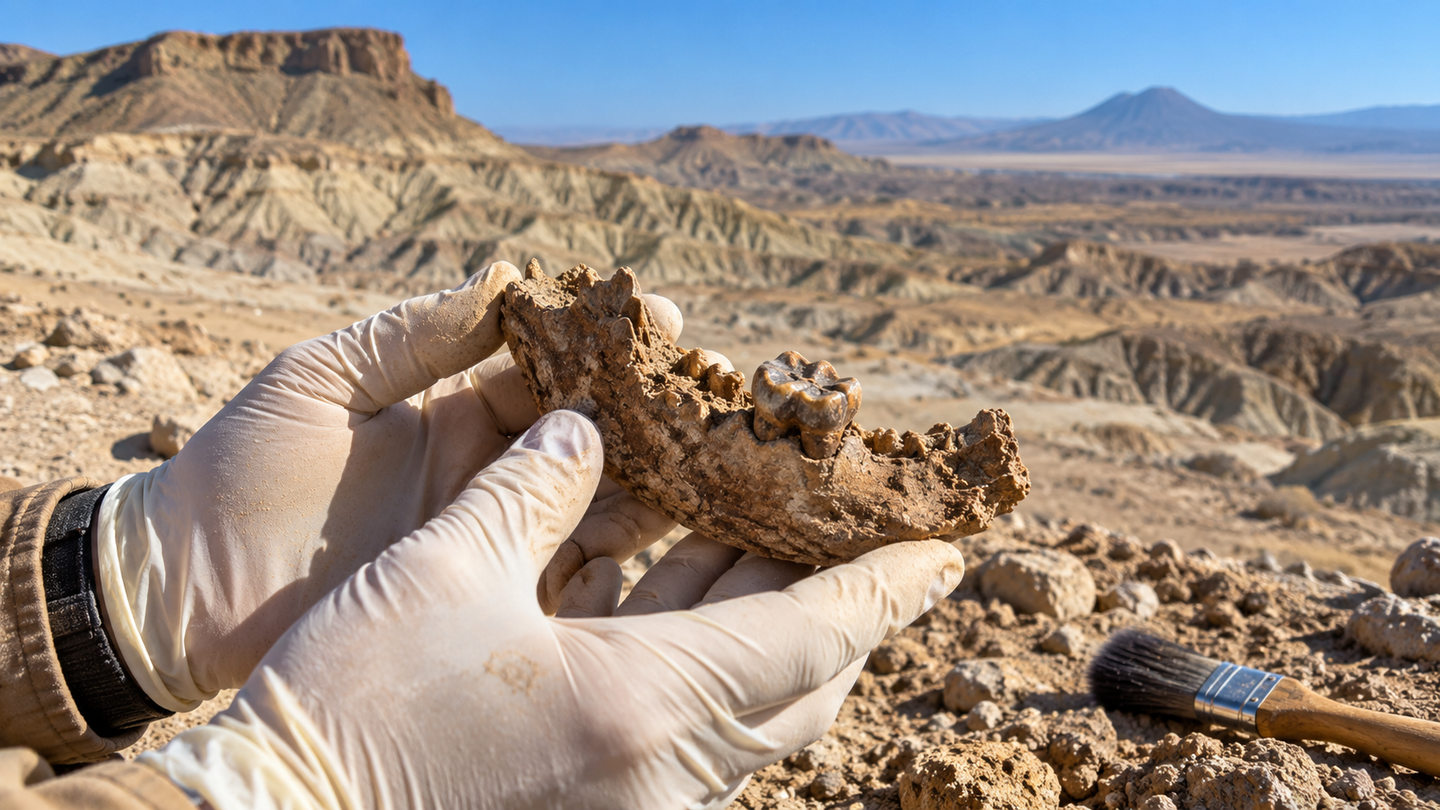
Ghost archaic ancestry reveals DNA from two unknown human lineages still carried by people around the world. (CREDIT: Shutterstock)
- A genetic method found that people worldwide carry DNA from an unidentified archaic human population that mixed with modern human ancestors in Africa.
- Oceanians also inherited traces of a far older lineage indirectly through Denisovans, whose ancestors encountered that population in Eurasia.
- Some of this mysterious DNA survives in genomic regions tied to immunity and metabolism, including areas once considered uniquely modern human.
The human genome holds genetic traces of at least two ancient relatives whose identities remain unknown. Their DNA survives alongside genes inherited from Neanderthals and Denisovans, revealing a human history shaped by repeated encounters and interbreeding.
One lineage mixed directly with the ancestors of modern humans in Africa before the latest migration out of the continent. The other lived much earlier and passed its genes to Denisovans, who later carried some of that DNA into modern human populations.
UC Berkeley researchers mapped these contributions using hundreds of present-day genomes. Their findings, published in Science, place the genetic exchanges within a timeline stretching back nearly 2 million years.
“We were actually able to find and map genomic locations in modern humans that are from this ghost lineage and show that this ghost ancestry is in all modern humans, not only in Africans,” said Yulin Zhang, a Berkeley graduate student and co-first author.
Reading history without ancient bones
Past discoveries of interbreeding depended heavily on DNA extracted from Neanderthal and Denisovan fossils. Only six high-coverage archaic genomes have been published, however, and all came from Eurasia. The oldest ancient human genome recovered in Africa is less than 20,000 years old.
DNA rarely survives for hundreds of thousands of years outside cold environments. That leaves many extinct populations invisible to methods requiring an archaic reference genome or a modern population untouched by ancient mixing.
The Berkeley team developed TRACE, short for Tracking Archaic Contributions via ARG Estimation, to work around that problem. It reconstructs ancestral recombination graphs, or ARGs, from modern genomes. These graphs map how DNA segments share ancestors and change through recombination over time.
Archaic DNA produces two useful clues. It tends to sit on unusually deep branches of the genetic family tree, reflecting a long separation between populations. It also appears in continuous stretches that have not yet been broken apart completely by recombination.
“Genealogies preserve a record of our evolutionary past,” said Berkeley associate professor Priya Moorjani. “By identifying regions whose ancestry extends unusually far back in time, we can uncover genetic contributions from extinct human populations, even in the absence of ancient DNA.”
A ghost lineage shared by everyone
The researchers first tested TRACE through computer simulations. Under one Out-of-Africa model, it reached 92% precision and 71% recall when analyzing the true simulated genealogies. Its false discovery rate remained below 0.25%.
They then applied the method to 503 phased genomes from the 1000 Genomes Project. TRACE recovered expected patterns of Neanderthal DNA in non-African populations and Denisovan DNA in Asian populations.
Other ancient segments matched neither group. These regions pointed to a separate “ghost” lineage that diverged from modern humans about 830,000 years ago, near the period when Neanderthals and Denisovans also separated from the modern human lineage.
Each person carried roughly 0.5% to 1.1% ghost ancestry. Africans and non-Africans inherited similar amounts, while most ghost segments outside Africa were also found in sub-Saharan Africans. That distribution indicates the interbreeding occurred in Africa before modern humans expanded widely into Eurasia.
The source population remains unknown. Its estimated age overlaps with Middle Pleistocene Homo groups in Africa, including populations sometimes associated with African Homo heidelbergensis. Genetic evidence cannot yet establish which group contributed the DNA.
Ancient DNA where none was expected
Across all sampled populations, ghost segments collectively covered more than 71% of the accessible human genome. Individual people carry only a small fraction, but different segments survive in different populations.
The distribution was far from even. Researchers identified 1,932 peaks where ghost ancestry appeared at unusually high frequencies. Genes intersecting these regions included CSMD1 and RBFOX1, while broader enrichments involved immune and metabolic functions, including major histocompatibility and lipoprotein complexes.
Ghost ancestry also appeared in all five regions previously described as shared Neanderthal and Denisovan ancestry deserts. Scientists had often interpreted such deserts as parts of the genome that rejected archaic DNA or preserved changes specific to Homo sapiens.
One desert on chromosome 7, containing the FOXP2 gene, held a ghost ancestry peak found at a frequency of 13.3%. Another on chromosome 3 contained a peak of about 20%.
The finding suggests natural selection did not remove DNA from every archaic source equally. Genetic load or incompatibilities specific to Neanderthals and Denisovans may explain their absence from some regions better than evolutionary distance alone.
A lineage from nearly 2 million years ago
The second unknown contribution emerged from 92 high-coverage Oceanian genomes. These included people from Papua New Guinea, Vanuatu and the Santa Cruz Islands, populations known for carrying relatively high levels of Denisovan ancestry.
Within Denisovan-derived segments, TRACE found lineages that reached much deeper into the past than those inside Neanderthal regions. Simulations supported a model in which a “super-archaic” population mixed with Denisovans before Denisovans interbred with modern humans.
The super-archaic lineage separated from modern human ancestors about 1.77 million years ago. Its surviving segments measured 20 to 83 kilobase pairs and represented around 0.3% of the Denisovan ancestry detected in Oceanians. The authors consider that figure a conservative lower bound because their filters excluded shorter and less certain segments.
Some fragments occurred in genes within the major histocompatibility complex and in CYP24A1, which regulates vitamin D degradation. Their biological effects remain uncertain.
A possible source is Homo erectus, whose history extends back about 1.8 million years. Recent protein evidence from Chinese Homo erectus fossils offers a potential connection, but neither TRACE nor the genomic timeline identifies the population conclusively.
The method also has limits. TRACE recovered fewer genuine segments from reconstructed genealogies than from perfect simulated ones, particularly under complex population histories. More diverse modern genome databases, improved genealogical reconstruction and additional Denisovan genomes could sharpen the picture.
“We often think of human evolution as a branching tree, but new genomic data and analytical methods reveal a much more interconnected history,” Moorjani said, describing it as “a complex web of populations connected by repeated episodes of migration and mixing.”
Dig deeper into archaic humans and genetic interbreeding
These five studies explore ghost populations, Neanderthal and Denisovan mixing, genealogical reconstruction and possible connections to Homo erectus.
Recovering signals of ghost archaic introgression in African populations: This analysis found genetic evidence that the ancestors of several West African populations received ancestry from a deeply diverged, unidentified archaic population. (Science Advances, 2020)
A unified genealogy of modern and ancient genomes: This work combined thousands of modern and ancient genomes into a shared genealogical framework, demonstrating how ancestral relationships and migrations can be reconstructed across human history. (Science, 2022)
Recurrent gene flow between Neanderthals and modern humans over the past 200,000 years: The study identified multiple movements of modern human DNA into Neanderthals and showed that interbreeding between the groups occurred in both directions. (Science, 2024)
Neanderthal ancestry through time: Insights from genomes of ancient and present-day humans: A catalog of Neanderthal segments from more than 300 genomes traced how this ancestry changed during the past 50,000 years and refined the timing of admixture. (Science, 2024)
Enamel proteins from six Homo erectus specimens across China: Ancient proteins revealed a variant shared by Chinese Homo erectus and Denisovans, supporting a possible connection between Homo erectus and super-archaic DNA that later reached modern humans. (Nature, 2026)
Research findings are available online in the journal Science.
The original story "Two unknown human ancestors still live in our DNA" is published in The Brighter Side of News.
Related Stories
- Humans and Neanderthals share ancient DNA linked to human language
- Ancient DNA in Oceania reveals hidden human evolution and health insights
- New AI model reconstructs human ancestry from DNA
Like these kind of feel good stories? Get The Brighter Side of News' newsletter.
Joshua Shavit
Writer and Editor
Joshua Shavit is a NorCal-based science and technology writer with a passion for exploring the breakthroughs shaping the future. As a co-founder of The Brighter Side of News, he focuses on positive and transformative advancements in technology, physics, engineering, robotics, and astronomy. Having published articles on AOL.com, MSN, Yahoo News, and Ground News, Joshua's work highlights the innovators behind the ideas, bringing readers closer to the people driving progress.