Wildfire smoke linked to higher assault rates, study finds
Study finds wildfire smoke days linked to a 3.6% rise in assaults in Seattle, suggesting air pollution may affect behavior.
 Edited By: Joseph Shavit

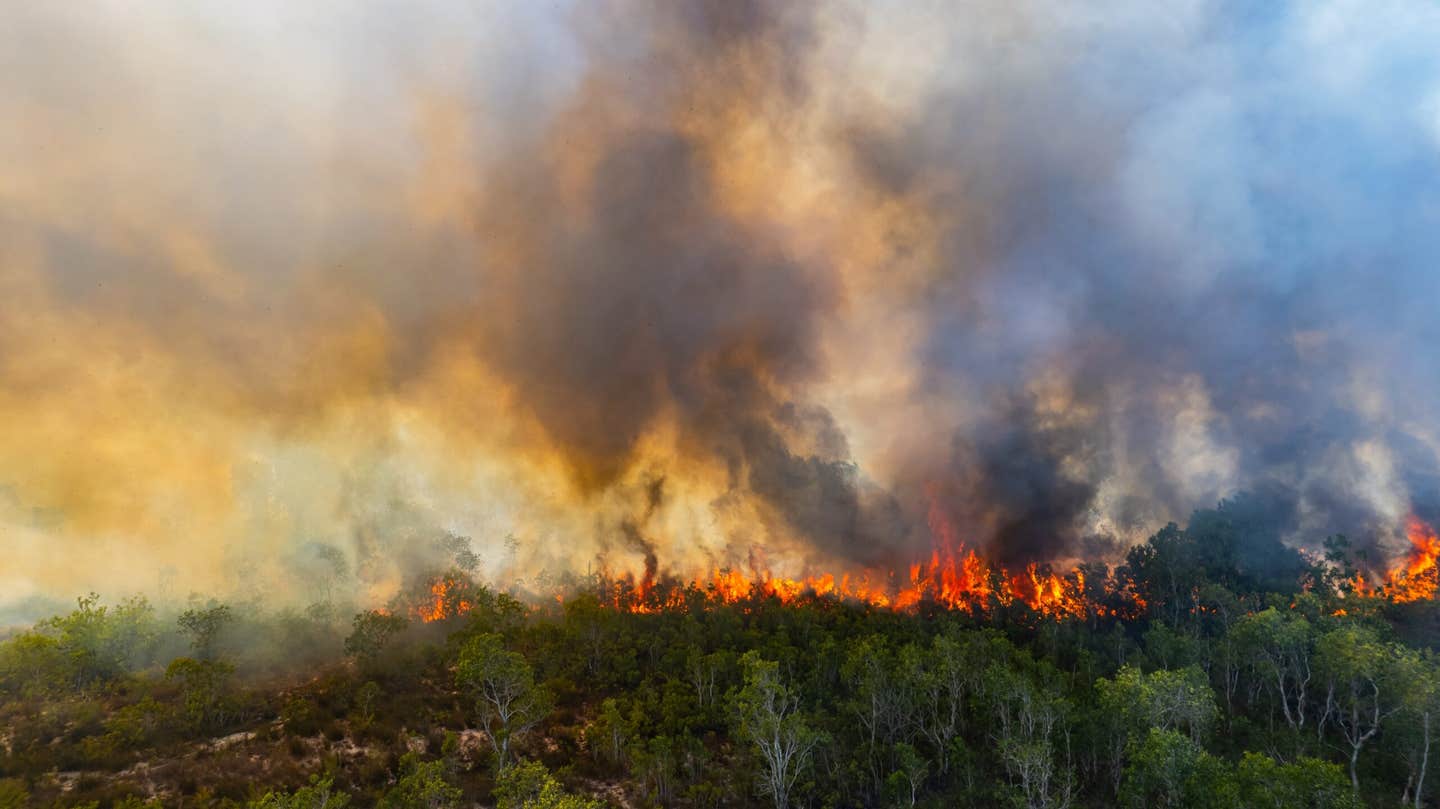
A decade-long study shows assault rates rise on smoky days in Seattle, pointing to a link between air pollution and aggression. (CREDIT: Shutterstock)
Smoke from distant wildfires can drift into a city without warning, turning the sky hazy and the air sharp. It can make your throat scratch and your eyes sting. Now, new research suggests it may also shape how people act toward each other.
A study published finds a consistent link between wildfire smoke and higher assault rates in Seattle over an eleven-year period. The research, led by political scientist Lion Kircheis from the University of Konstanz, does not claim that smoke directly causes violence. Still, it shows a clear pattern that raises new questions about how polluted air may influence behavior.
Kircheis examined daily crime data from 2013 to 2023, focusing on days when wildfire smoke affected the city. Across all eleven years, assault rates rose by an average of 3.6 percent on smoky days compared with clear ones. In a city the size of Seattle, that increase equals about one additional assault per day.
“I would especially like to emphasize that our study does not provide evidence of a direct causality for the effects of smoke on the human body,” Kircheis said. His work is a statistical analysis of patterns, not a medical study of biological effects.
Even so, the consistency of the findings stands out. The increase appeared year after year, across a wide range of conditions. It was not driven by a single extreme season or event.
Tracking Smoke and Violence Across A Decade
To explore the link, Kircheis used publicly available police and traffic records for Seattle. He paired those records with environmental data to identify days when wildfire smoke reached the city. Satellite observations, wind direction analysis, and local monitoring stations helped confirm when smoke was present.
Seattle offered a strong case study. The city has relatively clean air compared with many urban areas. It also maintains detailed and accessible public records. These features allowed the researcher to track changes over time with precision.
During the study period, wildfire smoke affected Seattle on 447 days. That represents about 11.1 percent of all days between 2013 and 2023. On those days, residents experienced noticeable declines in air quality.
The study focused on assault rates as a measure of violent behavior. Kircheis compared daily counts of assaults on smoky days with those on clear days. The pattern held steady. Assault rates rose when smoke filled the air.
The increase was not large on any single day. Yet it appeared consistently over more than a decade. That steady signal suggests a relationship that deserves attention.
Where the Increase Happens Matters
The research also found that the rise in violence was not evenly distributed across all settings. The increase was driven mainly by incidents that occurred outdoors, where people faced direct exposure to polluted air.
Indoor violence, measured through emergency calls related to domestic incidents, did not show a meaningful difference between smoky and non-smoky days. That contrast helps narrow the explanation. It suggests that exposure to outdoor air conditions may play a role.
Police behavior showed a similar pattern. Officers reported more uses of physical force on smoky days. This detail adds another layer to the findings. It suggests that tension may rise not only among civilians but also in interactions with law enforcement.
Taken together, the data point toward a subtle shift in how people respond to one another when air quality declines.
Interpreting A Small But Steady Effect
A 3.6 percent increase may sound modest at first. Kircheis acknowledges that the effect is not dramatic. Still, he stresses its importance.
“The statistical increase is not high, but it is consistent,” he said. Over time, small daily increases can add up, especially in larger populations.
In practical terms, the increase equals roughly one additional violent incident per day in Seattle. Over weeks or months of smoke exposure, that can translate into dozens of extra cases.
Kircheis also cautions against oversimplifying the results. “No. On the whole, the vast majority of people in Seattle does not act violently, even on smoky days,” he said. “But the probability that potentially violent conflicts actually escalate to violence is greater on days with wildfires.”
This distinction matters. The findings do not suggest that smoke turns people violent. Instead, they indicate that it may raise the chances that existing tensions escalate.
Why Polluted Air Might Affect Behavior
The study does not test biological mechanisms directly. Still, Kircheis offers a simple observation based on personal experience.
“It feels uncomfortable when there is smoke in the air. It is really unpleasant: Your throat is scratchy and your eyes tear up. You feel more irritable as a result,” he said.
That discomfort may play a role. When your body feels stressed or irritated, patience can wear thin. Small conflicts may feel harder to manage.
Exposure to smoke is not the same for everyone. Some people spend more time outdoors. Others lack access to clean indoor air. “We don’t all breathe the same air,” Kircheis said.
These differences can shape how strongly individuals experience polluted conditions. People with greater exposure may feel stronger physical effects, which could influence mood and reactions.
The study does not prove these pathways. It shows patterns at the population level. Still, the findings align with the idea that environmental stress can affect social behavior.
A Growing Concern In A Changing Climate
The results extend beyond one city. Wildfire seasons are becoming longer and more intense in many parts of the world. Smoke can travel hundreds of kilometers, reaching places far from the original fires.
“As a result of climate change, fire seasons are both expanding geographically and growing in length,” Kircheis said. “In some cases, smoke can spread hundreds of kilometres. Just last year (2025), Europe experienced a record year of wildfires.”
As smoke events become more common, their effects may reach further into daily life. The study suggests that air pollution may carry hidden social costs, not just physical health risks.
Kircheis sees the findings as part of a larger conversation. Cleaner air supports healthier communities. It may also support calmer and safer interactions.
He frames the research as one more reason to act. “Another good reason to intensify climate protection activities,” he said.
Practical Implications of the Research
The findings suggest that air quality may influence more than physical health. If smoke exposure raises the chance of conflict escalation, cities may need to consider new strategies during wildfire events. Public health alerts could include guidance not only for breathing safety but also for managing stress and social interactions.
Urban planning and emergency response systems may also benefit. Knowing that outdoor exposure plays a role, cities could expand access to clean indoor spaces during smoke events. Employers and schools might adjust schedules to reduce time spent outdoors.
For researchers, the study opens new lines of inquiry. Future work could examine other cities, different climates, and longer time periods. It could also explore how repeated exposure shapes behavior over time. Understanding these patterns could help policymakers design better responses to environmental stress.
At a broader level, the research highlights how climate change can affect society in unexpected ways. Reducing wildfire risk and improving air quality may offer benefits that go beyond physical health. It may also help support more stable and less volatile communities.
Research findings are available online in the journal Environmental Research Letters.
The original story "Wildfire smoke linked to higher assault rates, study finds" is published in The Brighter Side of News.
Related Stories
- Air pollution linked to an increased risk of developing ALS, study finds
- New global study links air pollution to rising dementia risk
- LA-based AI startup looks to help ease overloaded 911 systems
Like these kind of feel good stories? Get The Brighter Side of News' newsletter.
Rebecca Shavit
Writer
Based in Los Angeles, Rebecca Shavit is a dedicated science and technology journalist who writes for The Brighter Side of News, an online publication committed to highlighting positive and transformative stories from around the world. Her reporting spans a wide range of topics, from cutting-edge medical breakthroughs to historical discoveries and innovations. With a keen ability to translate complex concepts into engaging and accessible stories, she makes science and innovation relatable to a broad audience.