World’s largest lithium deposit discovered in the US along the Nevada – Oregon border
Scientists say a dormant volcano on the Nevada–Oregon border may hide the largest lithium deposit ever found on Earth.

 Edited By: Joshua Shavit

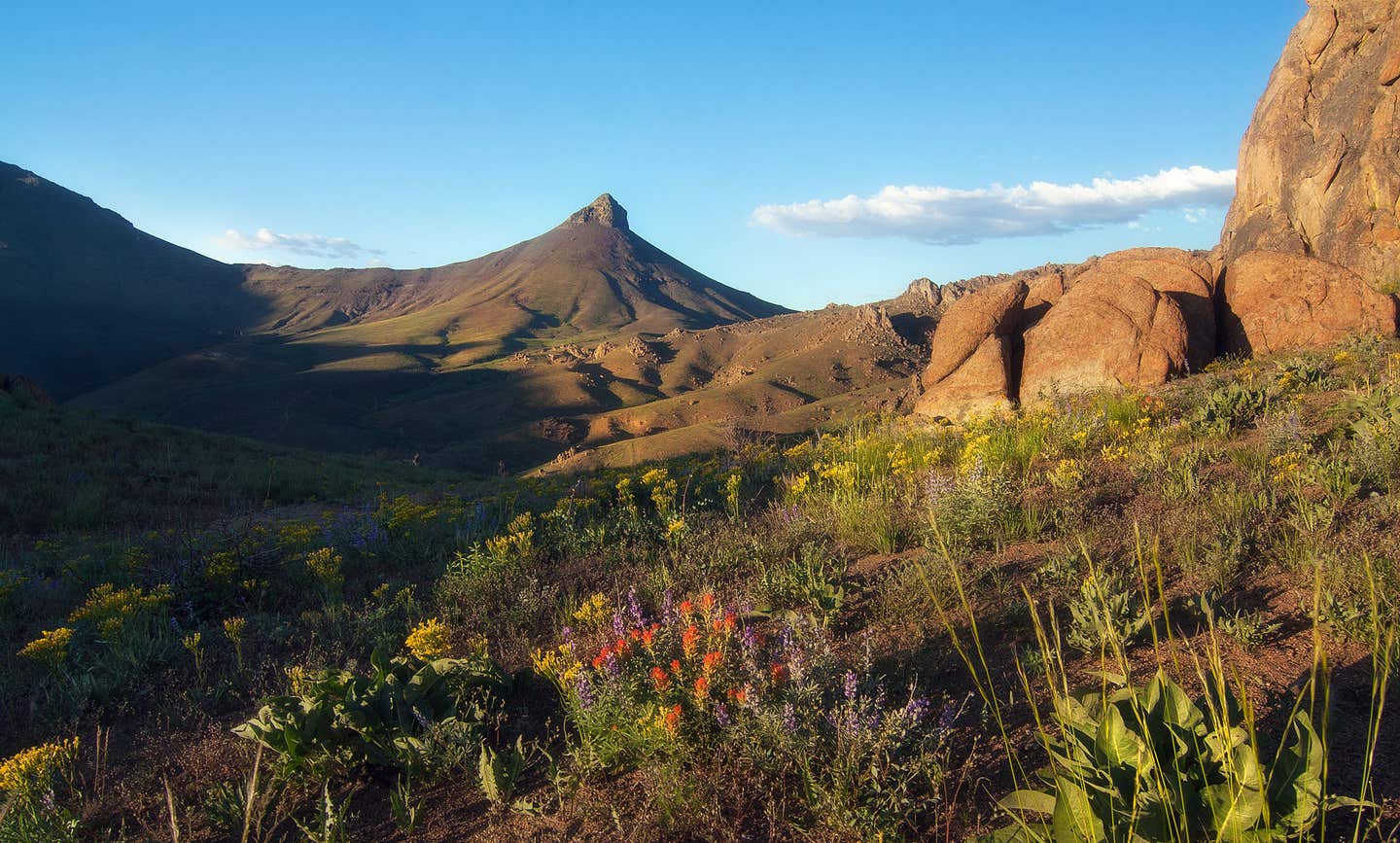
A long-dead volcano in the western U.S. may contain more lithium than any site on Earth. (CREDIT: Wikimedia / CC BY-SA 4.0)
Climate change is forcing a worldwide shift away from coal, oil, and gas. Solar farms stretch across plains. Wind turbines line ridges. Electric cars glide quietly down city streets. Behind nearly all of it sits one small but powerful element: lithium.
Demand for lithium is rising at a pace few minerals have ever seen. By 2040, scientists expect global demand to hit nearly one million metric tons. That is about eight times what the world produced in 2022. If nations hope to replace gas cars and coal plants, they must secure batteries first.
Now researchers say one of the most important lithium discoveries on Earth may be hiding in plain sight. Beneath remote desert hills along the Nevada and Oregon border, a long-dead volcano may contain the planet’s largest known lithium concentration.
The site is called the McDermitt caldera. It looks quiet today, but 16 million years ago, it exploded.
When an ancient volcano rewrote the land
The McDermitt caldera formed after an enormous volcanic blast released roughly 1,000 cubic kilometers of molten rock. The eruption collapsed the ground and created a bowl-shaped crater more than 40 kilometers wide. Ash and lava spread as far as 80 kilometers away.
What remained behind was a scorched basin that refused to cool quickly. A massive layer of glassy volcanic rock stayed hot for centuries. Over time, rain and snow filled the crater, forming a lake.
Ash and shattered stone washed into that lake for hundreds of thousands of years. The water had no outlet. It slowly grew salty and chemically harsh, more like a natural stew than a lake.
That ugly soup turned out to be perfect for one rare result. It trapped lithium.
The volcanic rock feeding the lake already held large amounts of lithium. The water pulled it out slowly, drop by drop, and locked it into soft clay forming at the bottom. When the lake finally dried, it left behind a thick blanket of lithium-rich sediment.
Those sediments would later change the battery future.
A clay no one expected
Most lithium today comes from two places. It is pulled from salty water under deserts like Chile’s salt flats, or it is crushed out of hard rock in Australia.
McDermitt is different. Its lithium lives inside clay.
In fact, so much lithium settled at the lake bottom that some samples contain more than 70 times the amount found in common rock. Across the southern half of the caldera, drill samples now show millions of tons of lithium embedded inside fine-grained earth.
Two mining projects alone estimate at least 5.1 million metric tons of lithium already mapped there. About 3 million sit beneath a place called Thacker Pass.
In 2017, scientists flagged Thacker Pass as one of the most promising lithium sites on Earth. Lithium Americas Corporation soon moved in. Lawsuits followed from local ranchers and tribal groups, who opposed digging near sacred land. The company eventually won the right to mine.
But scientists still faced one mystery. Why was Thacker Pass so much richer than nearby areas?
The hidden heat that changed everything
The answer lies deep underground.
After the original eruption, molten rock did not stop moving. It pushed upward again beneath the crater and lifted part of the landscape into the Montana Mountains. That pressure cracked the crust.
Those cracks became doorways.
Scalding fluid surged upward from below, packed with dissolved lithium, potassium, and other elements. Those fluids heated buried clay and changed it chemically, the same way heat hardens dough in an oven.
That shift transformed one form of clay into another. At Thacker Pass, a softer mineral changed into illite, a tougher clay that trapped lithium inside its structure.
Drill core studies show some samples now contain up to 18,000 parts per million lithium, among the highest clay values ever measured. In comparison, most rocks on Earth contain fewer than 50.
The fact that this transformation happened only in the south explains why northern parts of the caldera remain lower grade.
Heat did the upgrading.
Science behind the discovery
The work appears in Science Advances. The authors are Thomas Benson, Matthew Coble, and John Dilles from Lithium Americas Corporation, GNS Science, and Oregon State University.
Using fine-scale microscopes, the team confirmed lithium sits inside the illite itself and not in nearby minerals. This means the clay is the resource, not just the host.
The team believes the unique mix of a lithium-rich eruption, a sealed lake, slow chemical brewing, and later heat made the site exceptional.
Not every volcano will repeat that story. But some might.
A new road map for finding lithium
When researchers compare McDermitt to other sites in Mexico, Serbia, Nevada, and California, a pattern appears. The best locations form inside closed basins shaped by volcanoes and fed by ash.
McDermitt had one extra advantage. The magma itself started with unusually high lithium.
Future searches will now focus on ancient volcanic lakes that show signs of underground heating. Those systems may hold the next generation of battery metals.
Practical Implications of the Research
If McDermitt lives up to its promise, the lithium supply picture changes overnight. The United States would hold one of the largest domestic battery metal reserves on Earth.
That could cut reliance on foreign suppliers. It could lower battery costs. It could speed electric car production. It could reduce pollution tied to shipping minerals across oceans.
The research also gives geologists a clearer map for finding new lithium sites worldwide. More supply could reduce pressure on fragile salt flats and fragile communities.
But impact reaches beyond energy.
Mining decisions will shape local water use, wildlife, and Indigenous rights. Courts, lawmakers, and voters will face hard trade-offs.
This lithium could power the transition away from fossil fuels, but it also demands careful choices.
What lies under the desert may help cool the planet, if handled wisely.
Research findings are available online in the journal Science Advances.
Related Stories
- Massive new phosphate deposits in Norway could power electric cars for the next 50 years
- Groundbreaking lithium battery charges in under 5 minutes - eliminates EV range anxiety
- Electric vehicles get major boost from new ultra-powerful lightweight battery
Like these kind of feel good stories? Get The Brighter Side of News' newsletter.
Joseph Shavit
Writer, Editor-At-Large and Publisher
Joseph Shavit, based in Los Angeles, is a seasoned science journalist, editor and co-founder of The Brighter Side of News, where he transforms complex discoveries into clear, engaging stories for general readers. With vast experience at major media groups like Times Mirror and Tribune, he writes with both authority and curiosity. His writing focuses on space science, planetary science, quantum mechanics, geology. Known for linking breakthroughs to real-world markets, he highlights how research transitions into products and industries that shape daily life.